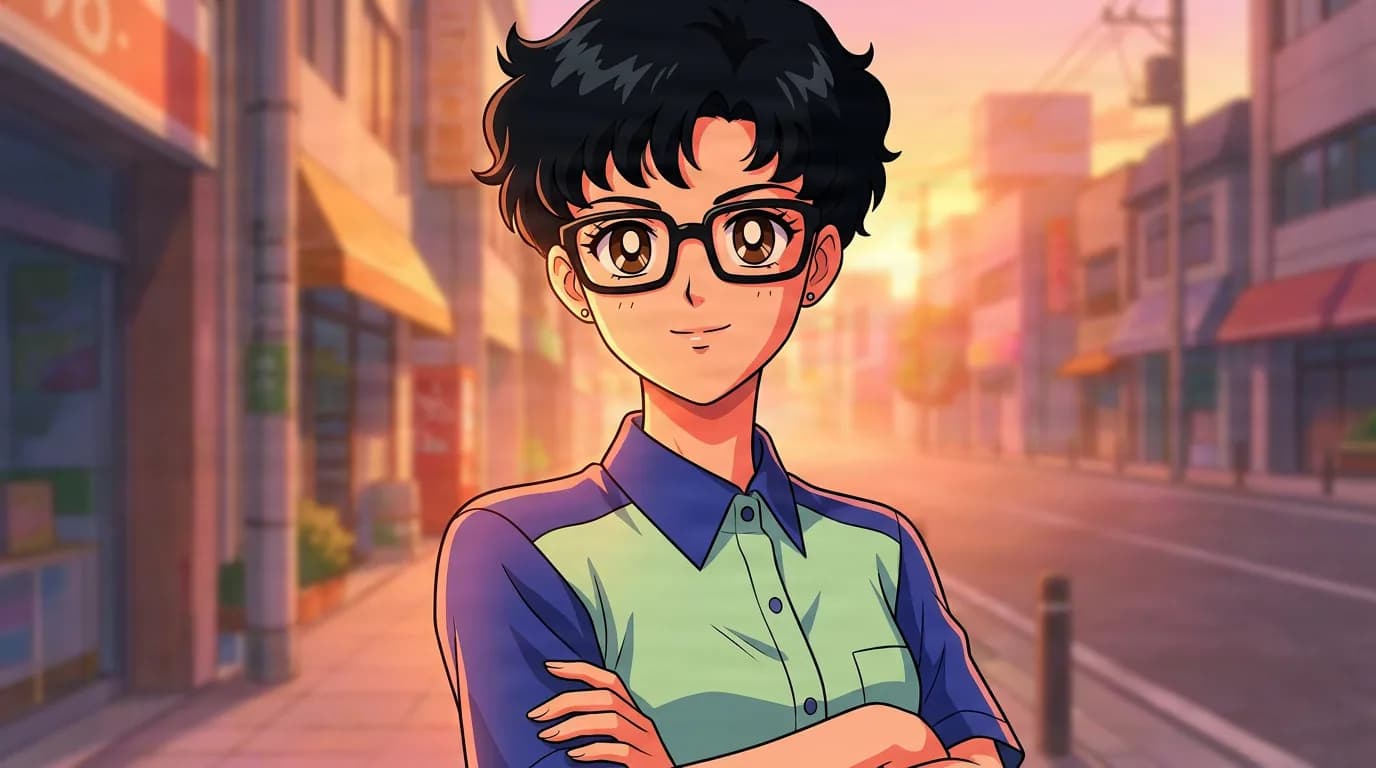
Hiromi Matsuno
CharacterHiromi Matsuno is an animator in the 1990s Sailor Moon anime who works on an in-universe Sailor V cartoon. Her episode centers on a friendship strained by self-doubt, a weakness the Dark Kingdom's Nephrite exploits to twist a creative partnership into open conflict.
Occupations
Appearance
Hiromi is a woman who earns her living as a professional animator, working among a studio's drawing staff.

Personality
Talented yet deeply insecure, Hiromi keeps measuring herself against her colleague Kazuko and concluding she falls short. That gnawing doubt drives her to break a shared promise in secret, convinced it is the only way to keep pace. Once she is freed from the influence pushing her, she owns up honestly and rediscovers the earnest passion for animation that first bonded the two of them.
Related Reading
See all
Naruto vs Luffy: Does the Fight Change if Luffy Tickles Hinata?
Naruto vs Luffy with the twist nobody asked for: Luffy tickled Hinata on date night, and she kind of liked it. We break down the whole fight and commit to a winner....
Namek Has No Women, and Piccolo Pulls Anyway
There are no women on Namek. That isn't an oversight, it's the biology. Why we handed Piccolo the one thing his own species rules out, and why it had to be trap soul....
History
Hiromi partners with Kazuko Tadashita on a Sailor V cartoon. Early in their friendship the pair had bought a set of special pencils and sworn not to touch them until each had become a true professional, and even then only with the other's blessing. As the work drags on, Hiromi loses confidence in her ability, certain her output cannot match Kazuko's, and quietly opens her pencil case without permission, treating the tools as her only means of keeping up.
Nephrite singles her out and plants the Youma Castor and Pollux inside the last pencil she has left. Under that dark sway she turns cold, quarrels with Kazuko, and insists that Sailor V should be killed off at the finale of the cartoon they are producing, appalling Kazuko, the director, and the rest of the crew. After the Sailor Senshi free her from Castor and Pollux, Hiromi confesses to using the pencils, only for Kazuko to admit she had felt exactly the same way. The two renew their shared dream of making animation together and seal the reconciliation with a pinky promise, all of it witnessed by the guardians.
Frequently Asked Questions
Who is Hiromi Matsuno in Sailor Moon?
Hiromi Matsuno is an animator in the 1990s Sailor Moon anime who works on an in universe Sailor V cartoon. Her episode focuses on a friendship with fellow animator Kazuko Tadashita that is strained by self doubt.
Why does Hiromi Matsuno turn against Kazuko Tadashita?
Hiromi Matsuno loses confidence in her own animation skills and begins to feel she cannot keep up with Kazuko Tadashita. Nephrite exploits that insecurity by placing the Youma Castor and Pollux inside a pencil she secretly starts using, which turns her cold toward Kazuko.
What are the special pencils in Hiromi Matsuno's story?
Early in their friendship, Hiromi Matsuno and Kazuko Tadashita bought a set of special pencils and promised not to touch them until each had become a true professional. Hiromi later opens hers without permission, convinced it is the only way to keep pace with Kazuko.
How is Hiromi Matsuno freed from Nephrite's influence?
The Sailor Senshi free Hiromi Matsuno from the Youma Castor and Pollux that Nephrite hid inside her pencil. Once freed, she confesses to using the pencils without permission and reconciles with Kazuko Tadashita.
What does Hiromi Matsuno insist should happen to Sailor V in the cartoon?
Under the Youma's dark influence, Hiromi Matsuno insists that Sailor V should be killed off at the finale of the cartoon she and Kazuko Tadashita are producing. The demand appalls Kazuko, the director, and the rest of the crew before the guardians free her from the enemy's hold.
Sources & Information
Looking for more on Hiromi Matsuno? The Sailor Moon Wiki on Fandom has a dedicated page with community notes.
View on FandomThis content is original writing by Daddy Jim Headquarters based on the Sailor Moon anime series, manga, and official materials. Sailor Moon was created by Naoko Takeuchi, published by Kodansha, and animated by Toei Animation. All rights to Sailor Moon and its characters belong to their respective owners. Episode and chapter references are cited where applicable.
Rights holders
- Created byNaoko Takeuchi
- Published byKodansha
- Animated byToei Animation
All rights belong to their respective owners.
Character and scene imagery on this site is original artwork by Daddy Jim Headquarters, not screenshots or licensed imagery. Official cover art is used on three types of pages for editorial commentary:
- Movie pages: theatrical posters and key visuals, credited to Toei Animation and Kodansha.
- Game pages: official box art, credited to the game's respective publishers.
- Manga chapter pages: volume covers, credited to Kodansha and Naoko Takeuchi.
Official resources:
Help Us Keep This Wiki Accurate
Daddy Jim Headquarters maintains this encyclopedia. If you spot an error, a translation issue, or something that doesn't look right, let us know.