Kazeshini (Zanpakutō spirit)
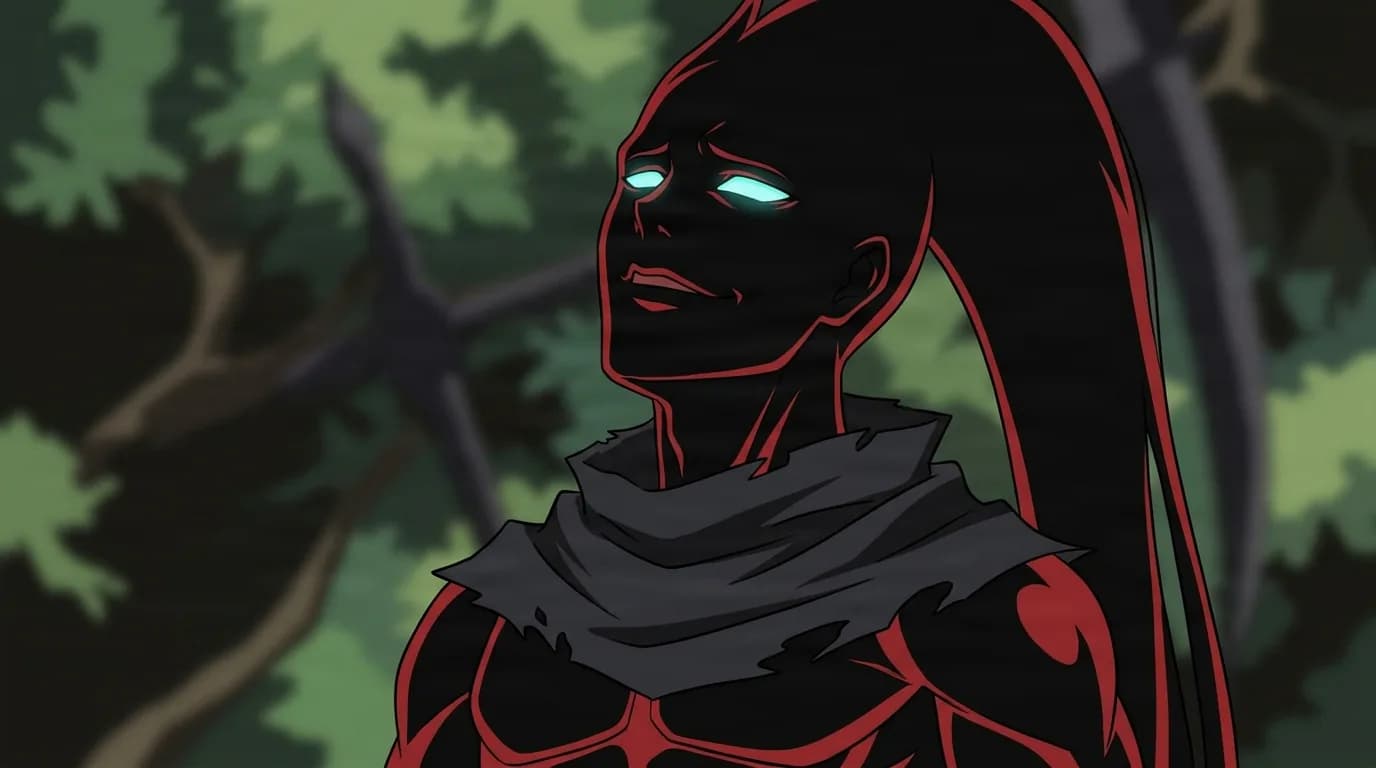
CharacterKazeshini is the embodied spirit of Shuhei Hisagi's Zanpakuto, appearing during the anime-only Zanpakuto Rebellion. Bloodthirsty and defiant, he casts himself as a blade that exists only to harvest lives, though a strange turn will eventually soften even him.
Appearance
Kazeshini takes shape as a lean, well-muscled dark-skinned man with pale blue eyes and black hair spilling down to his lower back. Grey strips of cloth wrap his neck, shoulders, wrists, and lower body, and curl-toed grey boots finish the look. A faintly flickering red outline traces his frame, and pronounced canine fangs lend his grin a savage edge.

Personality
Driven by Muramasa's brainwashing, Kazeshini is cocky, impulsive, and prone to wild laughter, boasting that he could face the whole Gotei 13 single-handed. He proclaims that reaping lives is his one and only purpose and fights without mercy or scruple, cutting down weaker foes and sneering at any spirit beaten by a Shinigami. His bond with Hisagi is openly hostile; he belittles his master and insists reaping was the only thing he ever owed their partnership. Even after the brainwashing lifts he keeps hunting Hisagi, until minding an orphaned baby against his will thaws him, teaching him the worth of protecting others and turning him toward making amends.
Related Reading
See all
The Bleach Female Characters Nobody Can Agree On, Settled
Five Bleach female characters, ranked and settled. Yoruichi sits at number five, the spot nobody expects, and our number one is an Arrancar with a soft heart....
Naruto vs Luffy: Does the Fight Change if Luffy Tickles Hinata?
Naruto vs Luffy with the twist nobody asked for: Luffy tickled Hinata on date night, and she kind of liked it. We break down the whole fight and commit to a winner....
History
In the Zanpakuto Rebellion, Kazeshini joins Muramasa's uprising, slaughtering Shinigami during the assault on the Seireitei and ambushing fighters like Renji and Rukia. He battles Hisagi to a draw before Izuru Kira intervenes, later loses to Izuru, and is finally beaten by Ichigo, breaking back to blade form. In the follow-up Beast Swords arc he alone keeps attacking Hisagi rather than returning to the sword, but caring for a dying man's baby changes him: he shields the child, faces Hisagi in a fair fight, and accepts a shared purpose of guarding others. He later helps the spirits against the energy-draining Kirikaze before his materialized form finally gives out and he returns for good to Hisagi's blade. In combat he relies on twin kusarigama, wind-like shadow blades, and a spinning tornado transformation.
Frequently Asked Questions
Who is Kazeshini in Bleach?
Kazeshini is the embodied spirit of Shuhei Hisagi's Zanpakuto, appearing during the anime-only Zanpakuto Rebellion. He is bloodthirsty and defiant, casting himself as a blade that exists only to harvest lives, though a strange turn eventually softens even him.
Is Kazeshini good or bad?
Kazeshini starts out villainous, joining Muramasa's uprising and slaughtering Shinigami while brainwashed, and stays hostile toward Hisagi even after the brainwashing lifts. He ultimately reforms after caring for an orphaned baby, accepting a shared purpose of protecting others alongside Hisagi.
Who uses Kazeshini in Bleach?
Kazeshini is the Zanpakuto of Shūhei Hisagi, and its embodied spirit answers to him as master.
What does Kazeshini look like?
Kazeshini takes the shape of a lean, well-muscled, dark-skinned man with pale blue eyes and black hair spilling down to his lower back. Grey cloth wraps his neck, shoulders, wrists, and lower body, and pronounced canine fangs lend his grin a savage edge.
How does Kazeshini change during the Beast Swords arc?
In the Beast Swords arc, Kazeshini alone keeps attacking Hisagi rather than returning to the sword, until caring for a dying man's baby changes him. He shields the child, faces Hisagi in a fair fight, and finally returns for good to Hisagi's blade.
Sources & Information
Looking for more on Kazeshini (Zanpakutō spirit)? The Bleach Wiki on Fandom has a dedicated page with community notes.
View on FandomThis content is original writing by Daddy Jim Headquarters based on the Bleach anime series, manga, and official materials. Episode and chapter references are cited where applicable.
Rights holders
- Created byTite Kubo
- Published byShueisha
- Animated byStudio Pierrot
All rights belong to their respective owners.
Character and scene imagery on this site is original artwork by Daddy Jim Headquarters, not screenshots or licensed imagery. Official cover art is used on three types of pages for editorial commentary:
- Movie pages: theatrical posters and key visuals, credited to Studio Pierrot and the production committee.
- Game pages: official box art for the Bleach console and mobile games, credited to Bandai Namco and other publishers.
- Manga chapter pages: Jump Comics volume covers, credited to Shueisha and Tite Kubo.
Official resources:
Help Us Keep This Wiki Accurate
Daddy Jim Headquarters maintains this encyclopedia. If you spot an error, a translation issue, or something that doesn't look right, let us know.