Doctor Londes
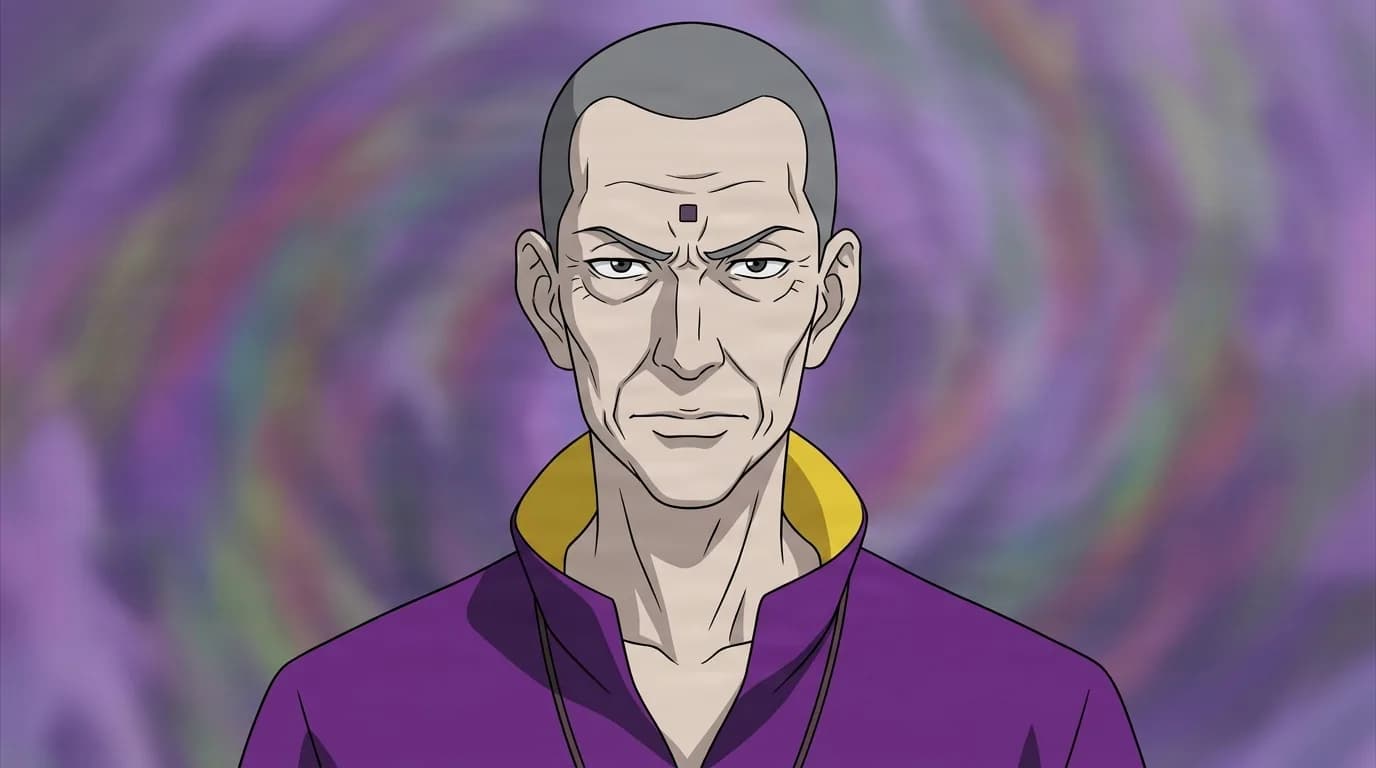
CharacterDoctor Londes is a fabricated public face, a phony neuroscientist beamed onto screens and advertisements to front the Scratch movement in Cowboy Bebop. Behind the aged figurehead hides a manipulator selling the fantasy of digital immortality to the desperate.
Appearance
Audiences only ever meet Londes as a broadcast image, an elderly man delivered through commercials, television feeds, and the Brain Dream software. Listed at ninety-five years old, slight and roughly five foot seven, the figure is engineered to project the calm authority of a scientist who has lived a very long life.

Personality
The persona runs on false credibility, posing as a kindly researcher who has cracked the puzzle of eternal life online. Every message he delivers steers believers toward recruiting fresh converts, making the whole identity a study in manufactured charisma built to grow a following. Fittingly, the character reads as the mirror image of Wen, since here a boy hides inside the mask of an old man rather than the reverse.
Related Reading
See all
Naruto vs Luffy: Does the Fight Change if Luffy Tickles Hinata?
Naruto vs Luffy with the twist nobody asked for: Luffy tickled Hinata on date night, and she kind of liked it. We break down the whole fight and commit to a winner....
Namek Has No Women, and Piccolo Pulls Anyway
There are no women on Namek. That isn't an oversight, it's the biology. Why we handed Piccolo the one thing his own species rules out, and why it had to be trap soul....

History
The invented backstory claims a researcher who, around 2021, abandoned conventional science to chase the notion of moving human minds onto the network, then vanished. He supposedly reemerged in 2069 to launch Scratch and served as its living proof that the process worked, guiding followers to bring in more members. In truth the entire figure belonged to Rosny Spanngen, who wore the projected image the way he would his own body. A thirty-eight million Woolong bounty from the ISSP, posted in 2071, drew the Bebop crew in. Faye slipped inside the group only to be knocked unconscious, and Spike later reached the hideout to speak with the on-screen Londes while Jet and Edward found Spanngen's real body and shut the program down.
Frequently Asked Questions
Who is Doctor Londes in Cowboy Bebop?
Doctor Londes is a fabricated public persona in Cowboy Bebop, a phony elderly neuroscientist broadcast on screens and advertisements to front the Scratch movement's promise of digital immortality.
Who is really behind Doctor Londes?
The Doctor Londes persona actually belongs to Rosny Spanngen, who wears the projected elderly image the way he would his own body while running the Scratch movement.
What is the Scratch movement in Cowboy Bebop?
The Scratch movement is a following built around Doctor Londes's claim of moving human minds onto the network to achieve eternal life, using the Brain Dream software to recruit believers.
What bounty is placed on Doctor Londes?
The ISSP posts a 38 million Woolong bounty on Doctor Londes in 2071, which draws the Bebop crew into investigating the Scratch movement.
How does the Bebop crew take down Doctor Londes?
Faye Valentine infiltrates the Scratch movement but is knocked unconscious, while Spike Spiegel confronts the on-screen Londes and Jet Black and Edward locate Rosny Spanngen's real body to shut the operation down.
Sources & Information
Looking for more on Doctor Londes? The Cowboy Bebop Wiki on Fandom has a dedicated page with community notes.
View on FandomThis content is original writing by Daddy Jim Headquarters based on the Cowboy Bebop anime series, manga, and official materials. Cowboy Bebop was created by Hajime Yatate, published by Sunrise, and animated by Sunrise. All rights to Cowboy Bebop and its characters belong to their respective owners. Episode and chapter references are cited where applicable.
Rights holders
All rights belong to their respective owners.
Character and scene imagery on this site is original artwork by Daddy Jim Headquarters, not screenshots or licensed imagery. Official cover art is used on three types of pages for editorial commentary:
- Movie pages: theatrical posters and key visuals, credited to Sunrise and Sunrise.
- Game pages: official box art, credited to the game's respective publishers.
- Manga chapter pages: volume covers, credited to Sunrise and Hajime Yatate.
Official resources:
Help Us Keep This Wiki Accurate
Daddy Jim Headquarters maintains this encyclopedia. If you spot an error, a translation issue, or something that doesn't look right, let us know.