Vertical Maneuvering Equipment
ItemSteel wire, pressurized gas, and paired blades give humanity its only real answer to the Titans. Strapped into a full-body harness, a soldier wearing vertical maneuvering equipment can launch grappling hooks, swing between rooftops and trees, and strike the nape that no ground-bound fighter could ever reach.
Overview
Vertical maneuvering equipment exists to move human combat off the ground and into open air, where a Titan's size stops being an absolute advantage. A harness wraps nearly the entire body below the neck, anchoring the wire spools, gas cylinders, and blade housings that make aerial movement possible. Core components include hand-held operating grips, piston-driven grapple hooks, a gas-powered reel mechanism, and wire propellers that accept plug-in blades.
The gas that drives the whole apparatus comes from Iceburst stone, a resource created by Karl Fritz, the 145th King, and found nowhere but Paradis Island. It is stored in canisters made of iron bamboo. Because raw talent alone cannot compensate for the rig's demands, mastering it takes real physical strength and relentless practice; even gifted soldiers hone their form constantly.

Function
At its most basic, a user fires a hook into a surface and opens the gas valve, reeling toward the anchor point before releasing and carrying momentum forward. In practice, soldiers rarely travel in straight lines. They swing in arcs around targets, weave between buildings and Titans, and chain anchor points together in slalom patterns. The gas output alone is strong enough to arrest a fall with no hook attached, and the hooks themselves punch straight into Titan flesh. A practiced user can match or exceed a Titan's speed, though open plains blunt the gear's value because anchor points grow scarce. Skilled operators like Jean Kirstein push further, redirecting mid-reel to change course while still being pulled.
Mechanically, the wire spool sits against the lower back and houses two axles that rotate independently. Each hand grip contains a trigger for hook launch, a lateral aiming switch, and a brake, and its top socket accepts a blade, letting the grip double as a sword handle; the internal workings are a black box maintained in secret by the technical division. Compressed gas from the cylinders blows across a fan to generate thrust, with pressure regulation controlling output. The blades are forged from ultrahard steel, flexible yet strong enough to carve Titan flesh, and can only be produced in the blast furnaces of the factory cities. Spares ride in boxes at the thighs; four years after the battle for Shiganshina, both blades and containers were slimmed down, remounted parallel to the thigh, and left open-topped for a diagonal draw.
Training is brutal by design. Recruits face an aptitude test almost immediately, and anyone who cannot hold themselves upright in the harness is washed out. Leg strength, spatial awareness, and the composure to keep thinking mid-panic are the qualities that matter most. Full certification takes three years, and the process claims lives; plenty of trainees quit or are expelled before graduating.


Notable Users
All three military branches issue the gear: the Survey Corps, the Military Police Brigade, and the Garrison. A variant built for killing humans rather than Titans, anti-personnel vertical maneuvering equipment, first appears in the hands of the Anti-Personnel Control Squad during its clashes with the Survey Corps. Once the scale of the Marleyan threat becomes clear, that human-combat design is adopted for general use while the classic Titan-killing rig stays with specialists. During the raid on Liberio, soldiers wear both systems at once, pairing long-range fire with close-quarters cutting power.
The standard body and harness also support Thunder Spears, explosive rods that swap in for blades to crack armored targets such as the Armored Titan. Though the hooks are meant for terrain, they kill people just as readily: Levi drives his into a member of the anti-personnel squad, and Mikasa fatally wounds Floch Forster the same way. The gear's main body was visually redesigned from Chapter 101 onward to match the anime version, with the older model still appearing on Keith Shadis and in the equipment Zeke took from Mike, implying the newer look reflects improved technology.
Related Reading
See all
Naruto vs Luffy: Does the Fight Change if Luffy Tickles Hinata?
Naruto vs Luffy with the twist nobody asked for: Luffy tickled Hinata on date night, and she kind of liked it. We break down the whole fight and commit to a winner....
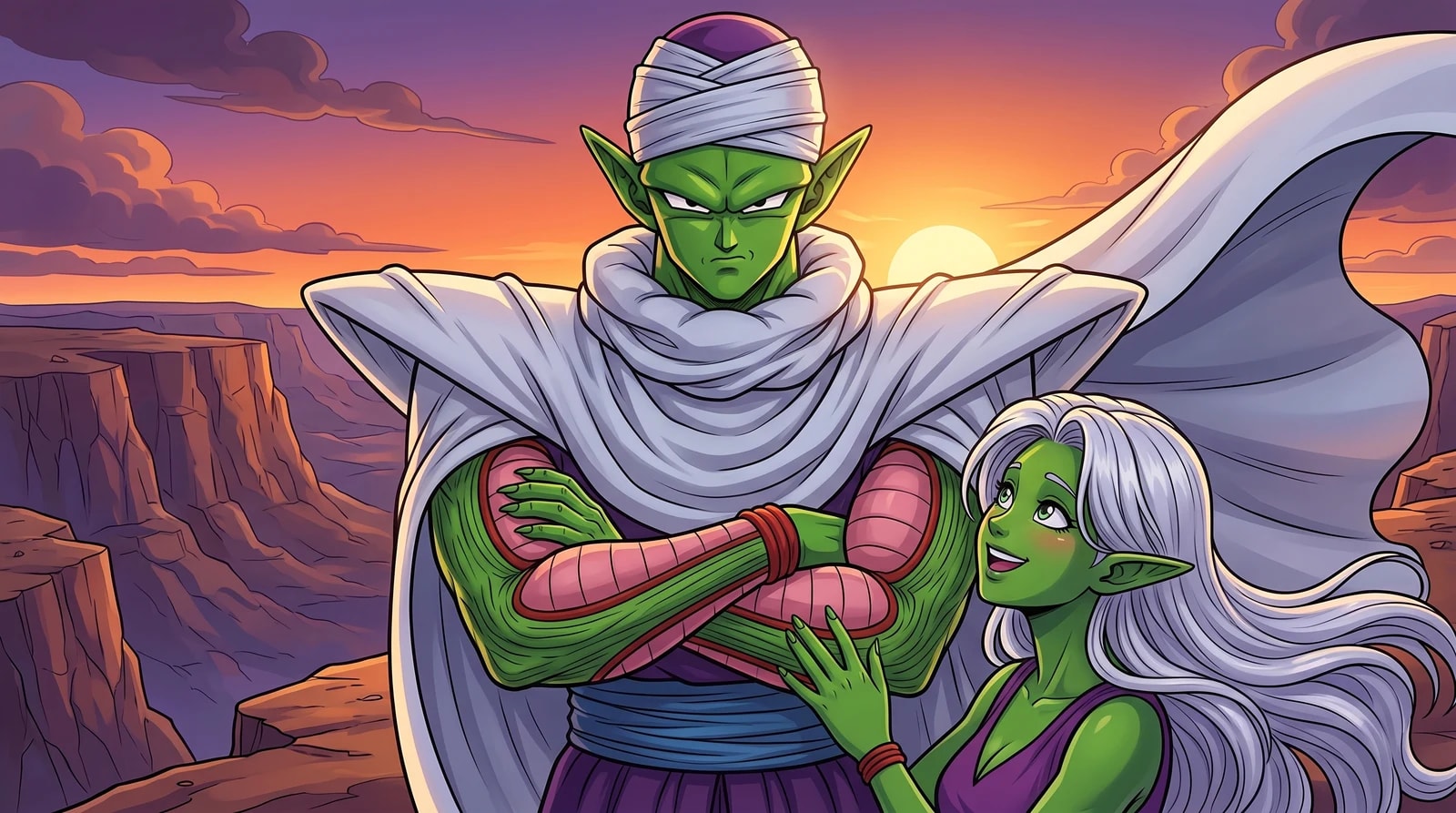
Piccolo Gets the Namek Hoes: Namek Has No Women, and He Pulls Anyway
There are no women on Namek. That isn't an oversight, it's the biology. Why we handed Piccolo the one thing his own species rules out, and why it had to be trap soul....


Frequently Asked Questions
What is the vertical maneuvering equipment in Attack on Titan?
Vertical maneuvering equipment is a full-body harness gear that anchors wire spools, gas cylinders, and blade housings, letting a soldier launch grappling hooks and swing through open air to reach a Titan's nape.
What powers vertical maneuvering equipment?
Vertical maneuvering equipment runs on gas from Iceburst stone, a resource created by Karl Fritz, the 145th King, found only on Paradis Island and stored in canisters made of iron bamboo.
How hard is vertical maneuvering equipment to master?
Training on vertical maneuvering equipment is brutal by design: recruits face an aptitude test almost immediately, anyone who cannot hold themselves upright in the harness washes out, and full certification takes three years, a process that claims lives.
What is vertical maneuvering?
Vertical maneuvering is the technique of firing a hook into a surface and opening the gas valve to reel toward the anchor point, letting a soldier swing in arcs, weave between buildings and Titans, and chain anchor points together to match or exceed a Titan's speed.
Which military branches use vertical maneuvering equipment?
All three military branches issue vertical maneuvering equipment: the Survey Corps, the Military Police Brigade, and the Garrison, alongside a human-combat variant first used by the Anti-Personnel Control Squad.
Sources & Information
Looking for more on Vertical Maneuvering Equipment? The Dragon Ball Wiki on Fandom has a dedicated page with community notes.
View on FandomThis content is original writing by Daddy Jim Headquarters based on the Dragon Ball anime series, manga, and official materials. Episode and chapter references are cited where applicable.
Character and scene imagery on this site is original artwork by Daddy Jim Headquarters, not screenshots or licensed imagery. Official cover art is used on three types of pages for editorial commentary:
- Movie pages: theatrical posters and key visuals, credited to Toei Animation and Shueisha.
- Game pages: official box art, credited to Bandai Namco, Atari, and other publishers.
- Manga chapter pages: Jump Comics volume covers, credited to Shueisha and Akira Toriyama.
Official resources:
Help Us Keep This Wiki Accurate
Daddy Jim Headquarters maintains this encyclopedia. If you spot an error, a translation issue, or something that doesn't look right, let us know.