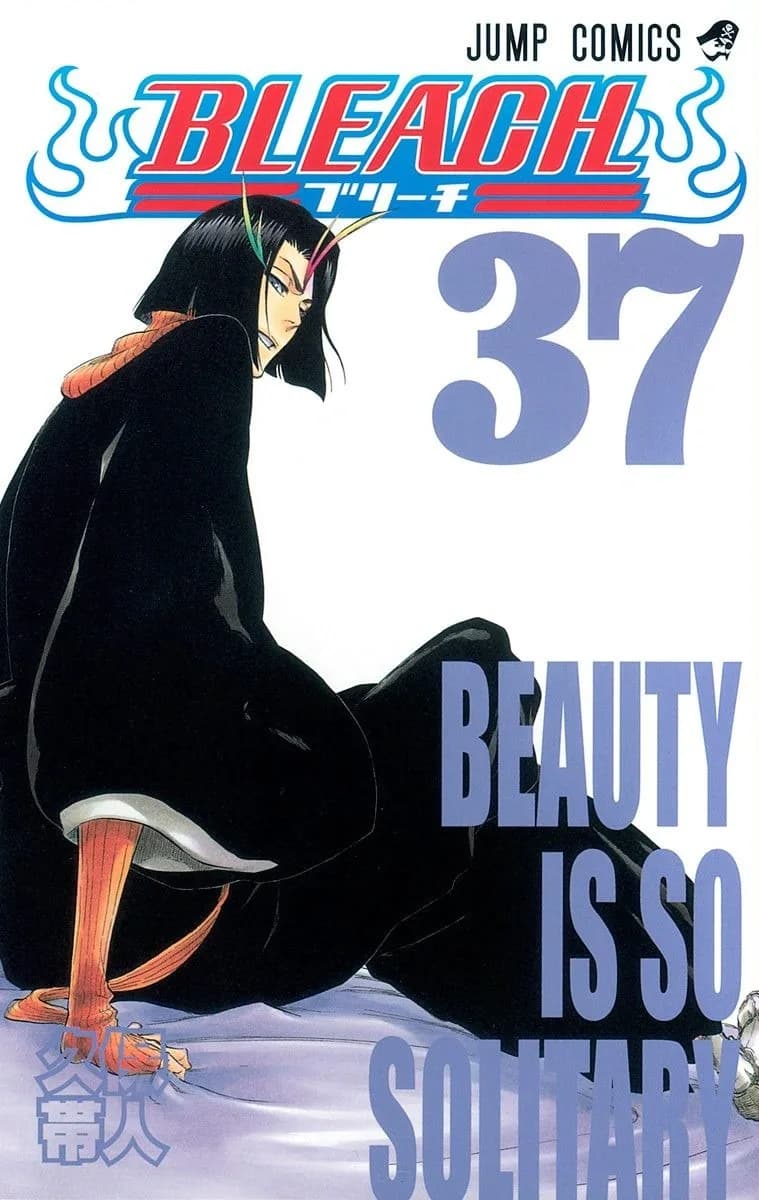
The finale of the Turn Back the Pendulum flashback, this chapter shows Kisuke Urahara framed for Aizen's Hollowfication experiments, condemned by Central 46, and rescued by Yoruichi, setting up the Visored's century-long exile to the living world.
Main Characters (5)
Summary
Urahara's attempt to undo Aizen's tampering with the Hōgyoku falls short, and he apologizes to Tessai. Stepping outside for air, he is seized by guards bearing a Central 46 warrant. Hauled before the hidden council, Urahara is barred from asking questions and accused of running the Hollowfication experiments himself; his insistence that Aizen is the true culprit is dismissed, since scores of guards and a captain vouch for the lieutenant. With evidence planted in the Twelfth Division lab, the council sentences Tessai to underground imprisonment for forbidden arts and orders Urahara stripped of rank and banished, while condemning Kensei's group to be handled as Hollows. Before the ruling can stand, a masked Yoruichi crashes in, shatters their bonds, and spirits everyone beneath Sōkyoku Hill along with the eight afflicted Shinigami and new Gigai prototypes. Urahara resolves to hide in the living world and slowly seek a cure. In the present, Hirako remarks that the Visored owe a debt to both Urahara and Aizen as they march out with their swords.

Key Events
The Hōgyoku cannot fully reverse the Hollowfication. Central 46 convicts Urahara and Tessai on Aizen's fabricated evidence. Yoruichi breaks the pair out and evacuates them with the eight victims. Urahara plans a hidden exile in the living world. In the present day, the Visored leave their hideout for battle.
Related Reading
See all
The Bleach Female Characters Nobody Can Agree On, Settled
Five Bleach female characters, ranked and settled. Yoruichi sits at number five, the spot nobody expects, and our number one is an Arrancar with a soft heart....
Naruto vs Luffy: Does the Fight Change if Luffy Tickles Hinata?
Naruto vs Luffy with the twist nobody asked for: Luffy tickled Hinata on date night, and she kind of liked it. We break down the whole fight and commit to a winner....
Notes
The chapter caps the Turn Back the Pendulum sequence that opens Volume 37 (BEAUTY IS SO SOLITARY) and explains the Visored's banishment 110 years before the main story. Episode 212 adapts it. Key figures include Urahara, Tessai, Yoruichi, Hirako, and the Hollowfied Shinigami who become the Visored.
Frequently Asked Questions
What chapter is Turn Back the Pendulum in Bleach?
Let Stop the Pendulum is the finale of the Turn Back the Pendulum flashback, a sequence printed at the front of Volume 37, BEAUTY IS SO SOLITARY, that explains the Visored's banishment 110 years before the main story.
Is the Turn Back the Pendulum arc filler?
No. Turn Back the Pendulum is a canon manga flashback rather than filler; Let Stop the Pendulum caps the sequence in Volume 37 and explains why the Visored were exiled to the living world.
Why is Urahara banished in Let Stop the Pendulum?
In Let Stop the Pendulum, Urahara is hauled before Central 46 and accused of running the Hollowfication experiments himself; with evidence planted in the Twelfth Division lab and a captain and scores of guards vouching for Aizen, the council strips Urahara of rank and banishes him.
How do Urahara and Tessai escape Central 46's sentence?
Before the ruling can stand, a masked Yoruichi crashes in, shatters their bonds, and spirits Urahara, Tessai, and the eight Hollowfied Shinigami beneath Sokyoku Hill along with new Gigai prototypes.
What episode adapts Let Stop the Pendulum?
Episode 212, Rescue Hirako! Aizen vs. Urahara, adapts this chapter, which caps the Turn Back the Pendulum flashback and sets up the Visored's century-long exile.
Sources & Information
Looking for more on Let Stop the Pendulum? The Bleach Wiki on Fandom has a dedicated page with community notes.
View on FandomThis content is original writing by Daddy Jim Headquarters based on the Bleach anime series, manga, and official materials. Episode and chapter references are cited where applicable.
Rights holders
- Created byTite Kubo
- Published byShueisha
- Animated byStudio Pierrot
All rights belong to their respective owners.
Character and scene imagery on this site is original artwork by Daddy Jim Headquarters, not screenshots or licensed imagery. Official cover art is used on three types of pages for editorial commentary:
- Movie pages: theatrical posters and key visuals, credited to Studio Pierrot and the production committee.
- Game pages: official box art for the Bleach console and mobile games, credited to Bandai Namco and other publishers.
- Manga chapter pages: Jump Comics volume covers, credited to Shueisha and Tite Kubo.
Official resources:
Help Us Keep This Wiki Accurate
Daddy Jim Headquarters maintains this encyclopedia. If you spot an error, a translation issue, or something that doesn't look right, let us know.