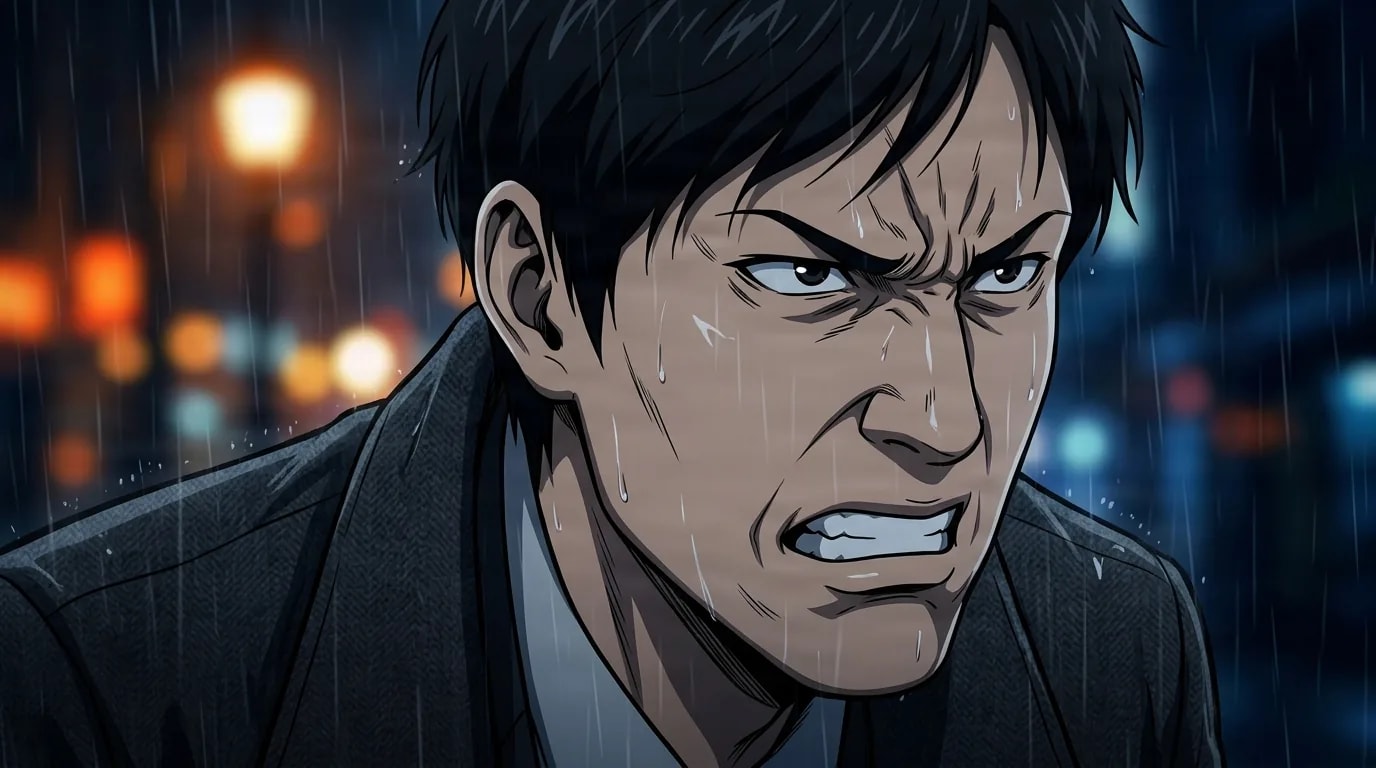
Hideki Ide
CharacterHideki Ide is a detective of the Japanese Task Force hunting Kira. Quick-tempered and deeply skeptical of L, he quits the investigation early on, only to return through his own off-the-books detective work and his loyalty to his closest friend on the force, Shuichi Aizawa.
Appearance
Ide wears his black hair in a short crop above small, light-colored eyes, and notably has no eyebrows. His usual outfit is a green blazer over a white shirt with a red tie.

Personality
Ide is short-tempered and has little tolerance for foolishness, reserving particular irritation for the antics of Touta Matsuda. His defining bond is with Shuichi Aizawa; the two sustain each other after walking away from the investigation and stand together when it counts. Wary of L from the outset, he refuses to commit to the team while the detective leads it and only signs on fully once Light Yagami inherits the role. Later, as suspicion grows that Light himself may be Kira, Ide quietly backs Aizawa and shields him.
History
Ide is part of the original Kira Investigation Team, a large body that thins to just six members once it becomes clear Kira will kill the police pursuing him as readily as criminals. When L insists on meeting the remaining detectives in person, Ide's distrust wins out and he turns his back on his colleagues, walking away. He is soon joined in his exile by Aizawa, who also breaks with L. The two prove they never truly quit: when Kyosuke Higuchi is unmasked as the Yotsuba Kira and the police are warned to keep their distance because of his Shinigami Eyes, Ide and Aizawa defy orders, leading a column of squad cars with tinted windows and face-concealing helmets to box Higuchi in and force his surrender, all enabled by an investigation they had been running on their own.
After L dies and Light assumes his identity, Ide rejoins the team in full as the Near and Mello arc opens with the kidnappings of Kanichi Takimura and Sayu Yagami. He is present in the Yellow Box warehouse when Near finally exposes Light as Kira. A year on, talking it over with Matsuda, Ide remains firm that bringing Kira down was right regardless of the means, since otherwise everyone who opposed him would eventually have been killed. He also features in the stage musical as a task force member who chooses to resign, and he holds the distinction of being the only member of the group absent from the live-action films.
Related Reading
See all
Super Saiyan Pubes: The Song About Where Super Saiyan Hair Actually Goes
The transformation everyone knows, the follow-up question nobody would touch. Why we made a smooth R&B track about the golden glow Dragon Ball never talks about....

The Bleach Female Characters Nobody Can Agree On, Settled
Five Bleach female characters, ranked and settled. Yoruichi sits at number five, the spot nobody expects, and our number one is an Arrancar with a soft heart....
Frequently Asked Questions
Who is Ide in Death Note?
Hideki Ide is a detective of the Japanese Task Force hunting Kira. Quick-tempered and deeply skeptical of L, he quits the investigation early on, only to return through his own off-the-books detective work and his loyalty to Shuichi Aizawa.
Why does Hideki Ide quit the Kira investigation?
Hideki Ide's distrust of L wins out: he refuses to commit to the team while the detective leads it, and when L insists on meeting the remaining detectives in person, Ide turns his back on his colleagues and walks away.
Who is Hideki Ide's closest friend in Death Note?
Hideki Ide's defining bond is with Shuichi Aizawa; the two sustain each other after walking away from the investigation and stand together when it counts.
How do Ide and Aizawa help capture Higuchi?
Defying orders, Hideki Ide and Shuichi Aizawa lead a column of squad cars with tinted windows and face-concealing helmets to box in Kyosuke Higuchi and force his surrender, all enabled by an investigation they had been running on their own.
Does Hideki Ide appear in the live-action Death Note films?
No. Hideki Ide holds the distinction of being the only member of the Task Force absent from the live-action films.
Sources & Information
Looking for more on Hideki Ide? The Death Note Wiki on Fandom has a dedicated page with community notes.
View on FandomThis content is original writing by Daddy Jim Headquarters based on the Death Note anime series, manga, and official materials. Episode and chapter references are cited where applicable.
Character and scene imagery on this site is original artwork by Daddy Jim Headquarters, not screenshots or licensed imagery. Official cover art is used on three types of pages for editorial commentary:
- Movie pages: theatrical posters and key visuals, credited to Nippon Television and Warner Bros. Japan.
- Game pages: official box art, credited to Konami and other publishers.
- Manga chapter pages: Jump Comics volume covers, credited to Shueisha, Tsugumi Ohba, and Takeshi Obata.
Official resources:
Help Us Keep This Wiki Accurate
Daddy Jim Headquarters maintains this encyclopedia. If you spot an error, a translation issue, or something that doesn't look right, let us know.