Sabito
CharacterSabito is a former student of Sakonji Urokodaki and a close friend of Giyu Tomioka. Slain by the Hand Demon during Final Selection, his lingering spirit returns to Mount Sagiri to mentor Tanjiro Kamado and prepare him for the trial ahead.
Appearance
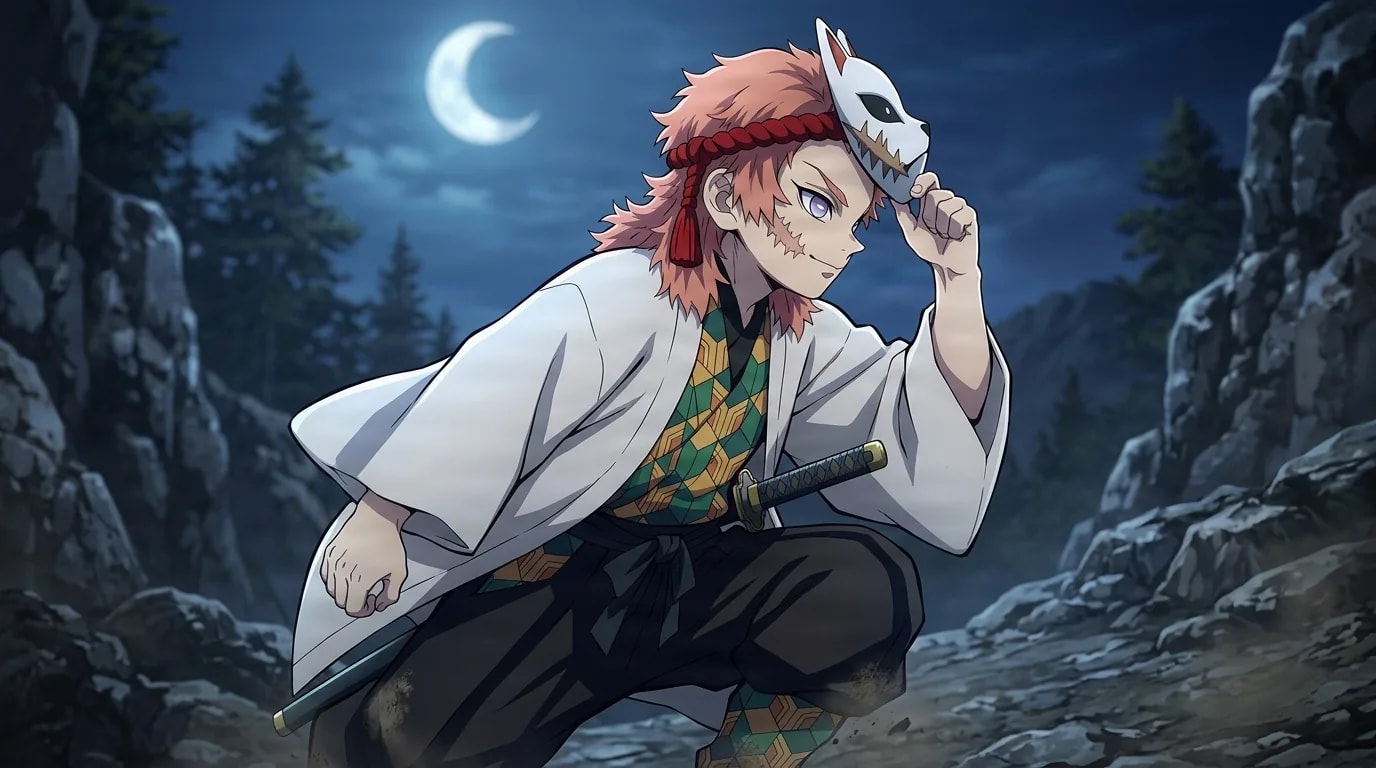
Sabito is a fair-skinned teenager with a prominent scar running from the corner of his mouth to his ear and gentle, cat-like eyes of grayish lavender. His thick, spiked peach-colored hair falls messily, the longest strands reaching his shoulders, with short bangs over the left side of his forehead.
He wears a green kimono patterned with a hexagonal design, tied at the waist over tattsuke-hakama trousers and topped with a plain white haori, plus leg guards, tabi socks, and zori. His fox-shaped warding mask, carved by his master, bears a scar matching his own face.
Personality
Sabito is a solemn boy convinced that his conduct should always befit a man. As Tanjiro's mentor he is unsparing, quick to call out flaws and refusing to grant him the title of a man until he earns it. He also takes a grim view of certain fights, doubting that any amount of effort could topple the Hand Demon.
Even so, he places his hopes in Tanjiro and feels genuine joy when his pupil surpasses him as Sakonji's strongest student. By Giyu's account, in life Sabito was kind and driven by a strong sense of justice, and his selflessness is shown when he saves his entire Final Selection group at the cost of his own life.
History
Orphaned, Sabito was taken in by Sakonji on Mount Sagiri, where he met Giyu and trained beside him in Water Breathing until both were ready for Final Selection. When Giyu sank into self-pity and resigned himself to death, Sabito struck him and reminded him to honor the sister who died saving him, then offered his hand as a sign their friendship endured.
During Final Selection, Sabito cut down many demons and protected the other entrants, but his blade snapped against the Hand Demon's hardened neck and he was killed. Unable to rest, his spirit returns to Mount Sagiri, where he befriends the ghost of Makomo. When Sakonji later trains Tanjiro, Sabito appears to spar with the boy relentlessly until, six months on, Tanjiro finally lands a blow that splits his mask. Satisfied his successor will avenge the fallen, Sabito's soul departs in peace.
Related Reading
See all
Demon Slayer Infinity Castle Is the Biggest Anime Movie Ever but It Still Lost in Japan
Demon Slayer: Infinity Castle earned $778 million globally and nearly 40 billion yen in Japan, but it still couldn't top Mugen Train's domestic record. Here's why that barely matters....
Super Saiyan Pubes: The Song About Where Super Saiyan Hair Actually Goes
The transformation everyone knows, the follow-up question nobody would touch. Why we made a smooth R&B track about the golden glow Dragon Ball never talks about....
Frequently Asked Questions
Who is Sabito in Demon Slayer?
Sabito is a former student of Sakonji Urokodaki and a close friend of Giyu Tomioka in Demon Slayer. After being slain by the Hand Demon during Final Selection, his spirit returns to Mount Sagiri to mentor Tanjiro Kamado.
What happened to Sabito and Makomo in Demon Slayer?
Sabito and Makomo were both students of Sakonji Urokodaki who died during Final Selection and lingered as spirits on Mount Sagiri, where they became friends. Sabito spars with Tanjiro to prepare him, and his soul departs in peace once Tanjiro splits his mask.
How did Sabito die in Demon Slayer?
Sabito died during Final Selection when his blade snapped against the Hand Demon's hardened neck. He had cut down many demons and protected the other entrants before he was killed at age thirteen.
What is Sabito's mask in Demon Slayer?
Sabito's mask is a fox-shaped warding mask carved by his master Sakonji Urokodaki. It bears a scar matching the one on Sabito's own face, and Tanjiro eventually splits it during their training.
Is Sabito a ghost in Demon Slayer?
Yes, Sabito appears as a ghost in Demon Slayer. Unable to rest after his death, his spirit returns to Mount Sagiri, befriends the ghost of Makomo, and trains Tanjiro until the boy is ready.
Sources & Information
Looking for more on Sabito? The Demon Slayer Wiki on Fandom has a dedicated page with community notes.
View on FandomThis content is original writing by Daddy Jim Headquarters based on the Demon Slayer anime series, manga, and official materials. Episode and chapter references are cited where applicable.
Character and scene imagery on this site is original artwork by Daddy Jim Headquarters, not screenshots or licensed imagery. Official cover art is used on three types of pages for editorial commentary:
- Movie pages: theatrical posters and key visuals, credited to ufotable and Aniplex.
- Game pages: official box art, credited to Sega, Aniplex, and other publishers.
- Manga chapter pages: Jump Comics volume covers, credited to Shueisha and Koyoharu Gotouge.
Official resources:
Help Us Keep This Wiki Accurate
Daddy Jim Headquarters maintains this encyclopedia. If you spot an error, a translation issue, or something that doesn't look right, let us know.