Shinobi Union
CharacterThe Shinobi Union is the peacetime successor to the Allied Shinobi Forces, an alliance that welcomes any hidden village willing to take part. Guided by the five Kage, it distributes missions across all its members to keep the postwar world free of fresh conflict.
Overview
Where the wartime Allied Shinobi Forces had drawn only on the Five Great Shinobi Countries and the samurai of the Land of Iron, the Shinobi Union throws its doors open to any hidden village that wishes to join. The five Kage steer the body, which takes commissions from clients and staffs each job with the members from across its nations best suited to the task. That arrangement hands every village an equal shot at work, a design meant to remove the grievances that once sparked war.

Role
Under the Union, the villages and their countries rebuilt swiftly from the Fourth Shinobi World War. To keep the peace, each member posts a representative inside every other village so shared concerns can be aired and common interests pursued, and when the Land of Silence loomed as a possible menace, the Union's chief organiser Shikamaru was handed the job of heading off another war. The alliance's rules bar its members from taking up arms against one another, which is why the crisis over the Land of Flowers grew so dangerous. When Danjō, the Land of Earth's daimyō, ordered Iwagakure to seize that territory, a land shielded by Kumogakure, the Fourth Tsuchikage looked for a way to quit the Union rather than be dragged into fighting the Cloud, and Kirigakure seemed likely to side with Iwa over a supply of vital minerals. The standoff nearly tore the Union apart, since ordinary wars between villages had always been far more common than the rare global threat that had first united everyone. Danjō himself dismissed the Union as an obstacle to the true nature of shinobi, whom he saw as born soldiers meant to fight endlessly. The alliance was salvaged only when the Seventh Hokage and the Land of Fire's daimyō, Ikkyū Madoka, presented Danjō with a solution at the Continental Summit that talked Iwa out of the invasion.
Notable Members
Each village sends a delegate of high standing and promising prospects, and these representatives convene monthly in the Land of Iron. By the events of Shikamaru Hiden they numbered ten, among them Shikamaru Nara of Konoha as head representative and chief organiser, Temari for Suna, Chōjūrō for Kiri, and Omoi for Kumo, with Iwagakure, the Land of Iron, and four further seats held by unnamed figures.
Related Reading
See all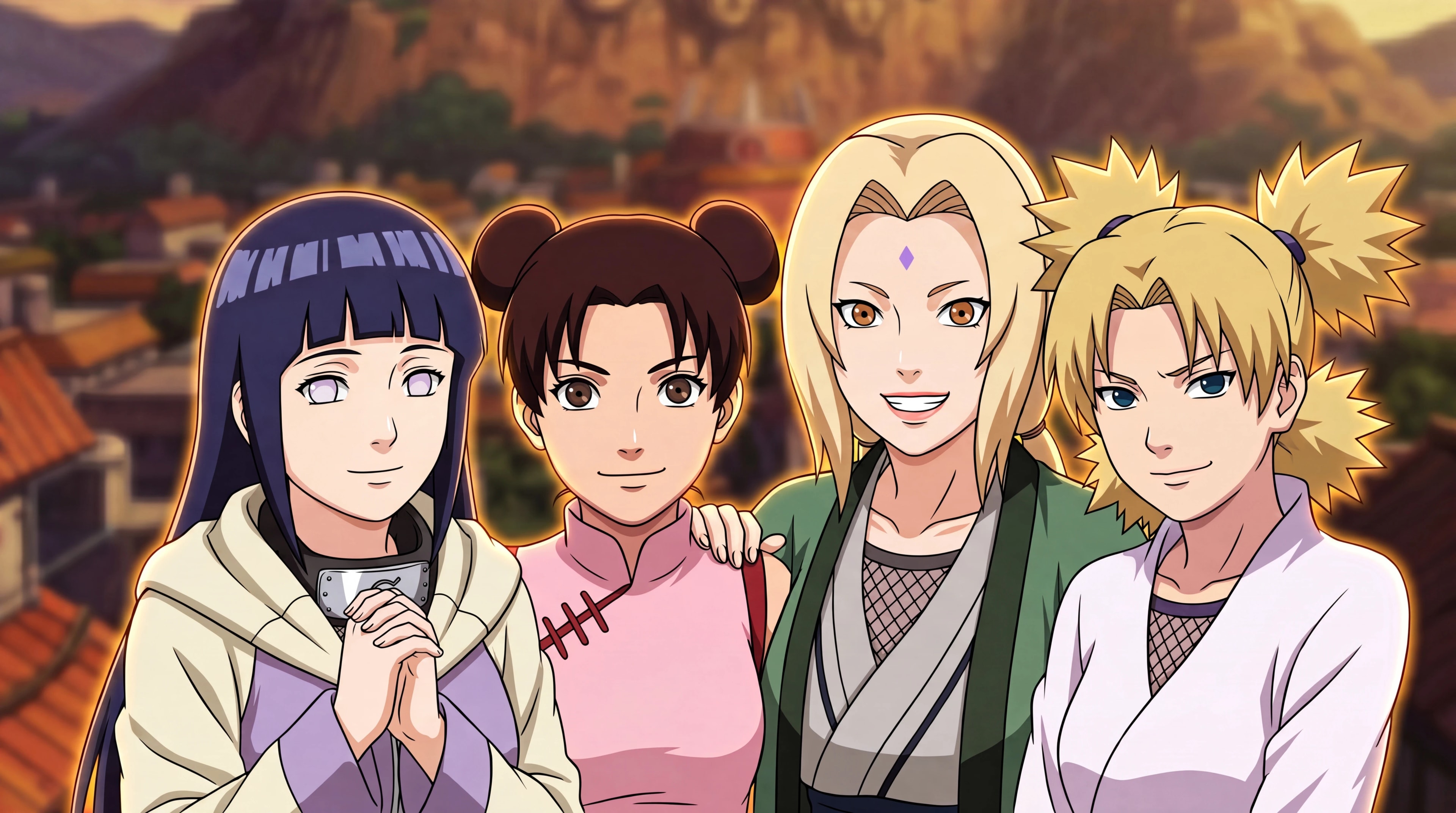
The Most Popular Women of Naruto
We ranked the six most popular women of Naruto from worst to first, and our number one is going to start a fight. The official poll got it wrong....
Super Saiyan Pubes: The Song About Where Super Saiyan Hair Actually Goes
The transformation everyone knows, the follow-up question nobody would touch. Why we made a smooth R&B track about the golden glow Dragon Ball never talks about....
Frequently Asked Questions
What is the Shinobi Union?
The Shinobi Union is the peacetime successor to the Allied Shinobi Forces, an alliance open to any hidden village willing to join, guided by the five Kage and used to distribute missions among its members.
What are the five shinobi nations?
The five great shinobi nations are Iwagakure, Kirigakure, Konohagakure, Kumogakure, and Sunagakure, all of which are affiliated with the Shinobi Union alongside the Land of Iron.
Who leads the Shinobi Union?
The Shinobi Union is guided by the five Kage, with Shikamaru Nara of Konoha serving as its chief organiser and head representative.
Why did Iwagakure consider leaving the Shinobi Union?
Iwagakure's Fourth Tsuchikage looked to withdraw from the Shinobi Union after the Land of Earth's daimyo ordered the Stone village to invade the Land of Flowers, a territory protected by Kumogakure, since Union rules forbid its members from fighting each other.
Where does the Shinobi Union hold its meetings?
Representatives of the Shinobi Union convene monthly in the Land of Iron to discuss matters concerning its member villages.
Sources & Information
Looking for more on Shinobi Union? The Naruto Wiki on Fandom has a dedicated page with community notes.
View on FandomThis content is original writing by Daddy Jim Headquarters based on the Naruto anime series, manga, and official materials. Episode and chapter references are cited where applicable.
Character and scene imagery on this site is original artwork by Daddy Jim Headquarters, not screenshots or licensed imagery. Official cover art is used on three types of pages for editorial commentary:
- Movie pages: theatrical posters and key visuals, credited to Studio Pierrot and Toho.
- Game pages: official box art for the Naruto: Ultimate Ninja Storm games, credited to Bandai Namco.
- Manga chapter pages: Jump Comics volume covers, credited to Shueisha and Masashi Kishimoto.
Official resources:
Help Us Keep This Wiki Accurate
Daddy Jim Headquarters maintains this encyclopedia. If you spot an error, a translation issue, or something that doesn't look right, let us know.