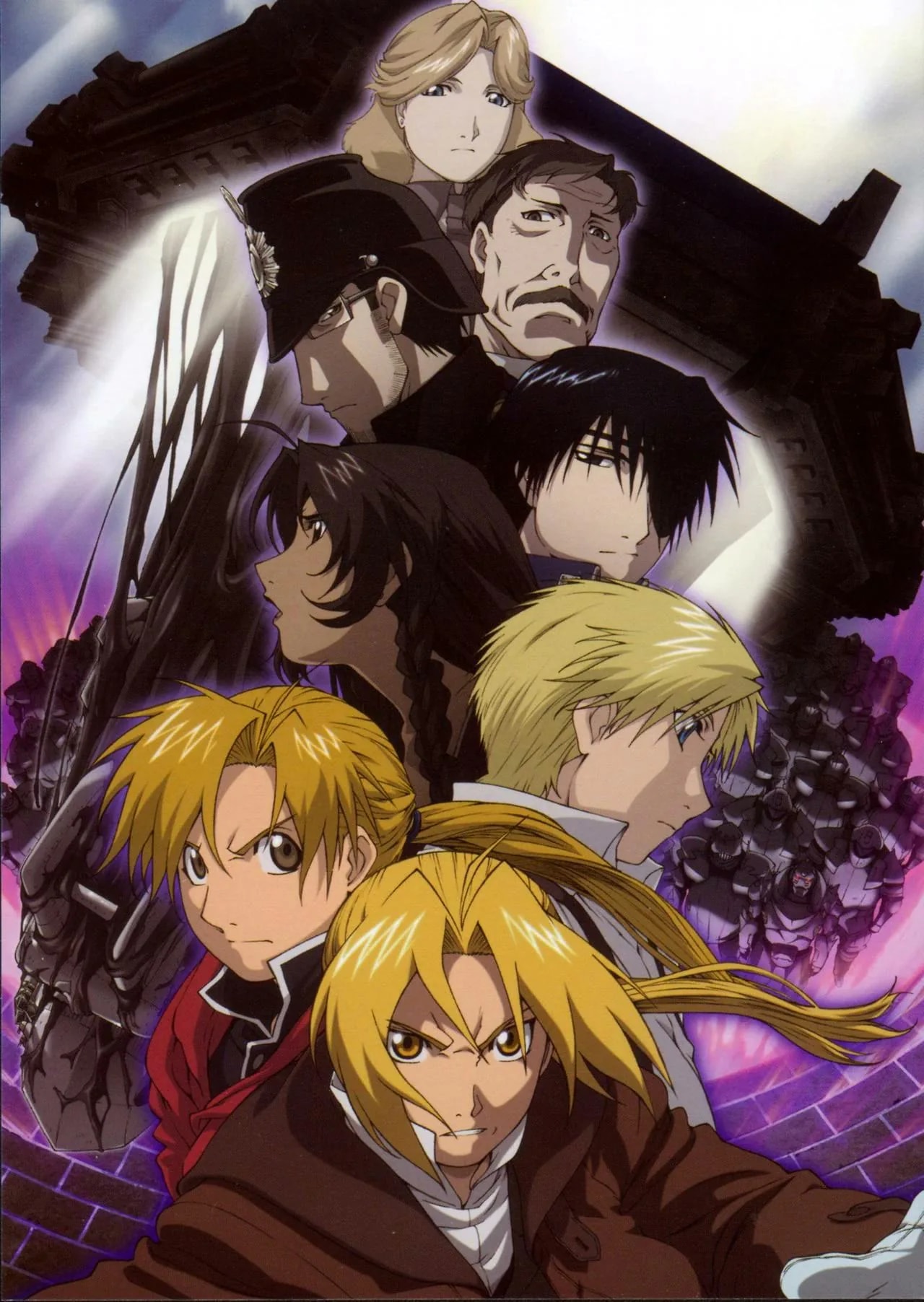
Fullmetal Alchemist the Movie: Conqueror of Shamballa
MovieFullmetal Alchemist the Movie: Conqueror of Shamballa is the first feature film in the franchise and the send-off to the 2003 anime. Set two years after the series, it splits its action between 1923 Germany and the world of Amestris as Edward Elric fights to close the Gate between them for good.
Overview
This picture serves as the full-length conclusion to the 2003 anime, a series that loosely reworked the manga's plot. Produced by Bones and distributed by Shochiku, it unfolds roughly two years past the show's finale, staging most of its events in 1923 Germany while also visiting Reole, Central City, and the Underground City. The film picks up the thread of Edward Elric being cast beyond the Gate into the real world.

Plot
A brief prologue set during the television run shows Edward and Alphonse dismantling the schemes of a rogue alchemist named Huskisson before the story leaps forward. The main tale finds Edward stranded past the Gate in Munich of 1923, working as a rocket engineer beside Alfons Heiderich, the real-world double of his brother. Back in Amestris, Alphonse searches for a way to pull Edward home. Ed rescues Noah, a Romani woman hunted for her mind-reading gift, while the pro-Nazi Thule Society, mistaking Amestris for the mythical paradise of Shamballa, tears open a doorway between the two worlds.
The society captures the Homunculus Envy, now shaped like a dragon, and uses his blood along with the brothers' father Hohenheim to power its gateway. Edward eventually breaches their headquarters, and a chain of accidents opens the passage that briefly lets Alphonse cross over for a reunion. In Amestris, the childhood friend Winry Rockbell learns that Izumi Curtis has died, and a battered Wrath gives himself up together with Gluttony to seal one end of the portal. Meanwhile Dietlinde Eckhart, who leads the Thule Society, launches an armored invasion fleet through the Gate, determined to conquer the land she believes lies beyond.
Hohenheim sacrifices himself to widen the passage, and Alfons launches Edward back toward Amestris in a rocket-driven aircraft before dying of his wounds. Reunited at last, the brothers join Roy Mustang and Alex Louis Armstrong to beat back Eckhart's warships over Central Command. Edward turns her own armored troops against her using soul fragments Alphonse had planted in their suits, then flies the flagship back through the Gate, where the surviving counterpart of Hughes shoots Eckhart dead. Choosing Earth as their new home, the brothers resolve to dismantle both ends of the portal so it can never reopen, and after Alfons' funeral they set off together to destroy a uranium bomb.


Reception
The feature runs about 105 minutes, reached Japanese screens on July 23, 2005, and opened in North America the following September. Its story receives a loose continuation in the Kids OVA, which imagines a hundred-year-old Edward who never returned from Earth, though whether that short counts as canon has never been confirmed. Funimation's North American rights lapsed in 2016, after which Aniplex of America took over English distribution, and the film can be streamed on Crunchyroll.
Much of the drama leans on real history, staging its events amid the unrest of Weimar Germany, the reparations that followed the Treaty of Versailles, and the earliest stirrings of the Nazi Party while it remained a fringe movement. The film even imagines this Germany as the first nation to hold nuclear arms. Smaller continuity notes surface throughout, including the detail that Hughes' double still lives on Earth despite the character's death in Amestris, and that both Envy and Wrath have already lost their special powers before the story begins.
Related Reading
See all
Naruto vs Luffy: Does the Fight Change if Luffy Tickles Hinata?
Naruto vs Luffy with the twist nobody asked for: Luffy tickled Hinata on date night, and she kind of liked it. We break down the whole fight and commit to a winner....
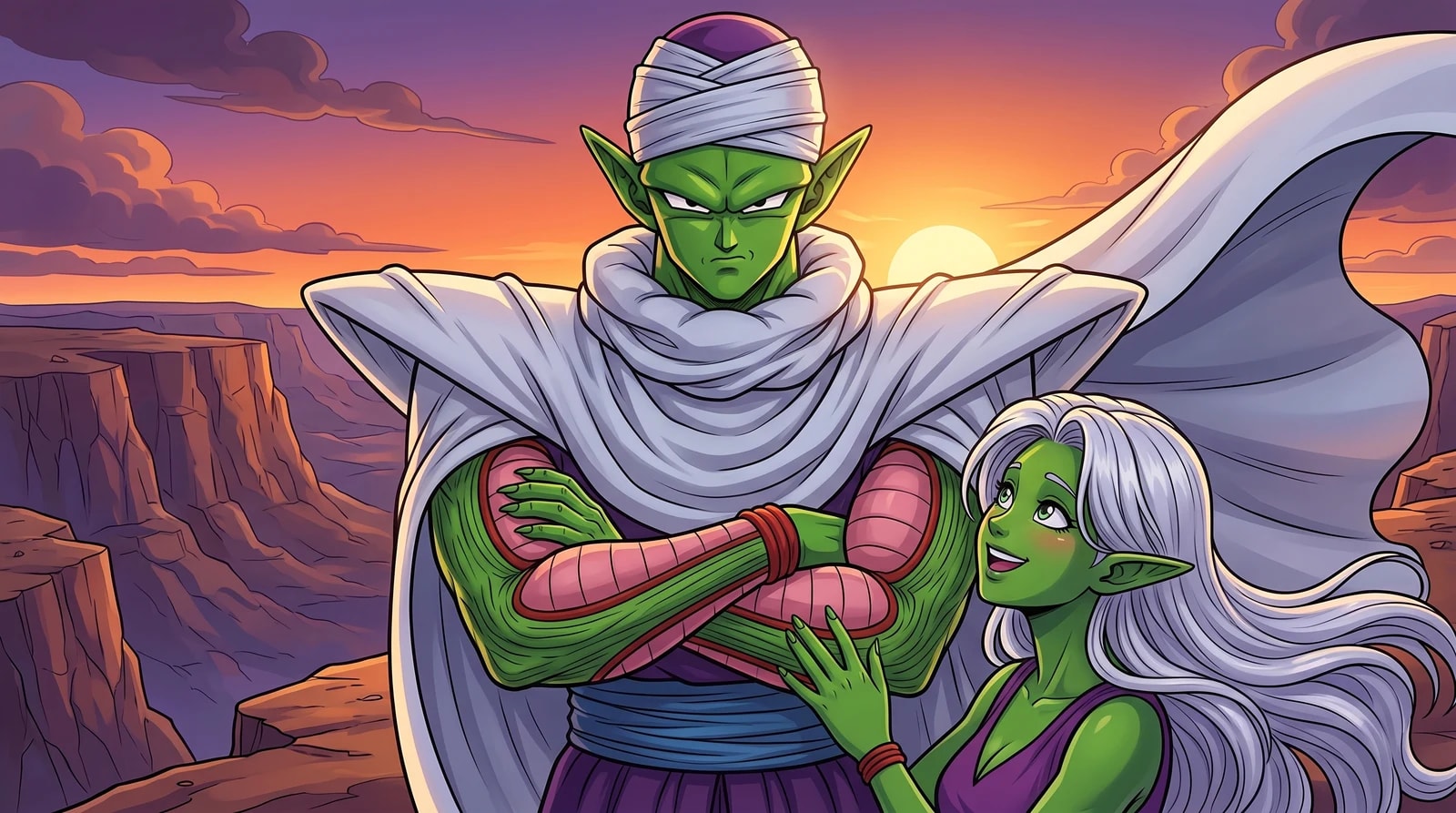
Piccolo Gets the Namek Hoes: Namek Has No Women, and He Pulls Anyway
There are no women on Namek. That isn't an oversight, it's the biology. Why we handed Piccolo the one thing his own species rules out, and why it had to be trap soul....

Frequently Asked Questions
Is Fullmetal Alchemist: Conqueror of Shamballa a sequel?
Yes, Conqueror of Shamballa serves as the full-length conclusion to the 2003 Fullmetal Alchemist anime, unfolding roughly two years after that series' finale.
Where can I watch the Fullmetal Alchemist movie?
Conqueror of Shamballa can be streamed on Crunchyroll. Aniplex of America now handles its English distribution after Funimation's North American rights lapsed in 2016.
Was there a Fullmetal Alchemist movie?
Yes, Conqueror of Shamballa is the first feature film in the Fullmetal Alchemist franchise, produced by Bones and released in Japan on July 23, 2005.
What is the plot of Conqueror of Shamballa?
Edward Elric is stranded beyond the Gate in 1923 Munich working as a rocket engineer, while Alphonse searches for a way to bring him home. The pro-Nazi Thule Society, mistaking Amestris for the mythical Shamballa, tears open a doorway between the two worlds and launches an invasion.
How does Conqueror of Shamballa end?
Edward and Alphonse reunite and join Roy Mustang and Alex Louis Armstrong to defeat Dietlinde Eckhart's invasion fleet. The brothers then choose Earth as their new home and resolve to destroy both ends of the Gate so it can never reopen.
Sources & Information
Looking for more on Fullmetal Alchemist the Movie: Conqueror of Shamballa? The Dragon Ball Wiki on Fandom has a dedicated page with community notes.
View on FandomThis content is original writing by Daddy Jim Headquarters based on the Dragon Ball anime series, manga, and official materials. Episode and chapter references are cited where applicable.
Character and scene imagery on this site is original artwork by Daddy Jim Headquarters, not screenshots or licensed imagery. Official cover art is used on three types of pages for editorial commentary:
- Movie pages: theatrical posters and key visuals, credited to Toei Animation and Shueisha.
- Game pages: official box art, credited to Bandai Namco, Atari, and other publishers.
- Manga chapter pages: Jump Comics volume covers, credited to Shueisha and Akira Toriyama.
Official resources:
Help Us Keep This Wiki Accurate
Daddy Jim Headquarters maintains this encyclopedia. If you spot an error, a translation issue, or something that doesn't look right, let us know.