Sherry Polnareff
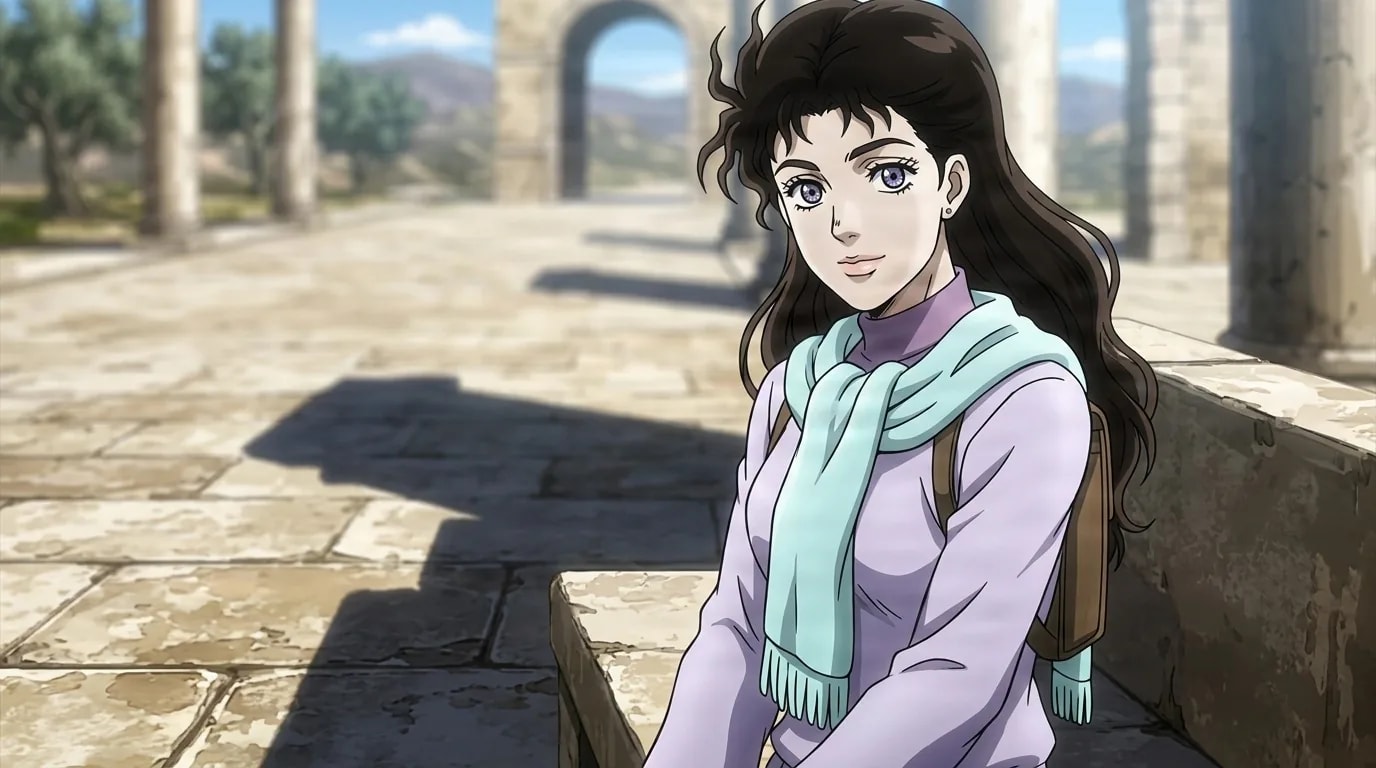
CharacterSherry Polnareff is a minor figure in Stardust Crusaders and the younger sister of Jean Pierre Polnareff. Her murder at the hands of J. Geil is what sets her brother on his long quest for revenge.
Appearance
Sherry is a slim, attractive young woman whose dark hair falls in long curls. Apart from eyes that resemble her brother's and a height a bit above average, she shares few traits with Jean Pierre Polnareff. The anime dresses her in a school uniform and hands her a frilly pink parasol. When Judgement later conjures a false version of her, the copy stares blankly and stands bare, and drawing near exposes a half-formed right side of the face with a glowing crimson lump lodged in the eye socket.

Personality
The tale offers only glimpses of who Sherry was. What comes through most clearly is a warm bond with her older brother, close enough that Jean Pierre keeps her photograph on him long after her death and lets her memory steer the direction of his life.
History
Sherry was still in her teens when her life was cut short. Walking home through a storm beside a friend, she was assaulted and killed by J. Geil, and the lone witness who lived through it was dismissed by the authorities. That failure of justice hardened her brother's resolve to hunt the murderer down himself, and years later Jean Pierre does exactly that, cornering and slaying J. Geil in combat.
Her memory surfaces one final time through the Stand Judgement, which grants Polnareff a wish and dangles the promise of bringing her back. What it produces instead is a clay double that mimics her look and voice, only to strike the moment he lowers his guard and steps close. The imitation is ultimately wrecked when Judgement hurls it toward Magician's Red to create a diversion.
Related Reading
See all
Naruto vs Luffy: Does the Fight Change if Luffy Tickles Hinata?
Naruto vs Luffy with the twist nobody asked for: Luffy tickled Hinata on date night, and she kind of liked it. We break down the whole fight and commit to a winner....
Piccolo Gets the Namek Hoes: Namek Has No Women, and He Pulls Anyway
There are no women on Namek. That isn't an oversight, it's the biology. Why we handed Piccolo the one thing his own species rules out, and why it had to be trap soul....

Frequently Asked Questions
Did Polnareff's sister get revived?
No, Sherry Polnareff is not truly revived. The Stand Judgement offers Jean Pierre Polnareff a wish to bring her back but instead produces a clay double that turns hostile once he lowers his guard.
Is Sherry alive in JoJo?
Sherry Polnareff is deceased. She was murdered by J. Geil while still a teenager, and her death is what sets her brother on his quest for revenge.
How did Sherry Polnareff die?
Sherry Polnareff was assaulted and killed by J. Geil while walking home through a storm with a friend, and the lone witness who survived was not believed by authorities.
What was Sherry Polnareff's relationship with her brother like?
Sherry Polnareff shared a warm bond with her older brother Jean Pierre, who kept her photograph on him long after her death and let her memory guide the course of his life.
Who created a fake version of Sherry Polnareff?
The Stand Judgement created a clay double of Sherry Polnareff that mimicked her look and voice, only to attack Jean Pierre Polnareff once he drew close, and the imitation was ultimately destroyed when Judgement hurled it at Magician's Red.
Sources & Information
Looking for more on Sherry Polnareff? The Dragon Ball Wiki on Fandom has a dedicated page with community notes.
View on FandomThis content is original writing by Daddy Jim Headquarters based on the Dragon Ball anime series, manga, and official materials. Episode and chapter references are cited where applicable.
Character and scene imagery on this site is original artwork by Daddy Jim Headquarters, not screenshots or licensed imagery. Official cover art is used on three types of pages for editorial commentary:
- Movie pages: theatrical posters and key visuals, credited to Toei Animation and Shueisha.
- Game pages: official box art, credited to Bandai Namco, Atari, and other publishers.
- Manga chapter pages: Jump Comics volume covers, credited to Shueisha and Akira Toriyama.
Official resources:
Help Us Keep This Wiki Accurate
Daddy Jim Headquarters maintains this encyclopedia. If you spot an error, a translation issue, or something that doesn't look right, let us know.