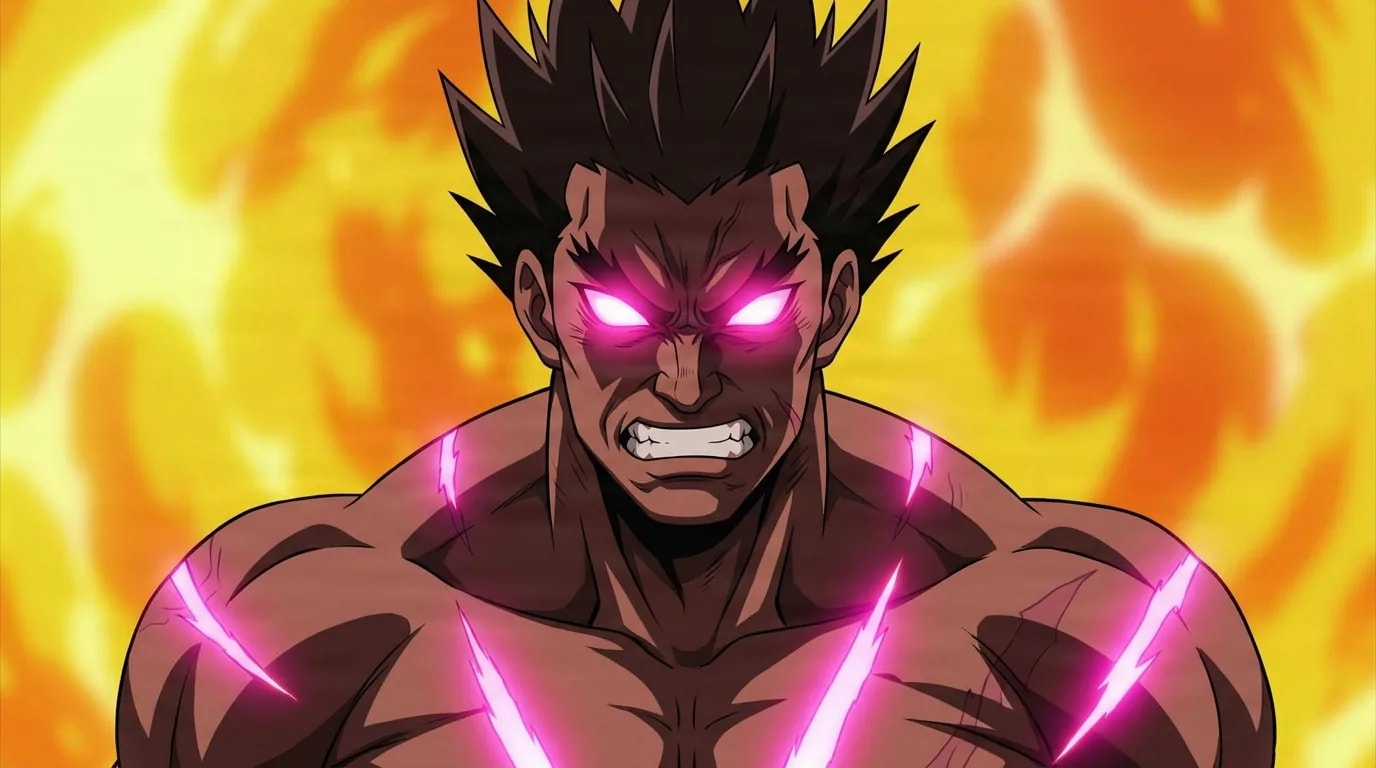
Instant Villains
CharacterInstant Villains is the label given to ordinary people whose Quirks are supercharged by the drug Trigger, turning them into rampaging monsters on the streets of Naruhata. They recur throughout My Hero Academia: Vigilantes as both a public menace and raw material for the Villain Factory's experiments.
Appearance
A dose of Trigger does not simply amplify a Quirk, it rewrites the person carrying it. Whoever takes the drug swells into a monstrous exaggeration of themselves, their power running far past anything they could produce unaided. The versions circulating in Naruhata are worse than the ordinary article, having been cut with stimulants by agents of the Villain Factory so that the Quirk hits harder and the user turns meaner.
Personality
Reason is the price of the power. Whatever restraint the user had erodes as the drug takes hold, and what follows is usually a blind rampage: street fixtures torn apart, bystanders put in danger, no discernible goal beyond destruction. Ending these outbreaks generally falls to the Pro Heroes or to the Naruhata Vigilantes. Not everyone who becomes one chose it. Some swallow the dose willingly, others have it forced into them.

History
The outbreaks are engineered. Kyudai Garaki and All For One, who run the Villain Factory, seed Trigger among street thugs and petty criminals precisely so that these episodes will happen, because each one yields data, intelligence, and samples on a Quirk under extreme load. Anyone whose power looks promising under that stress is abducted and rebuilt through bio-engineering into a Next-Level Villain. The whole pipeline exists to serve one goal, the creation of a being capable of matching All Might, which eventually produces the Nomu.
The Police Force draws a line between these people and ordinary Quirk-abusing criminals, refusing to file them as genuine villains given how many were victims of a needle they never asked for. Nobody had a settled answer for the phenomenon. Endeavor argued they should be treated like any other villain first and investigated afterward, while All Might pushed for heroes to concentrate on shielding civilians from the fallout.
Documented cases include Soga Kugisaki, who reached a second and more monstrous form, along with Moyuru Tochi, Rapt Tokage, Mario Kugutsu, Akira Iwako, Teruo Unagisawa, Chuma Yakumaru, Batto Yobayakawa, Ryuichi Gojiyama, Monster Cat, Eiji Okameda, and Rikiya Eno. Numerous civilians were transformed without ever being named, as were an unidentified crab villain, a caterpillar villain, and a wolf villain.
Related Reading
See all
Naruto vs Luffy: Does the Fight Change if Luffy Tickles Hinata?
Naruto vs Luffy with the twist nobody asked for: Luffy tickled Hinata on date night, and she kind of liked it. We break down the whole fight and commit to a winner....
Piccolo Gets the Namek Hoes: Namek Has No Women, and He Pulls Anyway
There are no women on Namek. That isn't an oversight, it's the biology. Why we handed Piccolo the one thing his own species rules out, and why it had to be trap soul....
Frequently Asked Questions
What are Instant Villains in My Hero Academia?
Instant Villains are ordinary people whose Quirks are supercharged by the drug Trigger, transforming them into rampaging monsters on the streets of Naruhata in My Hero Academia: Vigilantes.
Who creates the Instant Villains?
The Villain Factory, run by Kyudai Garaki and All For One, seeds Trigger among street thugs and petty criminals to engineer Instant Villain outbreaks and harvest data on Quirks under extreme stress.
What is the ultimate purpose behind the Instant Villains?
The Instant Villain outbreaks exist to help the Villain Factory create a being capable of matching All Might, a pipeline that eventually leads to the Next-Level Villains and, further along, the Nomu.
Are Instant Villains treated as ordinary criminals?
No, the Police Force treats Instant Villains differently from ordinary Quirk-abusing criminals since many are victims who never chose to take Trigger, and heroes like Endeavor and All Might disagreed over whether to prioritize subduing them or protecting civilians from the fallout.
Who opposes the Instant Villains?
Instant Villains are typically stopped by Pro Heroes or the Naruhata Vigilantes, who deal with the rampaging outbreaks whenever Trigger use turns violent on the streets.
Sources & Information
Looking for more on Instant Villains? The Dragon Ball Wiki on Fandom has a dedicated page with community notes.
View on FandomThis content is original writing by Daddy Jim Headquarters based on the Dragon Ball anime series, manga, and official materials. Episode and chapter references are cited where applicable.
Character and scene imagery on this site is original artwork by Daddy Jim Headquarters, not screenshots or licensed imagery. Official cover art is used on three types of pages for editorial commentary:
- Movie pages: theatrical posters and key visuals, credited to Toei Animation and Shueisha.
- Game pages: official box art, credited to Bandai Namco, Atari, and other publishers.
- Manga chapter pages: Jump Comics volume covers, credited to Shueisha and Akira Toriyama.
Official resources:
Help Us Keep This Wiki Accurate
Daddy Jim Headquarters maintains this encyclopedia. If you spot an error, a translation issue, or something that doesn't look right, let us know.