Pankration
CharacterPankration is Greece's contribution to the international hero roster, introduced in the film My Hero Academia: Two Heroes and brought back for World Heroes' Mission. His Quirk banks raw power and turns it loose, and his name is an old Olympic combat sport whose literal reading happens to be All-Might.
Appearance
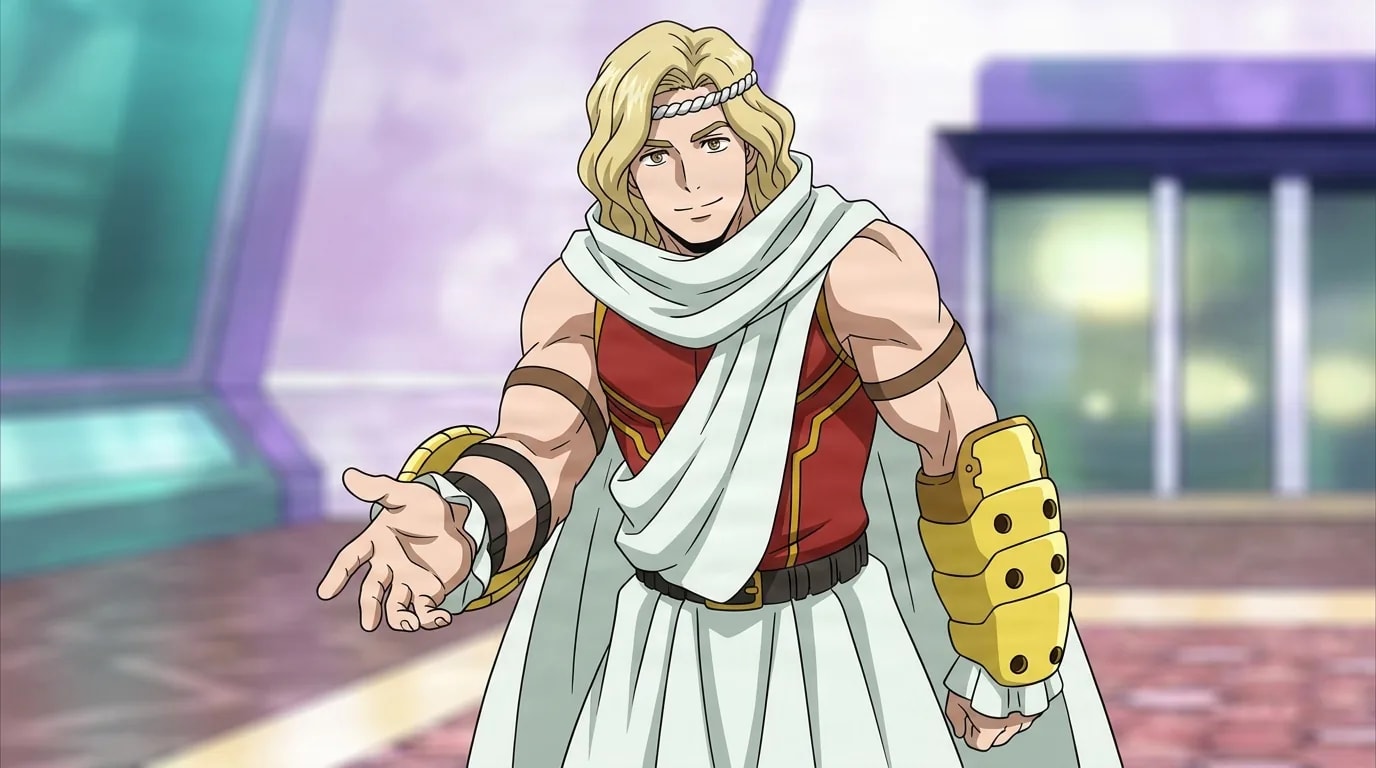
Long blond hair hangs straight down past a tall, heavily built frame, his arms thick with muscle.
The costume commits fully to an ancient Greek look, which suits both his name and his Olympic theme. He wears a red sleeveless breastplate under a white chiton-style wrap that loops over his shoulders and neck, belts at the waist, and hangs to the knee like a skirt. Oversized metal vambraces with frilled edges cover his forearms, a slim silver circlet crosses his brow, and greaves and sandals finish it.
Personality
He gets very little screen time and almost no characterization with it. The one data point available is a small courtesy: passing a mother and her child at the I-Expo, he stops to greet them.
It is thin evidence, but it points toward an approachable sort rather than a remote celebrity. Nothing in either film contradicts it.
History
His Quirk, Power, lets his body take in and release enormous quantities of raw force, which translates to tremendous physical strength. It is the whole of what the databooks say about him.
At the I-Expo he is first seen strolling the preview and exchanging greetings with a passing woman and her child. He attends the reception afterward alongside the other heroes, where Wolfram and his crew take the entire room hostage. He stays captive until Melissa Shield wrests I-Island's security system back and the prisoners are released.
He returns for the Humarise crisis, assigned to the Otheon Task Force. He helps take down the Humarise members holed up in their Otheon headquarters, and he is present when a news agency broadcasts the accusation that Izuku murdered twelve people. He later joins the search for the Trigger Bomb hidden in Otheon.
Related Reading
See all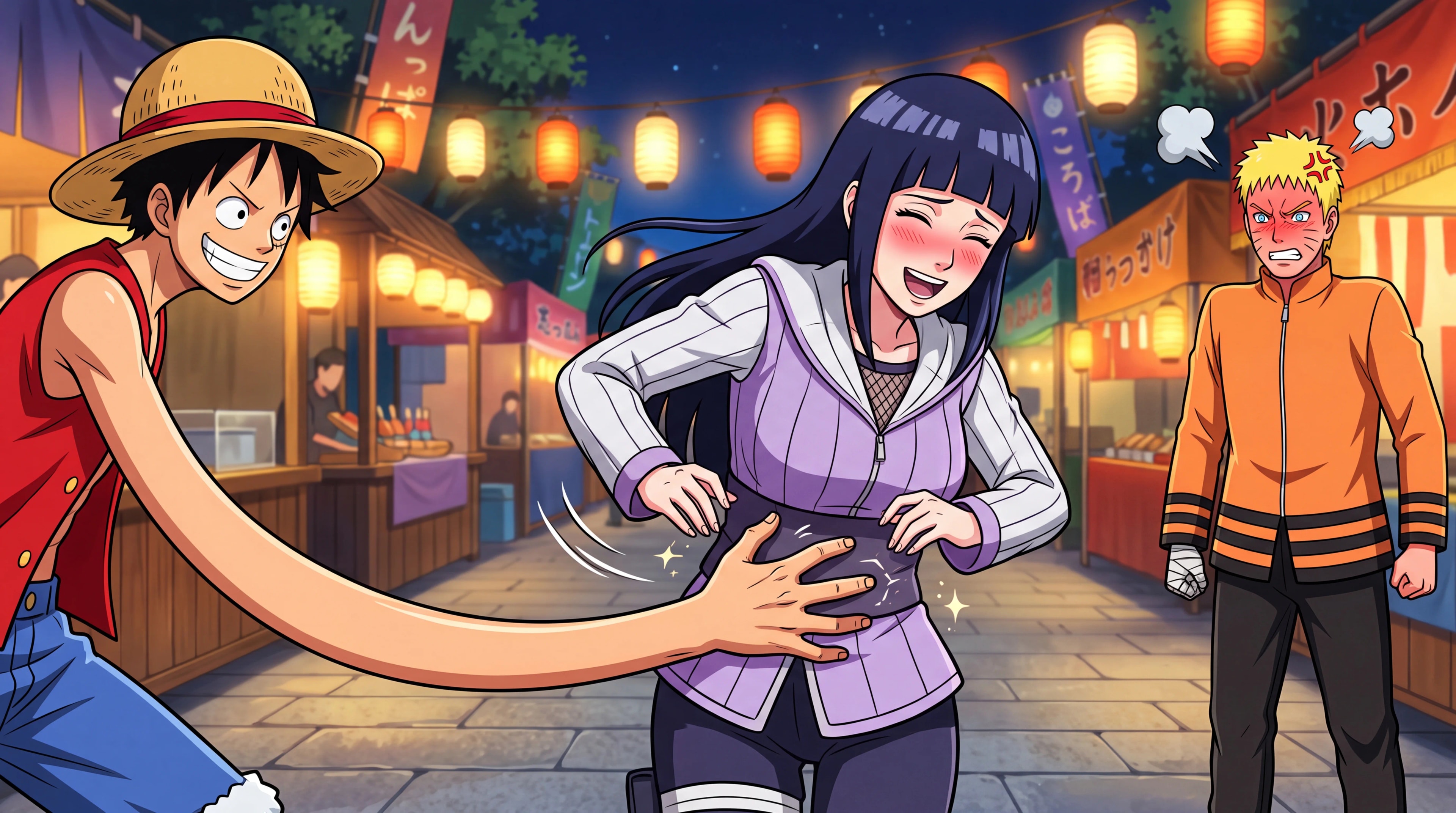
Naruto vs Luffy: Does the Fight Change if Luffy Tickles Hinata?
Naruto vs Luffy with the twist nobody asked for: Luffy tickled Hinata on date night, and she kind of liked it. We break down the whole fight and commit to a winner....
Piccolo Gets the Namek Hoes: Namek Has No Women, and He Pulls Anyway
There are no women on Namek. That isn't an oversight, it's the biology. Why we handed Piccolo the one thing his own species rules out, and why it had to be trap soul....
Frequently Asked Questions
What is pankration fighting?
Pankration is the near-ruleless ancient Greek Olympic combat sport, introduced in 648 BC, from which the My Hero Academia hero Pankration takes his name. The word literally translates to All Might.
What is Pankration's Quirk?
Pankration's Quirk, Power, lets his body absorb and release enormous quantities of raw force, which translates into tremendous physical strength.
Which My Hero Academia movies does Pankration appear in?
Pankration debuted in My Hero Academia: Two Heroes and returned for My Hero Academia: World Heroes' Mission.
What does Pankration do during the Humarise crisis?
Pankration is assigned to the Otheon Task Force, where he helps take down the Humarise members holed up in their headquarters and later joins the search for the hidden Trigger Bomb.
What happens to Pankration at the I-Island reception?
Pankration is taken hostage along with the other visiting heroes when Wolfram and his crew seize I-Island's security system, and he stays captive until Melissa Shield takes the system back and frees everyone.
Sources & Information
Looking for more on Pankration? The Dragon Ball Wiki on Fandom has a dedicated page with community notes.
View on FandomThis content is original writing by Daddy Jim Headquarters based on the Dragon Ball anime series, manga, and official materials. Episode and chapter references are cited where applicable.
Character and scene imagery on this site is original artwork by Daddy Jim Headquarters, not screenshots or licensed imagery. Official cover art is used on three types of pages for editorial commentary:
- Movie pages: theatrical posters and key visuals, credited to Toei Animation and Shueisha.
- Game pages: official box art, credited to Bandai Namco, Atari, and other publishers.
- Manga chapter pages: Jump Comics volume covers, credited to Shueisha and Akira Toriyama.
Official resources:
Help Us Keep This Wiki Accurate
Daddy Jim Headquarters maintains this encyclopedia. If you spot an error, a translation issue, or something that doesn't look right, let us know.