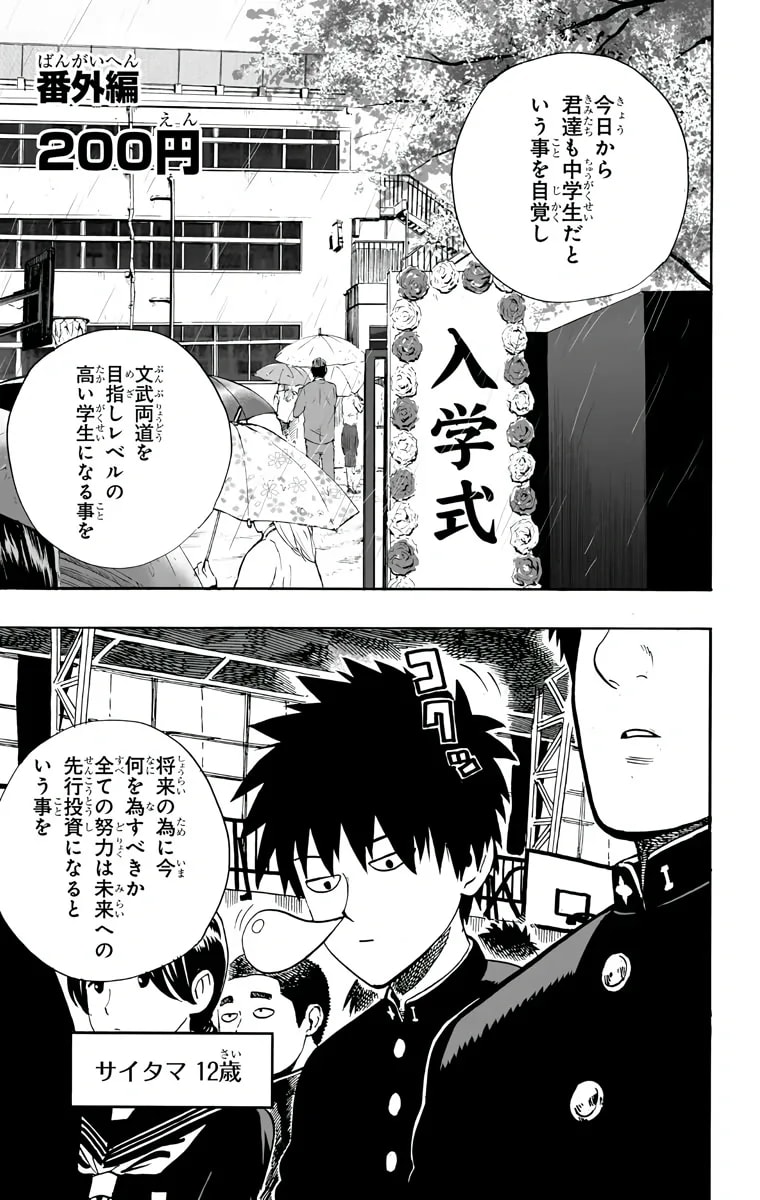
200 Yen
Manga ChapterA bonus chapter packaged with Volume 1, 200 Yen reaches back to Saitama's schoolboy years, when a stolen coin and a runaway monster left him doubting his own worth, then jumps ahead to show the philosophy he carries as an adult.
Summary
The story opens on a twelve-year-old Saitama nodding off through his middle school's opening ceremony. Nearby, two bullies shake down a group of younger kids for cash, and a youthful Mumen Rider, still calling himself the Nameless Bicycle Commuter, tries to intervene. A day later Saitama lounges in bed watching a broadcast about an escaped Mysterious Being, and the morning after that a teacher scolds him over unfinished homework and orders him to report to the staff lounge once classes end.
When the school day is over, the same two thugs, the Ripped Uniforms, corner Saitama, beat him, and make off with 200 yen. The runaway creature Piggy Bancon then appears demanding coins, and the delinquents surrender the stolen money to it.

Key Events
Hearing one bully lament that he can no longer buy his little brother's lunch, Saitama gives chase after the monster. He catches up, only to be knocked out cold for more than an hour. Waking late, he trudges to the staff lounge and is reprimanded for his tardiness, then leaves school wondering whether he is simply too weak to live properly. The scene jumps to the present, where a grown Saitama walks a snowy slope with a child riding his shoulders and voicing a fear of the future.


Notes
This extra ran with Volume 1, released December 4, 2012, and spans twenty-three pages. Saitama reassures the boy that there is no single correct way to live no matter how strong a person becomes, before the child spots a huge snow monster ahead and asks if he can beat it; Saitama instead panics over forgetting to take out the trash. His shirt nods to ONE's other work, Mob Psycho 100, and a voiced version appears on the One-Punch Man Maji Drama CD Vol. 1.
Related Reading
See all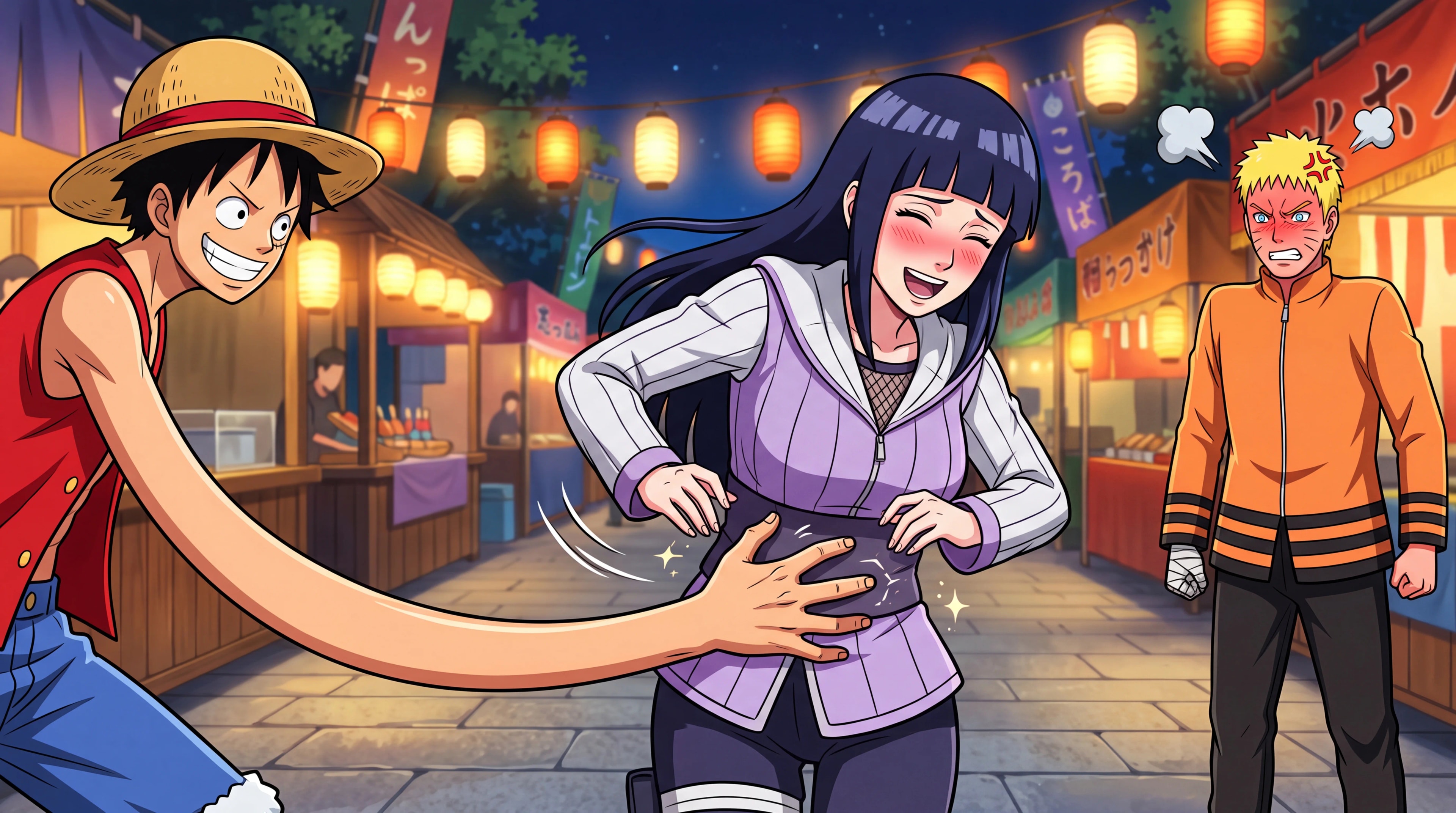
Naruto vs Luffy: Does the Fight Change if Luffy Tickles Hinata?
Naruto vs Luffy with the twist nobody asked for: Luffy tickled Hinata on date night, and she kind of liked it. We break down the whole fight and commit to a winner....
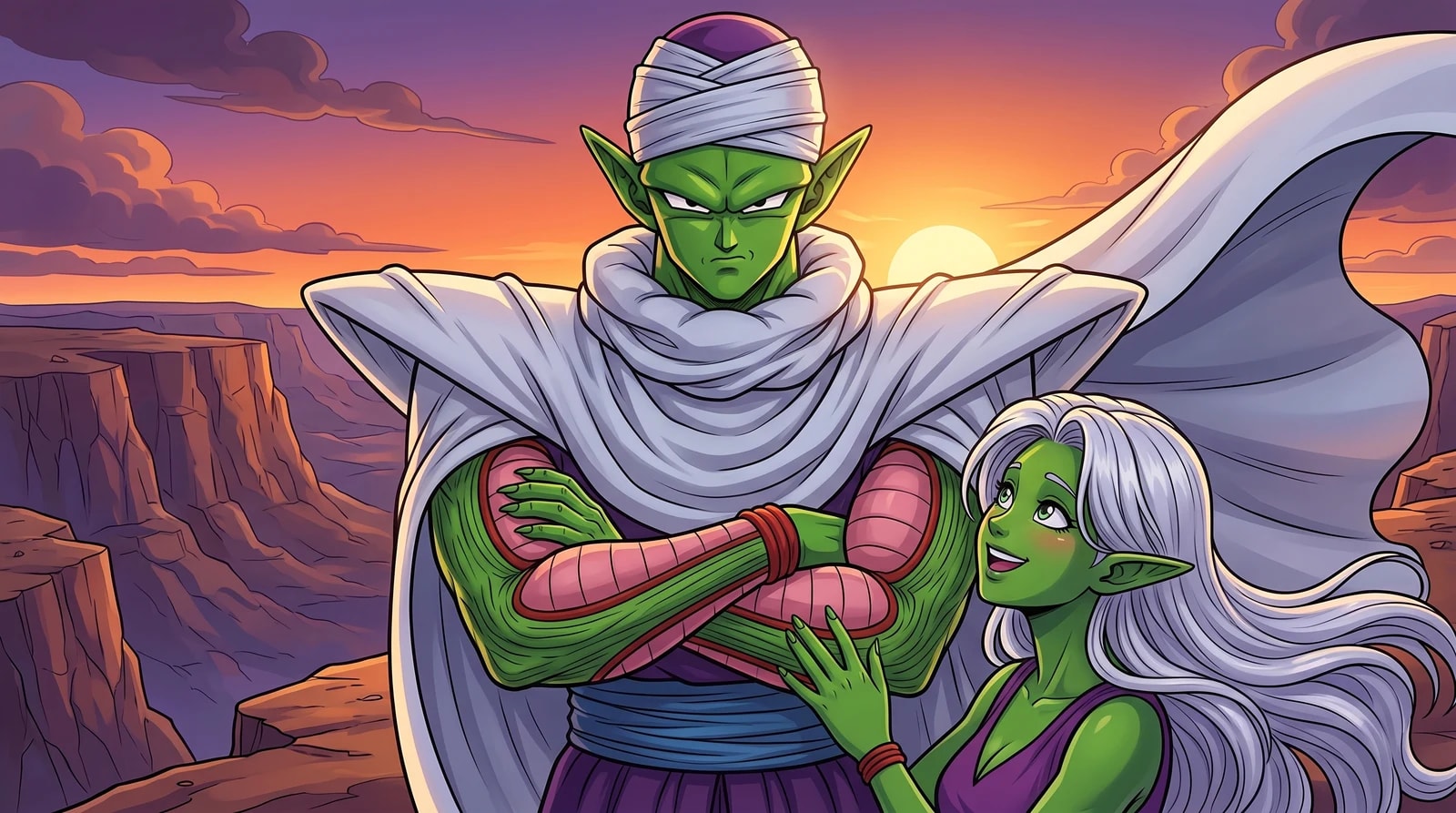
Piccolo Gets the Namek Hoes: Namek Has No Women, and He Pulls Anyway
There are no women on Namek. That isn't an oversight, it's the biology. Why we handed Piccolo the one thing his own species rules out, and why it had to be trap soul....

Frequently Asked Questions
What is the 200 Yen bonus chapter about in One-Punch Man?
200 Yen is a bonus chapter packaged with Volume 1 that flashes back to a twelve-year-old Saitama's school days. Bullies called the Ripped Uniforms beat him and steal 200 yen from him, which they then hand over to the runaway monster Piggy Bancon.
What happens after Saitama's money is stolen in 200 Yen?
After hearing one of the bullies worry he can no longer afford his little brother's lunch, Saitama chases after the monster Piggy Bancon to get the stolen 200 yen back. He catches up but is knocked unconscious for over an hour before waking up and getting scolded for being late to school.
How does 200 Yen connect to the present-day Saitama?
The chapter jumps forward to show an adult Saitama walking a snowy slope with a child on his shoulders who is anxious about the future. Saitama reassures the boy that there is no single correct way to live, no matter how strong a person becomes.
Who appears in the 200 Yen bonus chapter?
200 Yen features a young Saitama, a young Mumen Rider still going by the Nameless Bicycle Commuter, the bullies known as the Ripped Uniforms, and the runaway monster Piggy Bancon.
When was the 200 Yen chapter released?
The 200 Yen bonus chapter released with Volume 1 on December 4, 2012, and runs twenty-three pages. It also has a voiced version on the One-Punch Man Maji Drama CD Vol. 1.
Sources & Information
Looking for more on 200 Yen? The Dragon Ball Wiki on Fandom has a dedicated page with community notes.
View on FandomThis content is original writing by Daddy Jim Headquarters based on the Dragon Ball anime series, manga, and official materials. Episode and chapter references are cited where applicable.
Character and scene imagery on this site is original artwork by Daddy Jim Headquarters, not screenshots or licensed imagery. Official cover art is used on three types of pages for editorial commentary:
- Movie pages: theatrical posters and key visuals, credited to Toei Animation and Shueisha.
- Game pages: official box art, credited to Bandai Namco, Atari, and other publishers.
- Manga chapter pages: Jump Comics volume covers, credited to Shueisha and Akira Toriyama.
Official resources:
Help Us Keep This Wiki Accurate
Daddy Jim Headquarters maintains this encyclopedia. If you spot an error, a translation issue, or something that doesn't look right, let us know.