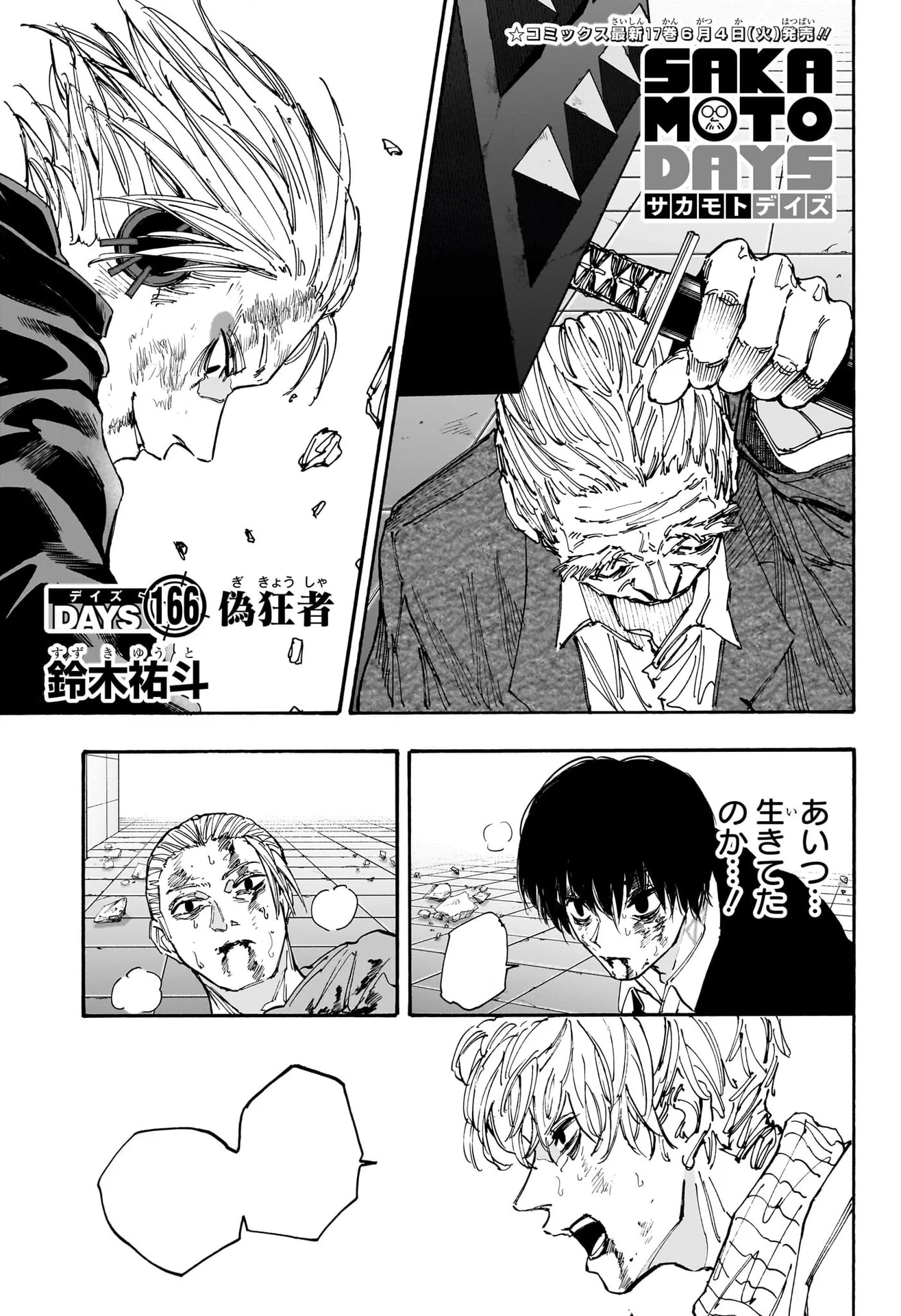
Chapter 166
Manga ChapterGaku, Haruma, and Uzuki band together against Takamura, whose danger sense makes him nearly untouchable. A tender orphanage flashback binds Uzuki and Haruma before Takamura reveals a chilling truth about his amputated arm and cuts Haruma in half.
Summary
Haruma reaches the scene as Gaku and Takamura clash. Takamura runs Gaku through the arm, but Gaku turns the wound into an opening, kicking the swordsman and his blade across the room until Takamura stabs the ground to halt himself. Haruma tries to spike a metal ball at Takamura from behind, yet Takamura slices it apart without so much as turning. When Uzuki orders a retreat, Gaku and Haruma refuse, telling him the JAA cannot be brought down while Takamura still lives.
A flashback drifts back to the Al-Kamar orphanage, where a young Uzuki wonders aloud why they must become assassins and complains that killers are always cast as villains, since he can be neither wholly good nor wholly bad. Haruma mulls it over and comes to understand him a little, prompting Uzuki to remark that the two of them are cut from the same cloth.
In the present, Uzuki joins the assault and warns the others that Takamura's sharpened sense for murderous intent offsets his failing eyesight. As Gaku and Haruma press from the front, Uzuki loops behind and snares Takamura's arm with his blade-whip, tossing one end into a rising lift so the machine drags the limb off the katana. Takamura catches the weapon in his left hand, then speaks plainly for the first time, mocking the idea that he is senile before severing his own trapped arm. He catches the falling forearm, presses the clean cut back into place, and grips his katana once more with the reattached dominant arm, sneering about a world crowded with the unworthy as he cleaves Haruma in two.
Key Events
Gaku, Haruma, and Uzuki commit to killing Takamura, arguing the JAA cannot fall otherwise. A flashback deepens the bond between Uzuki and Haruma at the Al-Kamar orphanage. Uzuki reveals Takamura senses killing intent to make up for poor vision and pins his arm with a blade-whip and a lift. Takamura speaks clearly for the first time, cuts off and reattaches his own arm, and slices Haruma in half.


Notes
Under the title False Madman, this is the one hundred and sixty-sixth chapter of Sakamoto Days and part of the Assassin Exhibition of the Century Arc. It ran in the twenty-fifth 2024 issue on May 20, 2024, and covers nineteen pages within Volume 19. The cover lines up Takamura, Gaku, Nagumo, Sakamoto, and Uzuki. Kashima appears in a flashback recalling how cleanly Takamura once severed his own arm.
Related Reading
See all
Naruto vs Luffy: Does the Fight Change if Luffy Tickles Hinata?
Naruto vs Luffy with the twist nobody asked for: Luffy tickled Hinata on date night, and she kind of liked it. We break down the whole fight and commit to a winner....
Piccolo Gets the Namek Hoes: Namek Has No Women, and He Pulls Anyway
There are no women on Namek. That isn't an oversight, it's the biology. Why we handed Piccolo the one thing his own species rules out, and why it had to be trap soul....
Frequently Asked Questions
What happens in Sakamoto Days Chapter 166?
In Sakamoto Days Chapter 166, "False Madman," Gaku, Haruma, and Uzuki team up against Takamura, but the swordsman cuts off and reattaches his own trapped arm before slicing Haruma in half.
How is Takamura able to sense his opponents despite poor eyesight?
In Chapter 166, Uzuki reveals that Takamura's sharpened sense for murderous intent compensates for his failing vision, allowing him to track opponents even when he cannot clearly see them.
What is revealed in the Al-Kamar orphanage flashback?
In Chapter 166, a flashback to the Al-Kamar orphanage shows a young Uzuki questioning why assassins are always seen as villains, a moment that deepens his bond with Haruma.
How does Uzuki trap Takamura's arm in this chapter?
In Chapter 166, Uzuki snares Takamura's arm with his blade-whip and feeds one end into a rising lift, using the machine to drag the limb off the katana.
What does Takamura do after his arm is trapped in Chapter 166?
In Chapter 166, Takamura speaks for the first time, mocks the idea that he is senile, then severs his own trapped arm, catches it as it falls, reattaches it, and uses it to cleave Haruma in two.
Sources & Information
Looking for more on Chapter 166? The Dragon Ball Wiki on Fandom has a dedicated page with community notes.
View on FandomThis content is original writing by Daddy Jim Headquarters based on the Dragon Ball anime series, manga, and official materials. Episode and chapter references are cited where applicable.
Character and scene imagery on this site is original artwork by Daddy Jim Headquarters, not screenshots or licensed imagery. Official cover art is used on three types of pages for editorial commentary:
- Movie pages: theatrical posters and key visuals, credited to Toei Animation and Shueisha.
- Game pages: official box art, credited to Bandai Namco, Atari, and other publishers.
- Manga chapter pages: Jump Comics volume covers, credited to Shueisha and Akira Toriyama.
Official resources:
Help Us Keep This Wiki Accurate
Daddy Jim Headquarters maintains this encyclopedia. If you spot an error, a translation issue, or something that doesn't look right, let us know.