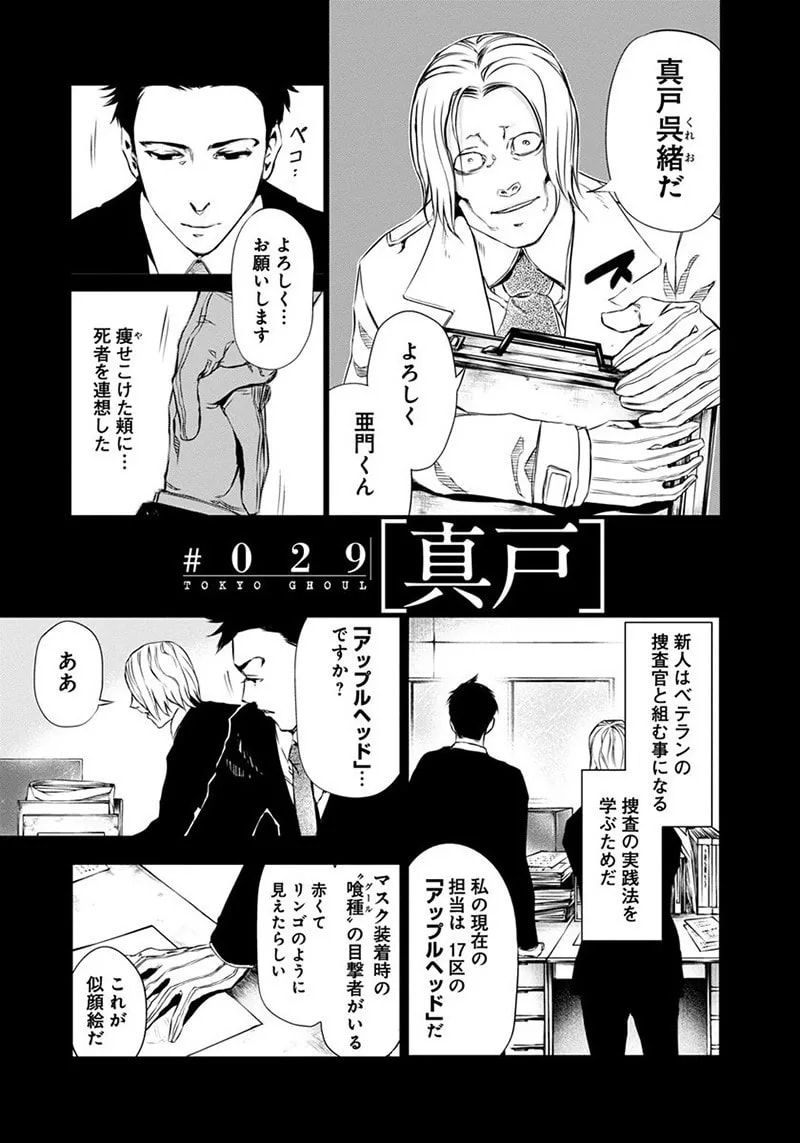
Mado's funeral gives the CCG's senior investigators a moment to size up the man he was, and Amon recalls the first case they worked together. The memories reveal how the odd, quinque-obsessed veteran first earned the younger man's respect.
Summary
Kureo Mado's funeral is conducted at the 1st Ward headquarters of the Commission of Counter Ghoul. Itsuki Marude dismisses the dead man as nothing more than a quinque fanatic, and Kishou Arima rebukes him for speaking ill of the deceased. Taishi Fura then breaks in with news that a ghoul suspect has begun to move, so there is no time left for grieving and they must deploy at once.
Koutarou Amon slips into a memory of first meeting Mado, whom colleagues had branded a strange old maniac for quinques. His hollow cheeks had reminded Amon of a corpse. On their first shared assignment, the two called on Kie Muramatsu, an elderly woman suspected of being a ghoul. Working from a medical certificate, Mado quickly weighed whether she qualified, and when it seemed she might not, he apologized for doubting her. On leaving, however, he proposed setting a trap, still unconvinced, and waved off Amon's objections as the words of a rookie.
Amon storms off, only to cross paths with Muramatsu while heading for the stakeout, straining under a heavy suitcase. Noticing blood leaking from it, he confronts her and she attacks. Mado appears without warning, overpowers her, and suggests turning her into a quinque. Later, Yukinori Shinohara approaches Amon and gently ribs him for crying over Mado, adding that the old investigator had been proud of him.
Key Events
Mado's funeral is cut short when a ghoul suspect starts moving, forcing the senior investigators to deploy. A flashback shows Amon and Mado's first assignment together, where Mado's instincts about the ghoul Kie Muramatsu prove correct and save Amon's life. Shinohara reveals that Mado had been proud of his young partner.

Related Reading
See all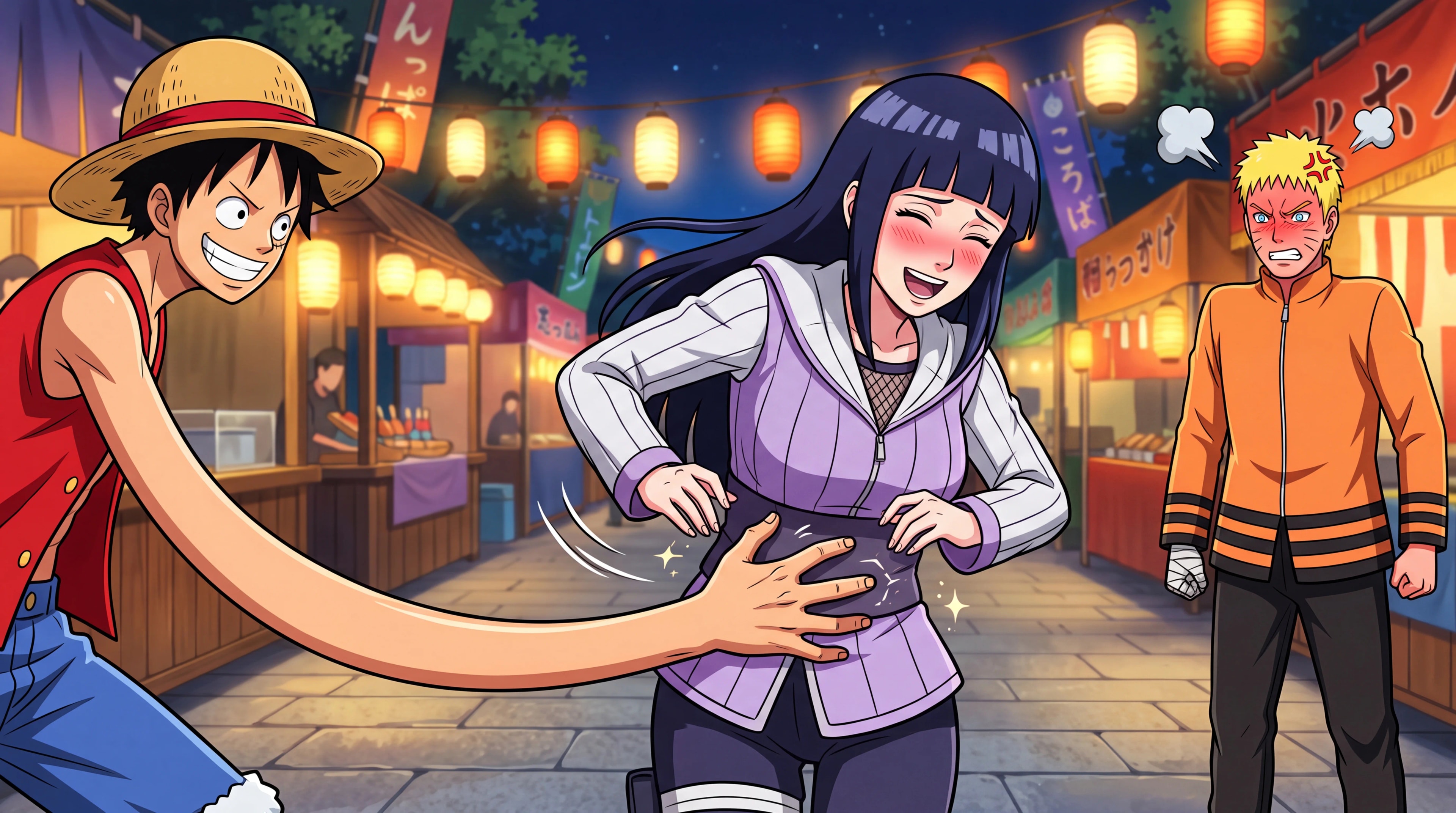
Naruto vs Luffy: Does the Fight Change if Luffy Tickles Hinata?
Naruto vs Luffy with the twist nobody asked for: Luffy tickled Hinata on date night, and she kind of liked it. We break down the whole fight and commit to a winner....
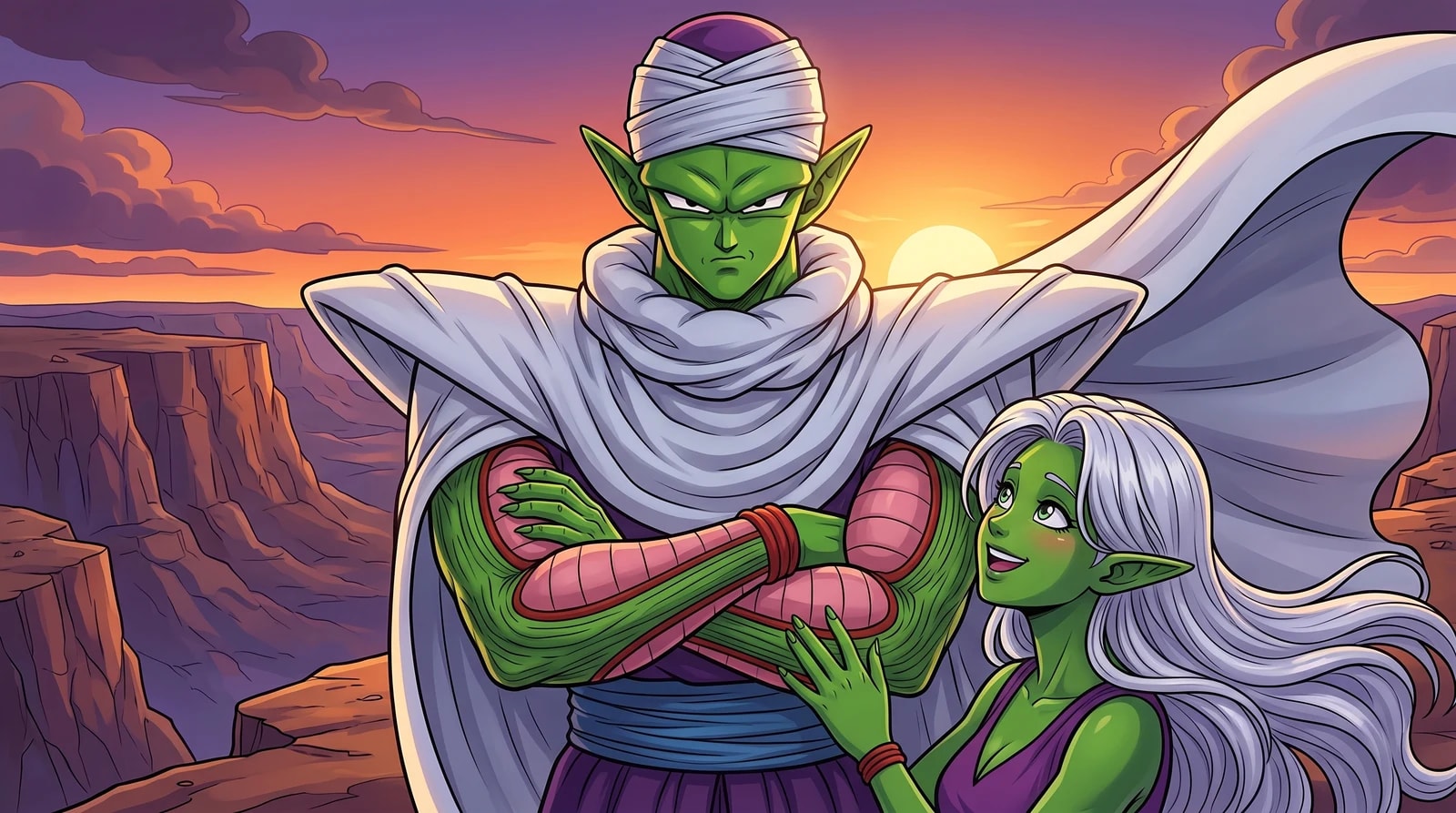
Piccolo Gets the Namek Hoes: Namek Has No Women, and He Pulls Anyway
There are no women on Namek. That isn't an oversight, it's the biology. Why we handed Piccolo the one thing his own species rules out, and why it had to be trap soul....

Frequently Asked Questions
What happens in Tokyo Ghoul Chapter 29?
Tokyo Ghoul Chapter 29 covers Kureo Mado's funeral at CCG headquarters, cut short by news that a ghoul suspect is moving, and flashes back to Amon and Mado's first assignment together investigating the elderly ghoul suspect Kie Muramatsu.
Why does Kishou Arima rebuke Itsuki Marude at Mado's funeral?
At Kureo Mado's funeral, Itsuki Marude dismisses him as nothing more than a quinque fanatic, and Kishou Arima rebukes Marude for speaking ill of the dead.
How did Amon and Mado first work together?
Chapter 29 flashes back to Koutarou Amon and Kureo Mado's first joint assignment, investigating an elderly woman named Kie Muramatsu whom Mado correctly suspected of being a ghoul despite Amon's doubts.
What does Shinohara tell Amon about Mado?
In Chapter 29, Yukinori Shinohara gently teases Koutarou Amon for crying over Kureo Mado's death and tells him that Mado had actually been proud of his young partner.
Why is Tokyo Ghoul Chapter 29 titled Mado?
Chapter 29 is simply titled Mado after the fallen investigator, since it centers on his funeral and a flashback that reveals the instincts and character behind his eccentric reputation.
Sources & Information
Looking for more on Chapter 29? The Dragon Ball Wiki on Fandom has a dedicated page with community notes.
View on FandomThis content is original writing by Daddy Jim Headquarters based on the Dragon Ball anime series, manga, and official materials. Episode and chapter references are cited where applicable.
Character and scene imagery on this site is original artwork by Daddy Jim Headquarters, not screenshots or licensed imagery. Official cover art is used on three types of pages for editorial commentary:
- Movie pages: theatrical posters and key visuals, credited to Toei Animation and Shueisha.
- Game pages: official box art, credited to Bandai Namco, Atari, and other publishers.
- Manga chapter pages: Jump Comics volume covers, credited to Shueisha and Akira Toriyama.
Official resources:
Help Us Keep This Wiki Accurate
Daddy Jim Headquarters maintains this encyclopedia. If you spot an error, a translation issue, or something that doesn't look right, let us know.