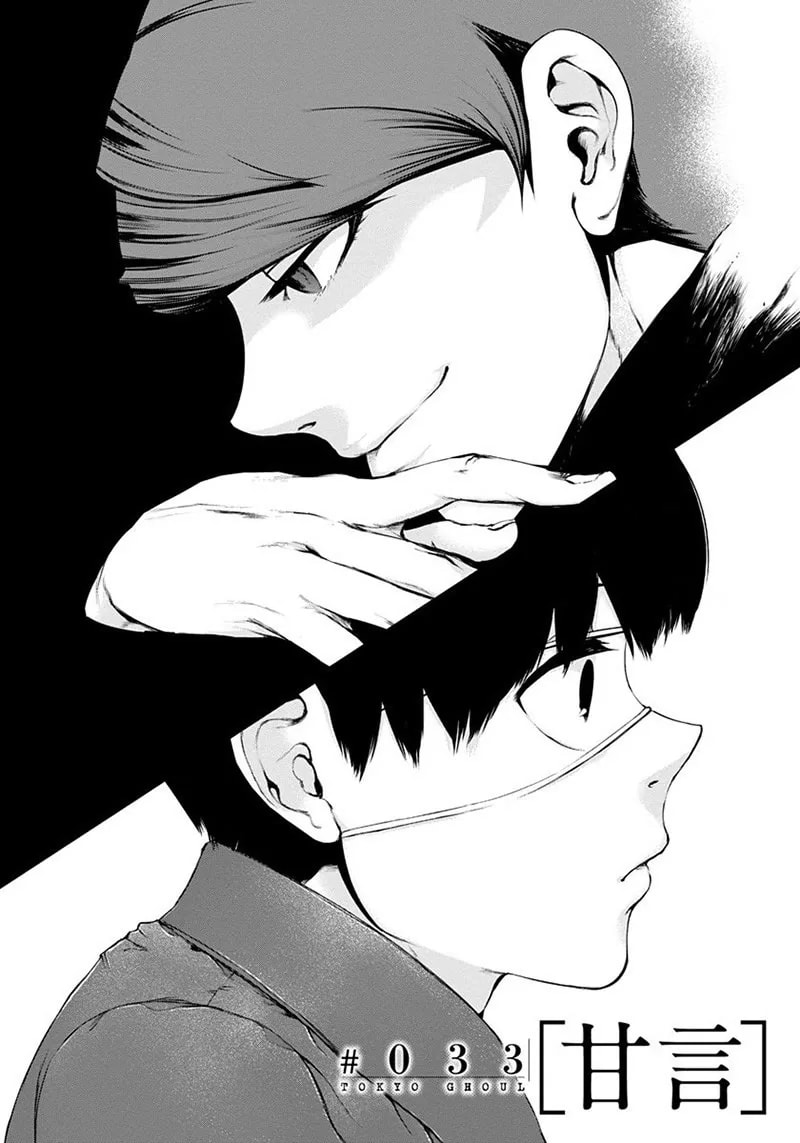
The thirty-third chapter of Tokyo Ghoul has Shuu Tsukiyama charm his way closer to Kaneki through shared talk of literature, all while Kaneki senses a hidden agenda. A separate errand then leads Kaneki to a bar and a mysterious new acquaintance.
Summary
Shuu Tsukiyama strolls through Kamii University and approaches Kaneki as he reads, introducing himself and confessing he enrolled specifically to meet him. Wary but polite, Kaneki befriends him anyway and explains he has been studying a martial arts manual because of the perilous times. The two trade thoughts on literature and reading, and Tsukiyama mentions a private cafe frequented by Sen Takatsuki, Kaneki's favorite author. Kaneki suspects a scheme and decides he cannot fully trust the man.
Tsukiyama insists he is misunderstood, claiming he only ever wanted someone to talk with who shared his interests, and that he has been lonely since Rize Kamishiro, who once filled that role, died. The pair arrange to meet and talk again on Sunday. Returning to Anteiku, Kaneki unexpectedly finds Renji Yomo, who asks him to come along somewhere because someone has requested to see him.
Yomo takes Kaneki to a bar in the 14th ward. There Kaneki is teased by a woman he learns is Itori, a friend of both Uta and Yomo and the owner of the Helter Skelter bar.

Key Events
Tsukiyama insinuates himself into Kaneki's life at university, using shared literary tastes and a claimed loneliness over Rize to build trust while Kaneki privately doubts him. The two agree to meet again that Sunday.
Yomo brings Kaneki to the 14th ward and introduces him to Itori, owner of the Helter Skelter bar, opening a new line of information about the ghoul world.


Related Reading
See all
Naruto vs Luffy: Does the Fight Change if Luffy Tickles Hinata?
Naruto vs Luffy with the twist nobody asked for: Luffy tickled Hinata on date night, and she kind of liked it. We break down the whole fight and commit to a winner....
Piccolo Gets the Namek Hoes: Namek Has No Women, and He Pulls Anyway
There are no women on Namek. That isn't an oversight, it's the biology. Why we handed Piccolo the one thing his own species rules out, and why it had to be trap soul....

Frequently Asked Questions
What happens in Tokyo Ghoul Chapter 33?
Chapter 33 has Shuu Tsukiyama charm Kaneki at Kamii University through talk of literature, then follows Kaneki to a bar in the 14th ward where Renji Yomo introduces him to Itori.
Why did Tsukiyama enroll at Kamii University?
Shuu Tsukiyama tells Kaneki he enrolled at Kamii University specifically to meet him, framing their friendship around shared literary tastes while Kaneki privately suspects a hidden agenda.
What does Tsukiyama say about Rize?
Tsukiyama tells Kaneki he has felt lonely since Rize Kamishiro died, claiming she once filled the role of someone who shared his interests, as part of his effort to win Kaneki's trust.
Who is Itori and how does Kaneki meet her?
Itori is the owner of the Helter Skelter bar in the 14th ward and a friend of Uta and Renji Yomo, and Kaneki meets her in Chapter 33 after Yomo brings him there at her request.
Why is Tokyo Ghoul Chapter 33 titled Flattery?
Chapter 33 is titled Flattery because it centers on Shuu Tsukiyama's manipulative charm as he insinuates himself into Kaneki's life at university to set up their planned Sunday meeting.
Sources & Information
Looking for more on Chapter 33: Flattery? The Dragon Ball Wiki on Fandom has a dedicated page with community notes.
View on FandomThis content is original writing by Daddy Jim Headquarters based on the Dragon Ball anime series, manga, and official materials. Episode and chapter references are cited where applicable.
Character and scene imagery on this site is original artwork by Daddy Jim Headquarters, not screenshots or licensed imagery. Official cover art is used on three types of pages for editorial commentary:
- Movie pages: theatrical posters and key visuals, credited to Toei Animation and Shueisha.
- Game pages: official box art, credited to Bandai Namco, Atari, and other publishers.
- Manga chapter pages: Jump Comics volume covers, credited to Shueisha and Akira Toriyama.
Official resources:
Help Us Keep This Wiki Accurate
Daddy Jim Headquarters maintains this encyclopedia. If you spot an error, a translation issue, or something that doesn't look right, let us know.