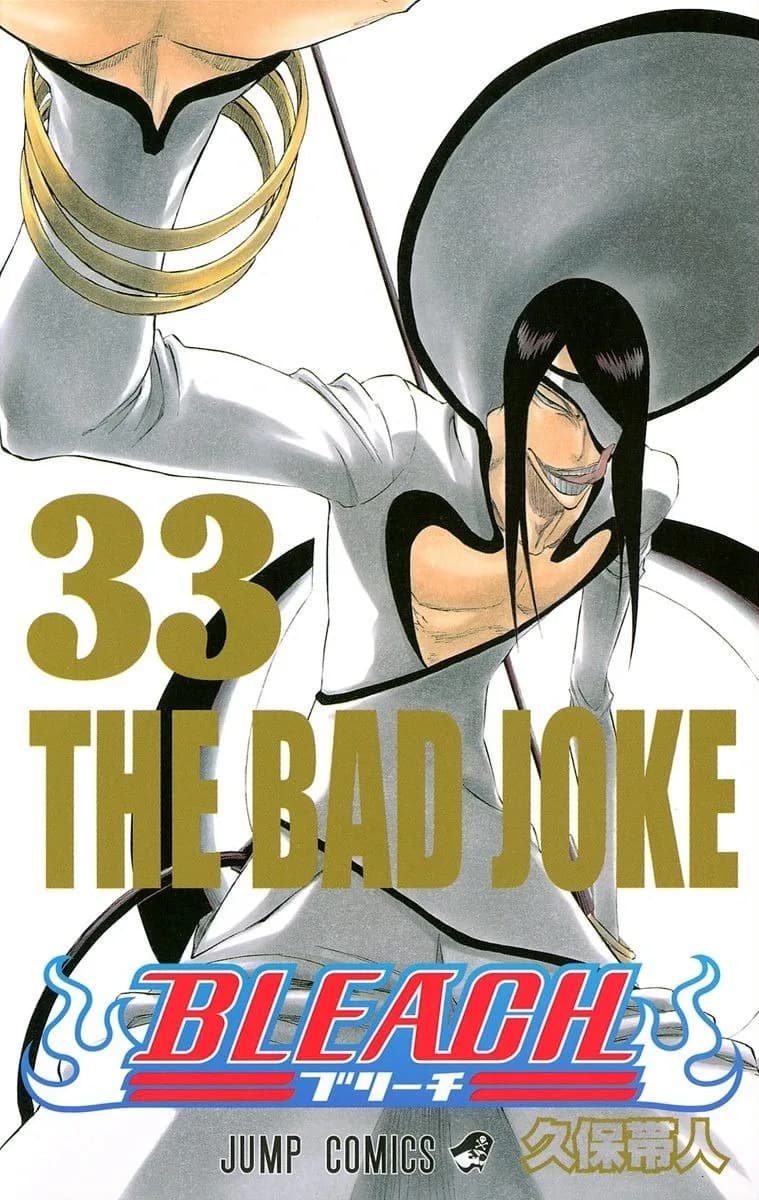
Szayelaporro demonstrates the horror of Teatro de Titere, sealing Uryu inside a voodoo doll that lets him torture the Quincy's body from afar. Meanwhile, Nnoitra and Nelliel both stay their blades, unsettled by memories of their shared past.
Summary
Spotting one last Renji clone behind him, Szayelaporro snaps his fingers to burst its head, unnerving the real Renji who has to watch a copy of himself explode. The scientist announces he will now reveal the true power of Fornicaras, but Uryu and Renji refuse to sit through the demonstration and attack together. Their shots are blocked by the two large Arrancar who had formed Szayelaporro's throne, and one of his wing-like appendages engulfs Uryu, then spits him back out. From a popped globule at its base emerges a small doll shaped like Uryu, which drops into Szayelaporro's palm.
Pretending to give the doll a voice, Szayelaporro presses its head and Uryu feels the pressure on his own face; a flick of its temple opens a matching cut on Uryu's. He explains the doll works like a remote control for its victim's senses. He then twists it apart at the waist, and though Renji begs him to stop, the doll simply separates without harming Uryu, because it is built to come apart. Inside, Szayelaporro reveals a set of small labeled pieces representing Uryu's organs. To show their purpose, he crushes the one marked stomach, and Uryu doubles over vomiting blood. When an enraged Renji charges, another appendage traps him, and Szayelaporro muses that Humans, Shinigami, and Quincy alike are equally vile and should all be exterminated by Aizen.
Out in the sands, Nnoitra hurls Nelliel back and closes in, but the two end up with their weapons frozen inches apart. Nnoitra asks why she did not strike; when she turns the question back, he insists he only stopped because she did. Backing off, he admits he cannot help dwelling on the past whenever he fights her, because after all this time she has not changed at all.

Key Events
Szayelaporro unveils Teatro de Titere, trapping Uryu in a sense-linked doll and demonstrating that crushing its internal organ pieces damages Uryu directly. Renji is caught as well. In the outdoor fight, Nnoitra and Nelliel each hesitate, and Nnoitra's fixation on their shared history begins to surface.
Related Reading
See all
The Bleach Female Characters Nobody Can Agree On, Settled
Five Bleach female characters, ranked and settled. Yoruichi sits at number five, the spot nobody expects, and our number one is an Arrancar with a soft heart....
Naruto vs Luffy: Does the Fight Change if Luffy Tickles Hinata?
Naruto vs Luffy with the twist nobody asked for: Luffy tickled Hinata on date night, and she kind of liked it. We break down the whole fight and commit to a winner....
Frequently Asked Questions
What happens in Bleach chapter 293, Urge for Unite?
In Urge for Unite, Szayelaporro demonstrates Teatro de Titere by sealing Uryu inside a voodoo-like doll that lets him torture the Quincy from afar, while out in the sands Nnoitra and Nelliel both stay their blades, unsettled by memories of their shared past.
How does Szayelaporro's Teatro de Titere work?
Teatro de Titere traps a victim inside a small linked doll that acts like a remote control for their senses, so pressing or cutting the doll injures the victim; crushing the labeled pieces representing their organs damages the real body, as shown when Szayelaporro makes Uryu vomit blood.
Why doesn't twisting the doll apart hurt Uryu?
When Szayelaporro twists the doll apart at the waist, Uryu is unharmed because the doll is deliberately built to come apart, revealing the set of small labeled pieces that represent Uryu's organs.
Why do Nnoitra and Nelliel stop fighting in this chapter?
Their weapons end up frozen inches apart, and Nnoitra admits he cannot help dwelling on the past whenever he fights Nelliel, because after all this time she has not changed at all.
Which anime episode adapts chapter 293?
Urge for Unite was adapted in Episode 193, Irresistible, Puppet Show of Terror.
Sources & Information
Looking for more on Urge for Unite? The Bleach Wiki on Fandom has a dedicated page with community notes.
View on FandomThis content is original writing by Daddy Jim Headquarters based on the Bleach anime series, manga, and official materials. Episode and chapter references are cited where applicable.
Rights holders
- Created byTite Kubo
- Published byShueisha
- Animated byStudio Pierrot
All rights belong to their respective owners.
Character and scene imagery on this site is original artwork by Daddy Jim Headquarters, not screenshots or licensed imagery. Official cover art is used on three types of pages for editorial commentary:
- Movie pages: theatrical posters and key visuals, credited to Studio Pierrot and the production committee.
- Game pages: official box art for the Bleach console and mobile games, credited to Bandai Namco and other publishers.
- Manga chapter pages: Jump Comics volume covers, credited to Shueisha and Tite Kubo.
Official resources:
Help Us Keep This Wiki Accurate
Daddy Jim Headquarters maintains this encyclopedia. If you spot an error, a translation issue, or something that doesn't look right, let us know.