Guillotine Devil
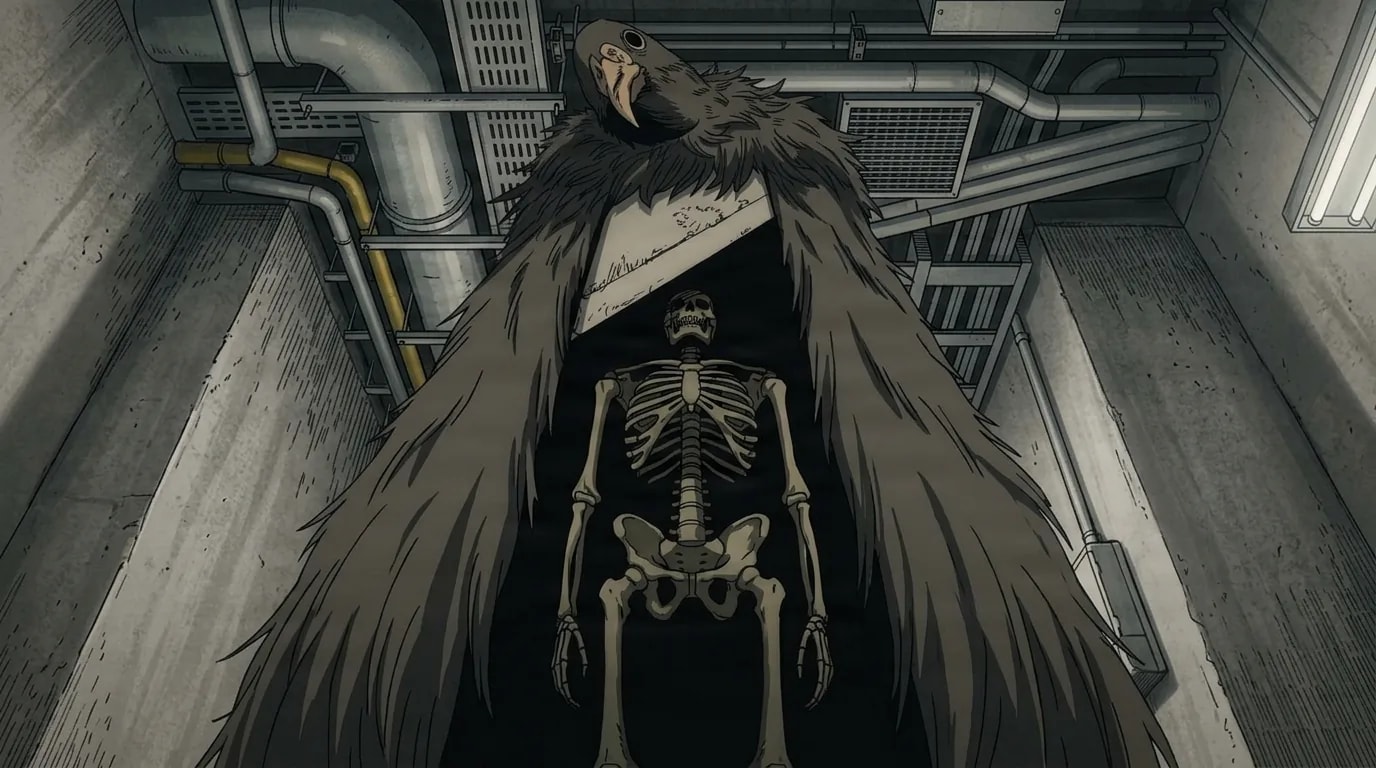
CharacterA devil born from the dread of guillotines, held captive among the Death Devil's enslaved servants. Resembling a grotesque pigeon fitted with an execution blade, it slices rather than beheads and can only voice a single squawking cry.
Appearance
Built like an oversized, grotesque pigeon, this devil holds its head at a permanent tilt to the right and sports a pair of ears sprouting where its beak begins. A cape of folded wings drapes its frame, parting to expose a skeletal front of spine, pelvis, and legs. Where ribs would normally sit, a broad guillotine blade is mounted instead. Its limbs taper off at the shins, bending sharply at the knee and ending without any feet.



Personality
Though bound to the Death Devil's will, the creature shows a strange streak of autonomy. Ordered to slaughter, it instead shears away only the weapons and garments of its targets while sparing their lives, and whether this springs from mercy or quiet rebellion is never made clear. It abandons its mistress the instant a real danger appears, choosing flight over a fight. Its wits seem dull, since its vocabulary amounts to nothing beyond a repeated cry of Gyohnee, yet it grasps commands well enough to carry them out in part.
History
The blade-bird was gathered up at some earlier point among the Death Devil's collection of pawns, held in reserve for later use. That use comes during the Aging Devil arc. Asa Mitaka and Death raid the Tokyo Devil Detention Center hoping to recover Chainsaw Man, and Asa blows their cover before a crowd of facility guards. Summoned and told to kill, the devil instead strips the guards of their arms and clothing, earning a scolding from Death for sparing them. With the guards neutralized, Haruka, Nobana, and Seigi walk free and elect to join the rescue deeper into the complex.
It shrugs off multiple gunshots during that clash, proof of considerable toughness, and attacks by fanning a single wing to carve its victims apart rather than dropping a blade on them. The devil later reverts to a lifeless effigy once the Nail Fiend and Katana Man descend on the others, much to Death's irritation. Its final outing arrives in the War Devil arc, when Death flings its effigy at Yoru with orders to shred her, and it dices her into pieces before Chainsaw Man's strike lops off its head.
Related Reading
See all
Viral Anime Wars: How Reze vs. Bakugo Memes Took Over Social Media in November 2025
Look, the origins of this viral showdown trace back to a single tweet that playfully juxtaposed Reze's enigmatic allure against Bakugo's expl...
Infinite Zeni Glitch: When Yamcha Never Pays and Mr. Popo Always Does
The internet found an infinite money glitch. So did Yamcha. A smooth R&B track about the easiest money in the Dragon Ball world and the one man who keeps paying for it....

Frequently Asked Questions
What is the Guillotine Devil in Chainsaw Man?
The Guillotine Devil is a devil born from the dread of guillotines, held captive among the Death Devil's enslaved servants. It slices rather than beheads and serves as one of Death's pawns.
What does the Guillotine Devil look like?
The Guillotine Devil is built like an oversized, grotesque pigeon with its head tilted permanently to the right and ears sprouting where its beak begins. A cape of folded wings parts to expose a skeletal front, where a broad guillotine blade is mounted in place of ribs.
Why does the Guillotine Devil spare its targets?
Although ordered to slaughter, the Guillotine Devil instead shears away only the weapons and clothing of its victims while sparing their lives. Whether this springs from mercy or quiet rebellion against the Death Devil is never made clear.
What sound does the Guillotine Devil make?
The Guillotine Devil's wits seem dull, since its entire vocabulary amounts to a repeated cry of Gyohnee. Even so, it grasps commands well enough to carry them out in part.
How does the Guillotine Devil die?
The Guillotine Devil meets its end during the War Devil arc. Death flings its effigy at Yoru with orders to shred her, and after it dices her into pieces, Chainsaw Man's strike lops off its head.
Sources & Information
Looking for more on Guillotine Devil? The Chainsaw Man Wiki on Fandom has a dedicated page with community notes.
View on FandomThis content is original writing by Daddy Jim Headquarters based on the Chainsaw Man anime series, manga, and official materials. Episode and chapter references are cited where applicable.
Character and scene imagery on this site is original artwork by Daddy Jim Headquarters, not screenshots or licensed imagery. Official cover art is used on three types of pages for editorial commentary:
- Movie pages: theatrical posters and key visuals, credited to MAPPA and the Chainsaw Man Movie Project.
- Game pages: official promotional artwork, credited to the licensed publishers.
- Manga chapter pages: Jump Comics volume covers, credited to Shueisha and Tatsuki Fujimoto.
Official resources:
Help Us Keep This Wiki Accurate
Daddy Jim Headquarters maintains this encyclopedia. If you spot an error, a translation issue, or something that doesn't look right, let us know.