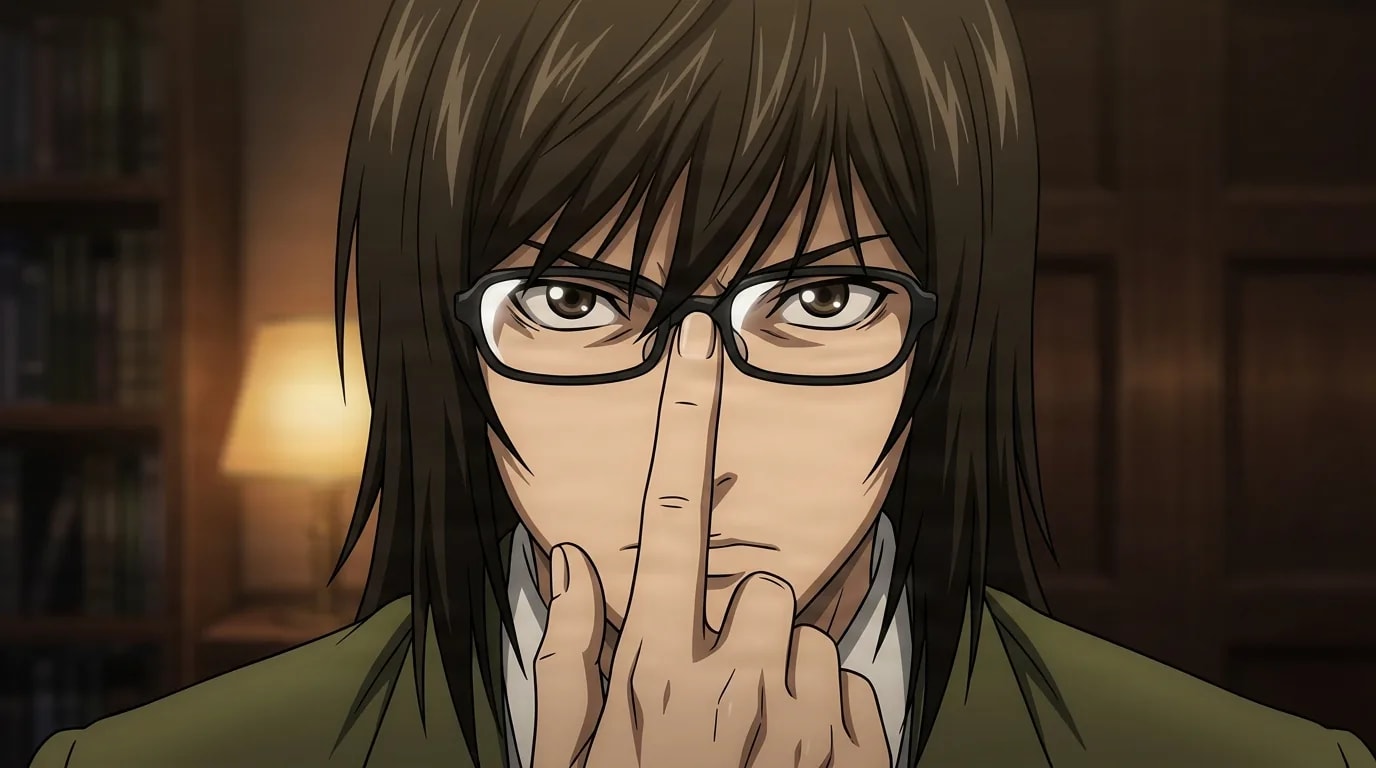
Teru Mikami
CharacterTeru Mikami is the criminal prosecutor Light Yagami handpicks to act as Kira's deputy when suspicion closes in. A childhood of bullying twisted his fierce sense of justice into rigid fanaticism, and as the loyal 'X-Kira' he passes judgment by notebook with mechanical devotion, reciting 'delete' over every condemned name.
Appearance
Black hair falling to his shoulders and a pair of glasses mark Mikami's look, which he completes with a long dark coat worn over a tailored suit. The series counts him among its good-looking cast. For most of the run he is drawn neat and composed, his design echoing Taro Kagami from the franchise's pilot chapter. That polish collapses once he lays eyes on Light in person, when his grooming frays and he takes on the wild look of a true zealot. Certain DS game appearances tint his hair a dark green instead of black.



Personality
A ferocious moral drive sits at Mikami's core, hardened since boyhood into an absolute split between the worthy and the wicked. He sorts every person he meets into one camp or the other and burns to see wrongdoers punished, a zeal that mirrors Light's own. His worship of Kira is total: asked on a fan survey what Kira meant to him, he answered with a single word, 'God.' When the job of building and operating a counterfeit notebook unsettles him, he deliberately shuts down his own doubts rather than question his deity. He despises idleness and has Takada broadcast that anyone failing to serve society will fall to Kira, while a softer thread shows in his concern for children, whom he wants groomed into useful citizens.
Mikami pursues his ends with cold utility and will spend innocent lives when he deems it necessary, as when he strikes down a journalist guilty of nothing worse than trespassing near one of Kira's rendezvous. His creed even outpaces Light's: he would execute anyone with a criminal past regardless of present conduct, a stance Light rejects as self-defeating for a project meant to deter future crime. Rigid routine governs him, from identical gym sessions week after week to names entered in perfectly aligned columns that fill exactly one page a day, a clockwork predictability Near and the SPK later turn against him. He never abandons his glasses even once the Shinigami Eyes sharpen his vision, and beneath the discipline runs a fragile mind that chants 'delete' with each killing and finally shatters once his faith in Kira breaks.
History
Raised by a single mother who was, by his account, his one true confidant, Mikami began sorting the world into good and evil while still very young. Sharp and driven, he rose to class president in elementary school and threw himself into shielding classmates from bullies, often coming to blows. Middle school reversed his fortunes; now a target himself, he started longing for his tormentors to be erased. When his mother begged him to stop putting himself in danger, he turned on her in contempt. She later died in a car crash that also claimed four of the boys he hated, and though he grieved her, he found grim satisfaction in the quiet that followed. From then on he held that every wrongdoer deserved punishment.
Top marks carried him through high school and into the law department at Kyodo University, after which he took up work as a prosecutor. Discovering Kira through the media felt like vindication of everything he believed, and he became a devout follower, joining Kira's Kingdom in hopes of catching the killer's attention. That wish comes true when Light, hunting for a proxy to deflect Near's suspicion, picks him on instinct from the program's footage. Granted Gelus's Death Note and the Shinigami Eyes through a bargain with Ryuk, Mikami immediately purges Demegawa and his unruly followers, then uses Sakura TV and the rise of Takada as a spokeswoman to open a channel back to Light.
The two coordinate an elaborate deception: Mikami keeps the genuine notebook hidden while writing in a forgery, feeding Takada the victims' details so the tailing Gevanni will mistake the fake for the real article. The plan unravels after Mello's interference exposes the true notebook, letting Near substitute a counterfeit. At the Yellow Box Warehouse, Mikami arrives and inscribes the names of everyone present except Light's, only for the swapped pages to betray them and unmask Light as Kira. The manga ends his story in prison, where he loses his mind and dies days later, with Matsuda suspecting Near's own use of the notebook; the anime instead has him drive a pen into his chest, a final distraction that buys his fallen god a chance to run.
Related Reading
See all
Super Saiyan Pubes: The Song About Where Super Saiyan Hair Actually Goes
The transformation everyone knows, the follow-up question nobody would touch. Why we made a smooth R&B track about the golden glow Dragon Ball never talks about....

The Bleach Female Characters Nobody Can Agree On, Settled
Five Bleach female characters, ranked and settled. Yoruichi sits at number five, the spot nobody expects, and our number one is an Arrancar with a soft heart....

Frequently Asked Questions
Who is Teru Mikami to Light Yagami?
Teru Mikami is the criminal prosecutor Light Yagami handpicks to act as Kira's deputy, known as 'X-Kira,' carrying out judgments by notebook when suspicion closes in on Light.
Why did Light choose Teru Mikami?
Light chose Mikami while hunting for a proxy to deflect Near's suspicion, picking him on instinct from footage of Kira's Kingdom, the program Mikami had joined hoping to catch the killer's attention.
Does Mikami betray Light?
Mikami does not betray Light; he stays fanatically loyal. His rigid, predictable routine of entering names in perfectly aligned columns that fill exactly one page a day is what Near and the SPK exploit to expose Light as Kira.
Is Teru Mikami mentally ill?
The series portrays Mikami with a fragile mind beneath his rigid discipline; he chants 'delete' with every killing and his psyche shatters once his faith in Kira breaks, after which he loses his mind in prison and dies days later.
Was Mikami in love with Light?
The wiki frames Mikami's bond with Light as total religious worship rather than romance; asked what Kira meant to him, he answered with a single word, 'God,' and his composure visibly frayed when he finally met Light in person.
Sources & Information
Looking for more on Teru Mikami? The Death Note Wiki on Fandom has a dedicated page with community notes.
View on FandomThis content is original writing by Daddy Jim Headquarters based on the Death Note anime series, manga, and official materials. Episode and chapter references are cited where applicable.
Character and scene imagery on this site is original artwork by Daddy Jim Headquarters, not screenshots or licensed imagery. Official cover art is used on three types of pages for editorial commentary:
- Movie pages: theatrical posters and key visuals, credited to Nippon Television and Warner Bros. Japan.
- Game pages: official box art, credited to Konami and other publishers.
- Manga chapter pages: Jump Comics volume covers, credited to Shueisha, Tsugumi Ohba, and Takeshi Obata.
Official resources:
Help Us Keep This Wiki Accurate
Daddy Jim Headquarters maintains this encyclopedia. If you spot an error, a translation issue, or something that doesn't look right, let us know.