Death Note (2006 film)
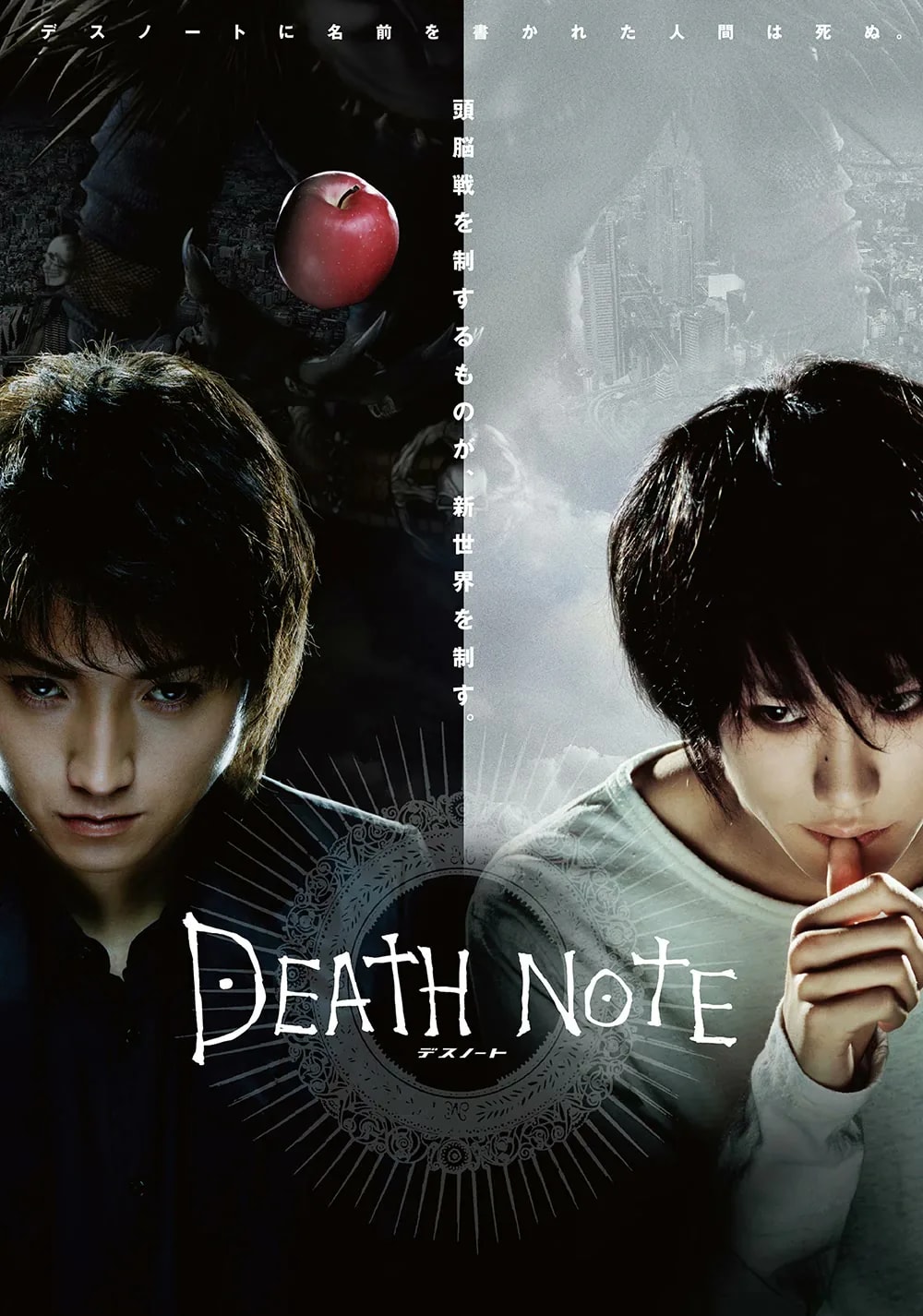
MovieThe opening chapter of the live-action Death Note films, directed by Shusuke Kaneko and released in Japan in 2006. It adapts the early manga, following Light Yagami's discovery of the killer notebook and the detective L's pursuit, and sets up the concluding film The Last Name.
Overview
This 2006 release opens the live-action Death Note film series, serving as the opening installment of a two-part tale, and its sequel Death Note: The Last Name brings the story to a close. Shusuke Kaneko directed both halves, drawing on the manga that Tsugumi Ohba and Takeshi Obata created.



Plot
A gifted but jaded Tokyo college student, Light Yagami, comes upon a dark notebook on his way home, its pages promising death to anyone whose name is written while their face is pictured. Doubtful at first, he tests it on a criminal, sees that it works, and after a second victim meets the notebook's former keeper, the shinigami Ryuk. Embracing the power, Light starts striking down felons across the globe and is both worshipped and feared under the name Kira.
The killings draw the reclusive detective L, who pins Kira to Japan and, through a televised stunt using a decoy named Lind L. Tailor, baits Light into exposing his region and his ability to kill from a distance. As L closes in on the task force led by Light's own father Soichiro, Light engineers the deaths of an FBI agent shadowing him and, more painfully, his girlfriend Shiori, manipulating the former agent Naomi Misora into a fatal confrontation. Feigning grief, Light worms his way onto the investigation hunting Kira, while a closing scene introduces the actress Misa Amane as a second notebook drops beside her.

Reception
The film opened across Japanese theaters on June 17, 2006, then held the top box office spot for two weeks, edging The Da Vinci Code down to the runner-up position. It went on to play across Hong Kong, Taiwan, Singapore, Malaysia, the United Kingdom, and a limited North American run, its Hong Kong debut being the earliest such premiere there for any Japanese film. Earnings reached around forty-one million dollars in Japan alongside roughly two million in Hong Kong. Home editions followed on DVD and Blu-ray, among them a fifth-anniversary box paired with The Last Name and later reissues from Viz Media and Funimation. Director Kaneko built his approach around the psychological dread of death, wanting the picture to dwell on the suffering its source material only brushes against.
Related Reading
See all
Super Saiyan Pubes: The Song About Where Super Saiyan Hair Actually Goes
The transformation everyone knows, the follow-up question nobody would touch. Why we made a smooth R&B track about the golden glow Dragon Ball never talks about....

The Bleach Female Characters Nobody Can Agree On, Settled
Five Bleach female characters, ranked and settled. Yoruichi sits at number five, the spot nobody expects, and our number one is an Arrancar with a soft heart....


Frequently Asked Questions
What is the 2006 Death Note film about?
The 2006 Death Note film is the live-action opening chapter that adapts the early manga, following Tokyo college student Light Yagami after he finds a notebook that kills anyone whose name is written while their face is pictured. As Light strikes down criminals under the alias Kira, the reclusive detective L sets out to catch him.
When was the 2006 Death Note film released?
The 2006 Death Note film opened across Japanese theaters on June 17, 2006. It later played in territories including Hong Kong, Taiwan, Singapore, Malaysia, the United Kingdom, and a limited North American run.
Who directed the 2006 Death Note film?
The 2006 Death Note film was directed by Shusuke Kaneko, who also helmed its sequel, with a screenplay by Tetsuya Oishi and music by Kenji Kawai.
Is the 2006 Death Note film part of a series?
Yes, the 2006 Death Note film is the opening installment of a two-part live-action tale, and its sequel Death Note: The Last Name brings the story to a close. Both halves were directed by Shusuke Kaneko.
How did the 2006 Death Note film perform at the box office?
The 2006 Death Note film held the top Japanese box office spot for two weeks, edging The Da Vinci Code into second place, and earned around forty-one million dollars in Japan plus roughly two million in Hong Kong.
Sources & Information
Looking for more on Death Note (2006 film)? The Death Note Wiki on Fandom has a dedicated page with community notes.
View on FandomThis content is original writing by Daddy Jim Headquarters based on the Death Note anime series, manga, and official materials. Episode and chapter references are cited where applicable.
Character and scene imagery on this site is original artwork by Daddy Jim Headquarters, not screenshots or licensed imagery. Official cover art is used on three types of pages for editorial commentary:
- Movie pages: theatrical posters and key visuals, credited to Nippon Television and Warner Bros. Japan.
- Game pages: official box art, credited to Konami and other publishers.
- Manga chapter pages: Jump Comics volume covers, credited to Shueisha, Tsugumi Ohba, and Takeshi Obata.
Official resources:
Help Us Keep This Wiki Accurate
Daddy Jim Headquarters maintains this encyclopedia. If you spot an error, a translation issue, or something that doesn't look right, let us know.