Serpent Breathing
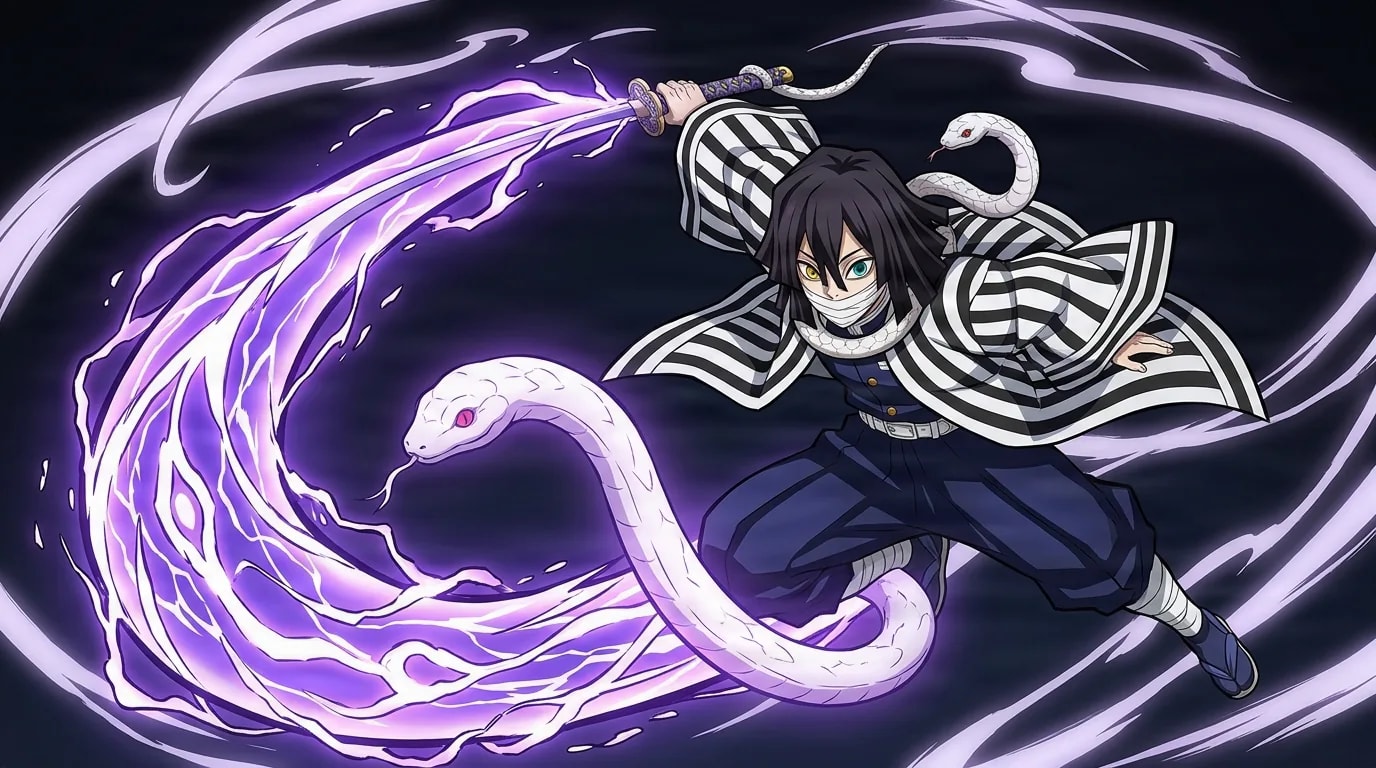
CharacterSerpent Breathing copies the slithering, sudden strikes of a snake, sending the blade weaving along unpredictable paths. Branched from Water Breathing, it belongs to Obanai Iguro, who wields a curving sword shaped like a snake's body.
Overview
Serpent Breathing imitates snakes, chiefly their winding glide and their fast, darting bites, and pours that motion into the user's steps and cuts. Its forms twist and bend the blade much the way a serpent coils, so the attacks rarely travel straight and constantly wander, able to land from any direction and throw an opponent off balance. Practitioners also picture pale serpents trailing alongside them as they release each technique.
The style grew out of Water Breathing. Since only Obanai Iguro is known to use it, and he is taken to be its originator, it demands a specially curved blade resembling an Indonesian kris dagger or an old Japanese dakoken, its outline modeled on the form of a snake.

Forms
At minimum the style holds five recorded forms, every one of them shown in the story. The First Form, Winding Serpent Slash, sends a single horizontal cut snaking toward the target. The Second Form (titled Venom Fangs of the Narrow Head, Chapter 164) has the user flash behind a foe at blinding speed and sweep their head off in one horizontal cut. The Third Form, Coil Choke (Episode 56), circles an enemy and carves at them from every side. The Fourth Form, Twin-Headed Reptile, is a forward leap into a slicing horizontal strike, visualized as a two-headed snake. The Fifth Form, Slithering Serpent (Episode 56), charges ahead in a curling path, bending the sword across several angles to cut down one or many enemies at once, capable of taking several heads in a single pass.

Notable Users
Obanai Iguro is the sole confirmed practitioner and the presumed creator. Blind in his right eye since youth, he performs the style with help from his snake, Kaburamaru, who reads and anticipates an enemy's moves and feeds that information back to him; whether the style works without the snake is unknown. According to the second databook, defeated demons recalled the style as harsh, leaving an odd cross-section, with one grumbling that the snaky blade and Obanai's biting words stung alike.
Related Reading
See all
Demon Slayer Infinity Castle Is the Biggest Anime Movie Ever but It Still Lost in Japan
Demon Slayer: Infinity Castle earned $778 million globally and nearly 40 billion yen in Japan, but it still couldn't top Mugen Train's domestic record. Here's why that barely matters....
Super Saiyan Pubes: The Song About Where Super Saiyan Hair Actually Goes
The transformation everyone knows, the follow-up question nobody would touch. Why we made a smooth R&B track about the golden glow Dragon Ball never talks about....

Frequently Asked Questions
What is Serpent Breathing in Demon Slayer?
Serpent Breathing is a sword style in Demon Slayer that copies the slithering, sudden strikes of a snake, sending the blade weaving along unpredictable paths that can land from any direction. Branched from Water Breathing, it is wielded by Obanai Iguro using a curving sword shaped like a snake's body.
Who invented Serpent Breathing?
Obanai Iguro is the sole confirmed practitioner of Serpent Breathing and is presumed to be its creator. Since only he is known to use it, he is taken to be its originator.
How many forms does Serpent Breathing have?
Serpent Breathing has at minimum five recorded forms, all shown in the story: First Form Winding Serpent Slash, Second Form Venom Fangs of the Narrow Head, Third Form Coil Choke, Fourth Form Twin-Headed Reptile, and Fifth Form Slithering Serpent. No ten forms are recorded in the source material.
What is Serpent Breathing derived from?
Serpent Breathing grew out of Water Breathing. It is one of the styles that branched from that original technique.
What kind of sword does Serpent Breathing use?
Serpent Breathing demands a specially curved blade resembling an Indonesian kris dagger or an old Japanese dakoken, with its outline modeled on the form of a snake. This curving shape lets the blade twist and bend the way a serpent coils.
Sources & Information
Looking for more on Serpent Breathing? The Demon Slayer Wiki on Fandom has a dedicated page with community notes.
View on FandomThis content is original writing by Daddy Jim Headquarters based on the Demon Slayer anime series, manga, and official materials. Episode and chapter references are cited where applicable.
Character and scene imagery on this site is original artwork by Daddy Jim Headquarters, not screenshots or licensed imagery. Official cover art is used on three types of pages for editorial commentary:
- Movie pages: theatrical posters and key visuals, credited to ufotable and Aniplex.
- Game pages: official box art, credited to Sega, Aniplex, and other publishers.
- Manga chapter pages: Jump Comics volume covers, credited to Shueisha and Koyoharu Gotouge.
Official resources:
Help Us Keep This Wiki Accurate
Daddy Jim Headquarters maintains this encyclopedia. If you spot an error, a translation issue, or something that doesn't look right, let us know.