Obanai Iguro
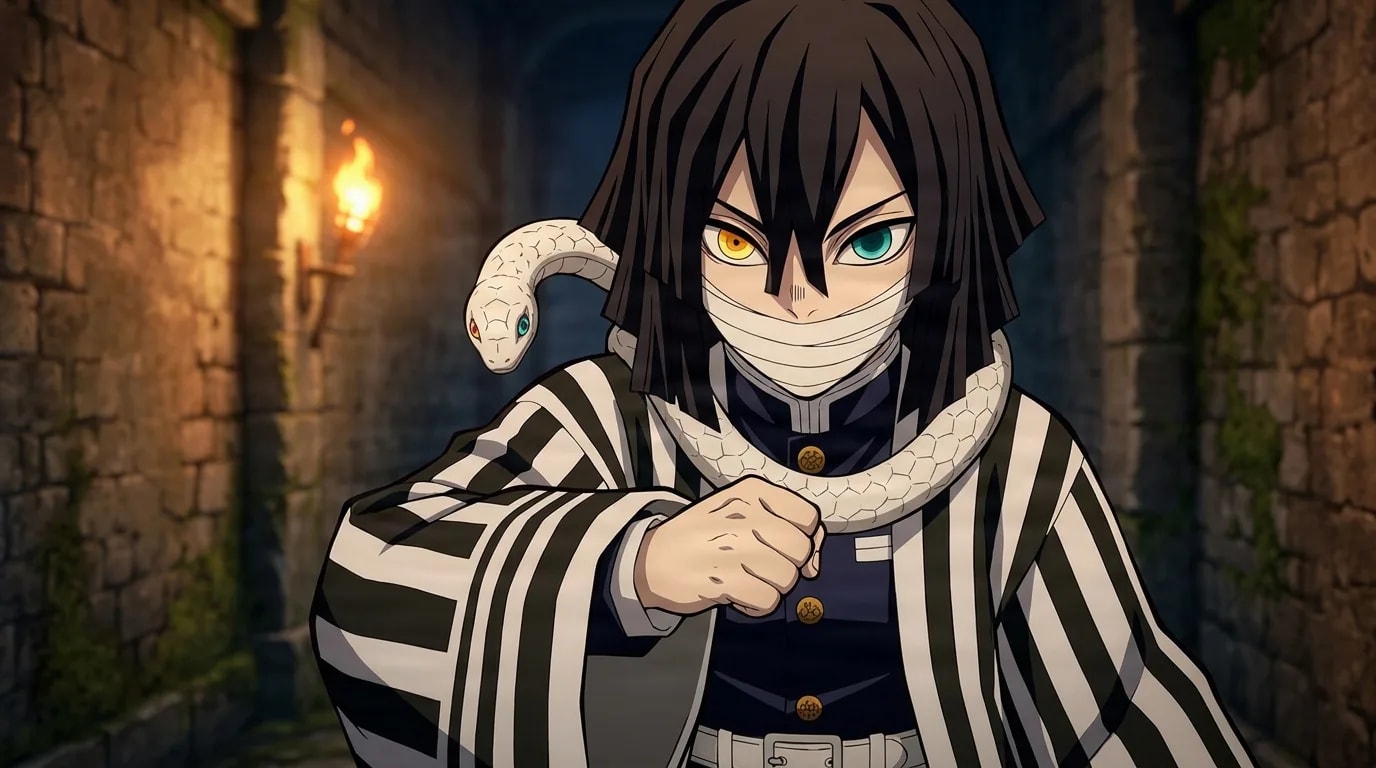
CharacterObanai Iguro holds the post of Serpent Hashira in the Corps during the Taisho era. Raised in a vicious bloodline that offered children to a serpent demon, he turns his fury toward slaying demons and quietly carries strong feelings for Mitsuri Kanroji.
Appearance and Personality
Obanai is short and slim with a toned frame and straight black hair of uneven length. His eyes show heterochromia, the right a yellow shade and the left teal, and his right side is nearly sightless. Bandages typically hide the bottom half of his face, masking the wide scars left when his relatives sliced his mouth open to resemble a snake's. His white snake Kaburamaru is almost always coiled around him. Severe and curt, he is intensely devoted yet prickly toward Tanjiro, and he bears a heavy burden of guilt and self-hatred from his childhood, convinced his corrupted blood denies him any chance at happiness.



Background and Story Role
The Iguro family amassed wealth by serving a serpent demon, handing over their infants in return for the riches taken from its prey. Being the first boy the family had produced in centuries and one bearing unusual eyes, Obanai was kept locked away, fattened up, and held in reserve, his mouth eventually cut to satisfy the demon. He broke free with a stolen hairpin, taking with him the snake that had crept into his cell, and was saved by Shinjuro Rengoku. His one surviving relative blamed him for the demon slaughtering the rest of the family, a blow that scarred him, and he became a slayer to release his rage.
Serving as Serpent Hashira, he sees the later campaigns through, attending Hashira gatherings, inspecting Yoshiwara after the Upper Six clash, and dropping into the Infinity Castle. In the climactic fight against Muzan he pushes himself to the edge of death, awakening his Mark and turning his blade bright red, wishing that in a peaceful next life he might tell Mitsuri how he feels.

Abilities
Obanai ranks among the mightiest Hashira, using Serpent Breathing with an oddly curved Nichirin blade whose twisting, hard-to-predict strikes match his fighting style. Half-blind, he makes up for it with the senses he honed during his imprisonment and works in tight coordination with Kaburamaru. At the climax he awakens a Demon Slayer Mark and reddens his sword, driving his power to its height during the assault on Muzan.
Related Reading
See all
Demon Slayer Infinity Castle Is the Biggest Anime Movie Ever but It Still Lost in Japan
Demon Slayer: Infinity Castle earned $778 million globally and nearly 40 billion yen in Japan, but it still couldn't top Mugen Train's domestic record. Here's why that barely matters....
Super Saiyan Pubes: The Song About Where Super Saiyan Hair Actually Goes
The transformation everyone knows, the follow-up question nobody would touch. Why we made a smooth R&B track about the golden glow Dragon Ball never talks about....

Frequently Asked Questions
Who is Obanai Iguro in Demon Slayer?
Obanai Iguro is the Serpent Hashira of the Demon Slayer Corps during the Taisho era. Raised in a vicious bloodline that offered children to a serpent demon, he turns his fury toward slaying demons and quietly carries strong feelings for Mitsuri Kanroji.
How does Obanai Iguro die in Demon Slayer?
Obanai Iguro dies in the climactic battle against Muzan, pushing himself to the very edge of death while awakening his Demon Slayer Mark and turning his blade bright red. He is listed as deceased after the final confrontation.
Is Obanai Iguro in love with Mitsuri Kanroji in Demon Slayer?
Yes, Obanai Iguro, the Serpent Hashira, carries strong romantic feelings for Mitsuri Kanroji, the Love Hashira. In his final moments he wishes that in a peaceful next life he might tell her how he feels.
What Breathing Style does Obanai Iguro use in Demon Slayer?
Obanai Iguro uses Serpent Breathing, fighting with an oddly curved Nichirin blade whose twisting, hard-to-predict strikes match his style. At the climax he awakens a Demon Slayer Mark and reddens his sword.
What is the name of Obanai Iguro's snake in Demon Slayer?
Obanai Iguro's snake is named Kaburamaru, a white serpent that is almost always coiled around him and works in tight coordination with him in battle.
Sources & Information
Looking for more on Obanai Iguro? The Demon Slayer Wiki on Fandom has a dedicated page with community notes.
View on FandomThis content is original writing by Daddy Jim Headquarters based on the Demon Slayer anime series, manga, and official materials. Episode and chapter references are cited where applicable.
Character and scene imagery on this site is original artwork by Daddy Jim Headquarters, not screenshots or licensed imagery. Official cover art is used on three types of pages for editorial commentary:
- Movie pages: theatrical posters and key visuals, credited to ufotable and Aniplex.
- Game pages: official box art, credited to Sega, Aniplex, and other publishers.
- Manga chapter pages: Jump Comics volume covers, credited to Shueisha and Koyoharu Gotouge.
Official resources:
Help Us Keep This Wiki Accurate
Daddy Jim Headquarters maintains this encyclopedia. If you spot an error, a translation issue, or something that doesn't look right, let us know.