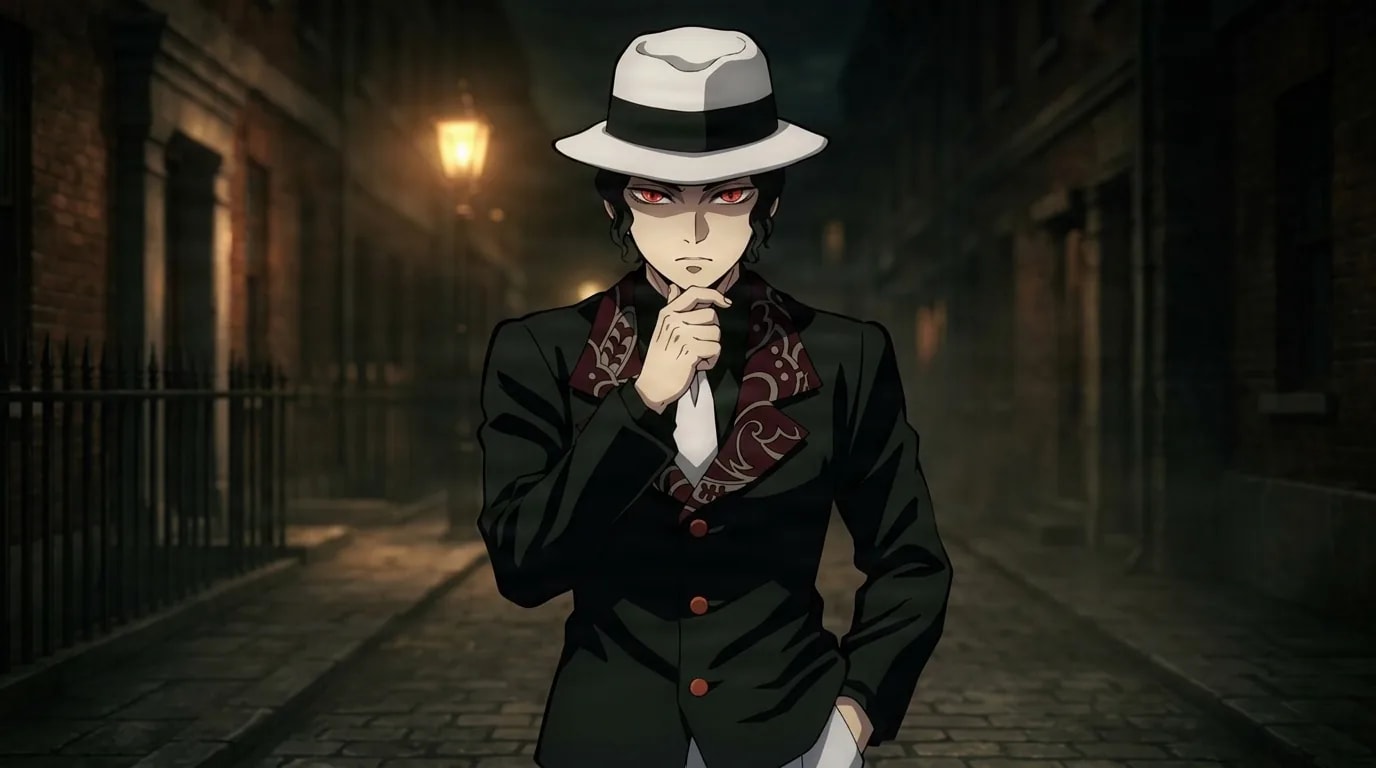
Muzan Kibutsuji
CharacterMuzan Kibutsuji is the central antagonist of Demon Slayer, the Demon King and progenitor of every other demon, and leader of the Twelve Kizuki. Born terminally ill a thousand years ago, he became a demon and has pursued true immortality ever since.
Appearance
Standing tall, Muzan has a lean and muscular frame paired with unnaturally pale skin that can read as sickly. He has short wavy black hair, sharp almond eyes with vivid red irises and slit cat-like pupils, and bluish nails. He looks to be in his twenties despite his true age. A master of disguise, he is first seen in a white fedora and an elegant black tuxedo and freely changes his style of dress to blend into human society.
His look shifted across the centuries, from a sokutai outfit in the Heian period to long hair and a worn kimono when his illness deepened. For his meeting with the Lower Ranks he appeared as an elegantly dressed woman so they would fail to recognize him.



Personality
Muzan is a cold, ruthless, and brilliant megalomaniac who places no value on human life and little on his own subordinates. Usually flat and detached, he murders his followers without changing expression and shows feeling only when his vision of perfection advances or when others fully submit to him. His cruelty and presence command both terror and devotion among demons.
His guiding belief is a hatred of change, which he equates with decline, and a love of permanence and the eternal. When he learned that Nezuko had survived sunlight, his usual composure cracked into open elation at the prospect of finally absorbing that immunity for himself.
Abilities
As the first demon and the source of all others, Muzan is the strongest of his kind. Even after dissolving a drug meant to weaken him, he wiped out close to a hundred Demon Slayers almost effortlessly. A marked Giyu stated that an Upper Rank's strength does not compare to his, and Tanjiro could only evade his attacks on instinct, unable to follow them or even track them by smell.
By extending whips from his back he massacred dozens more slayers and overwhelmed several marked Hashira at once. His power lies in biokinesis, the ability to reshape and control his own flesh and blood, alongside the regeneration and physical supremacy that define him as the Demon King.
Related Reading
See all
Demon Slayer Infinity Castle Is the Biggest Anime Movie Ever but It Still Lost in Japan
Demon Slayer: Infinity Castle earned $778 million globally and nearly 40 billion yen in Japan, but it still couldn't top Mugen Train's domestic record. Here's why that barely matters....

Super Saiyan Pubes: The Song About Where Super Saiyan Hair Actually Goes
The transformation everyone knows, the follow-up question nobody would touch. Why we made a smooth R&B track about the golden glow Dragon Ball never talks about....


Frequently Asked Questions
Who is Muzan Kibutsuji in Demon Slayer?
Muzan Kibutsuji is the central antagonist of Demon Slayer, the Demon King and progenitor of every other demon, and the leader of the Twelve Kizuki. Born terminally ill a thousand years ago, he became a demon and has pursued true immortality ever since.
Why did Muzan Kibutsuji become a demon?
Muzan Kibutsuji became a demon after being born terminally ill a thousand years ago. Ever since his transformation, he has pursued true immortality, including immunity to sunlight.
How old is Muzan Kibutsuji in Demon Slayer?
Muzan Kibutsuji is over 1,000 years old chronologically, though he looks to be in his twenties despite his true age.
Why does Muzan Kibutsuji appear as a woman in Demon Slayer?
Muzan Kibutsuji appeared as an elegantly dressed woman for his meeting with the Lower Ranks so that they would fail to recognize him. He is a master of disguise who freely changes his style of dress to blend into human society.
What are Muzan Kibutsuji's powers in Demon Slayer?
Muzan Kibutsuji's power lies in biokinesis, the ability to reshape and control his own flesh and blood, along with extreme regeneration and physical supremacy. As the first demon and the source of all others, he is the strongest of his kind.
Sources & Information
Looking for more on Muzan Kibutsuji? The Demon Slayer Wiki on Fandom has a dedicated page with community notes.
View on FandomThis content is original writing by Daddy Jim Headquarters based on the Demon Slayer anime series, manga, and official materials. Episode and chapter references are cited where applicable.
Character and scene imagery on this site is original artwork by Daddy Jim Headquarters, not screenshots or licensed imagery. Official cover art is used on three types of pages for editorial commentary:
- Movie pages: theatrical posters and key visuals, credited to ufotable and Aniplex.
- Game pages: official box art, credited to Sega, Aniplex, and other publishers.
- Manga chapter pages: Jump Comics volume covers, credited to Shueisha and Koyoharu Gotouge.
Official resources:
Help Us Keep This Wiki Accurate
Daddy Jim Headquarters maintains this encyclopedia. If you spot an error, a translation issue, or something that doesn't look right, let us know.