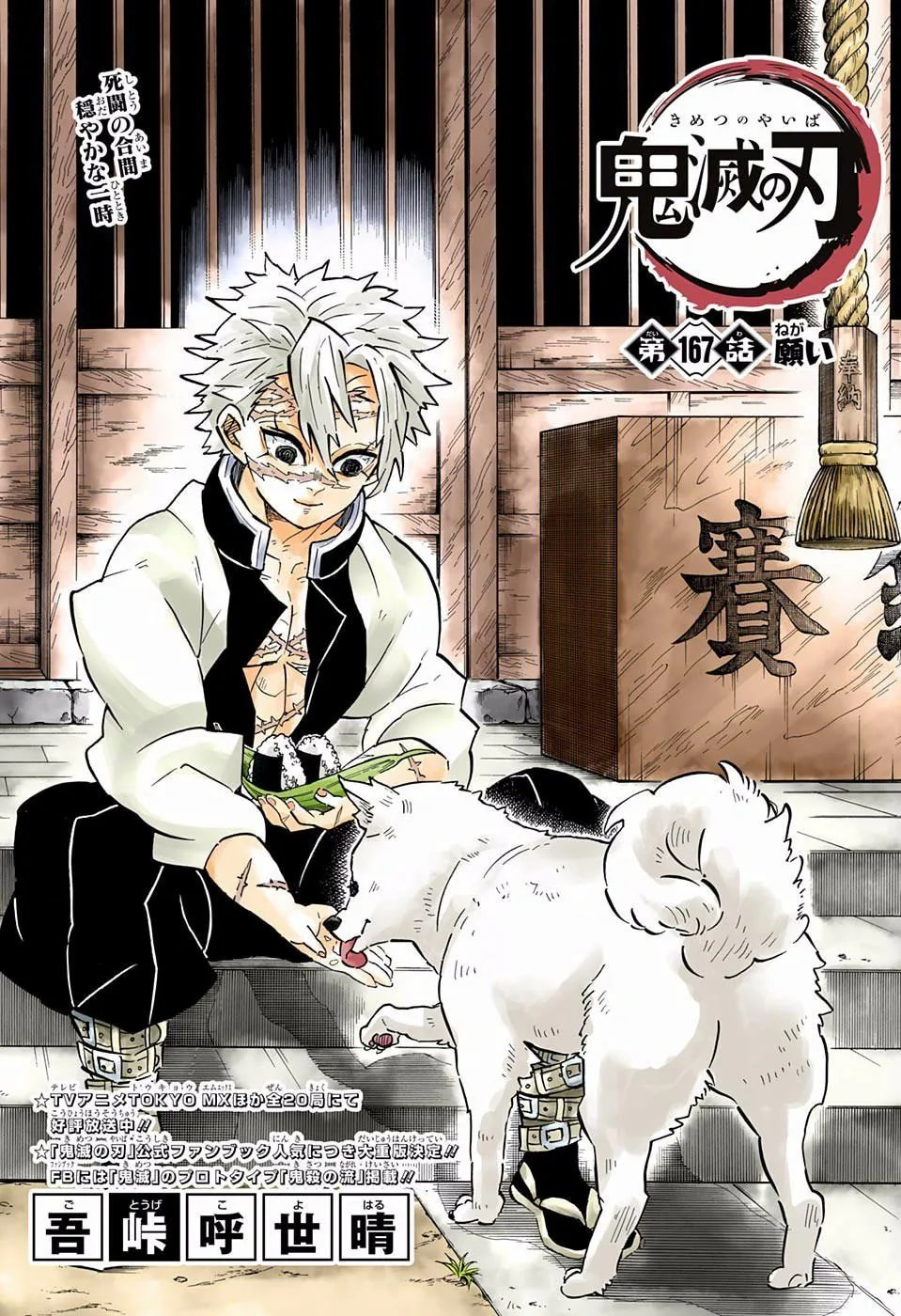
The 167th chapter of Kimetsu no Yaiba follows Sanemi's solo duel with Kokushibo, trading Wind and Moon Breathing forms. Though wounded, the Wind Hashira turns his rare Marechi blood into a weapon that staggers Upper Rank One.
Summary
The Wind Hashira and Upper Rank One collide, with Kokushibo loosing Moon Breathing, Fifth Form, a spinning wheel of crescent slashes that drives Sanemi back. Noting the demon can repeat the technique with a single swing, Sanemi answers with Wind Breathing, Third Form. Kokushibo praises the Hashira's body and skill as fully matured, while Sanemi privately admits the demon's mastery raises the hair on his neck. He observes that every cut spawns chaotic, shifting blades that defy prediction, and he concedes that without his own hard experience he could never hold them off. The blend of Kokushibo's speed with a demon's regeneration and strength marks him as a foe whose power keeps rising.
Energized rather than cowed, Sanemi presses on, calling Kokushibo a demon truly worth killing. He cuts at the eye-covered blade, leaps in to threaten the neck, and even tries to scoop up Genya's fallen short sword with his foot, matching the demon strike for strike. Kokushibo retaliates with Moon Breathing, Sixth Form, carving deep wounds across Sanemi's chest and limbs and shattering the surrounding pillars. As Sanemi rises, bleeding heavily, Kokushibo's pulse quickens against his will. Sanemi laughs and explains that, much like catnip on a cat, his Marechi blood intoxicates demons. He lunges anew, leaving the unsteady Upper Rank to stagger, thrilled that his rare blood affects even the strongest demons.
Key Events
Sanemi battles Kokushibo alone and works out that the demon's swings generate erratic, size-shifting blades.
The Wind Hashira nearly keeps pace with Upper Rank One but cannot land a clean hit. After being badly cut, the blood from Sanemi's wounds reaches Kokushibo, and the scent of his Marechi blood makes the demon stumble and lose his footing.
Notes
Set within the Infinity Castle Arc and collected in Volume 19, the chapter highlights both the lethality of Kokushibo's Moon Breathing and the unique advantage of Sanemi's Marechi heritage. The revelation that his blood disrupts even an Upper Rank reframes the wounds Sanemi sustains as a deliberate gamble rather than simple disadvantage, tilting the duel in unexpected directions.
Related Reading
See all
Demon Slayer Infinity Castle Is the Biggest Anime Movie Ever but It Still Lost in Japan
Demon Slayer: Infinity Castle earned $778 million globally and nearly 40 billion yen in Japan, but it still couldn't top Mugen Train's domestic record. Here's why that barely matters....
Super Saiyan Pubes: The Song About Where Super Saiyan Hair Actually Goes
The transformation everyone knows, the follow-up question nobody would touch. Why we made a smooth R&B track about the golden glow Dragon Ball never talks about....

Frequently Asked Questions
What happens in Chapter 167 of Demon Slayer?
Chapter 167 of Kimetsu no Yaiba, titled "A Request," follows Sanemi's solo duel with Kokushibo as they trade Wind and Moon Breathing forms. Though wounded, the Wind Hashira turns his rare Marechi blood into a weapon that staggers Upper Rank One.
How does Sanemi's Marechi blood affect Kokushibo in Chapter 167?
In Chapter 167, the scent of Sanemi's Marechi blood intoxicates demons much like catnip affects a cat, causing Kokushibo to stumble and lose his footing. Sanemi reveals his rare blood disrupts even the strongest demons, including an Upper Rank.
What Moon Breathing forms does Kokushibo use in Chapter 167?
In Chapter 167, Kokushibo uses Moon Breathing, Fifth Form, a spinning wheel of crescent slashes, and later Moon Breathing, Sixth Form, which carves deep wounds across Sanemi's chest and limbs and shatters the surrounding pillars.
What volume and arc is Demon Slayer Chapter 167 in?
Chapter 167 of Demon Slayer is set within the Infinity Castle Arc and is collected in Volume 19.
What does Sanemi learn about Kokushibo's swordsmanship in Chapter 167?
In Chapter 167, Sanemi works out that Kokushibo's swings generate erratic, size-shifting blades that defy prediction. He concedes that without his own hard experience he could never hold them off, and that the demon's speed combined with regeneration and strength marks him as a foe whose power keeps rising.
Sources & Information
Looking for more on A Request? The Demon Slayer Wiki on Fandom has a dedicated page with community notes.
View on FandomThis content is original writing by Daddy Jim Headquarters based on the Demon Slayer anime series, manga, and official materials. Episode and chapter references are cited where applicable.
Character and scene imagery on this site is original artwork by Daddy Jim Headquarters, not screenshots or licensed imagery. Official cover art is used on three types of pages for editorial commentary:
- Movie pages: theatrical posters and key visuals, credited to ufotable and Aniplex.
- Game pages: official box art, credited to Sega, Aniplex, and other publishers.
- Manga chapter pages: Jump Comics volume covers, credited to Shueisha and Koyoharu Gotouge.
Official resources:
Help Us Keep This Wiki Accurate
Daddy Jim Headquarters maintains this encyclopedia. If you spot an error, a translation issue, or something that doesn't look right, let us know.