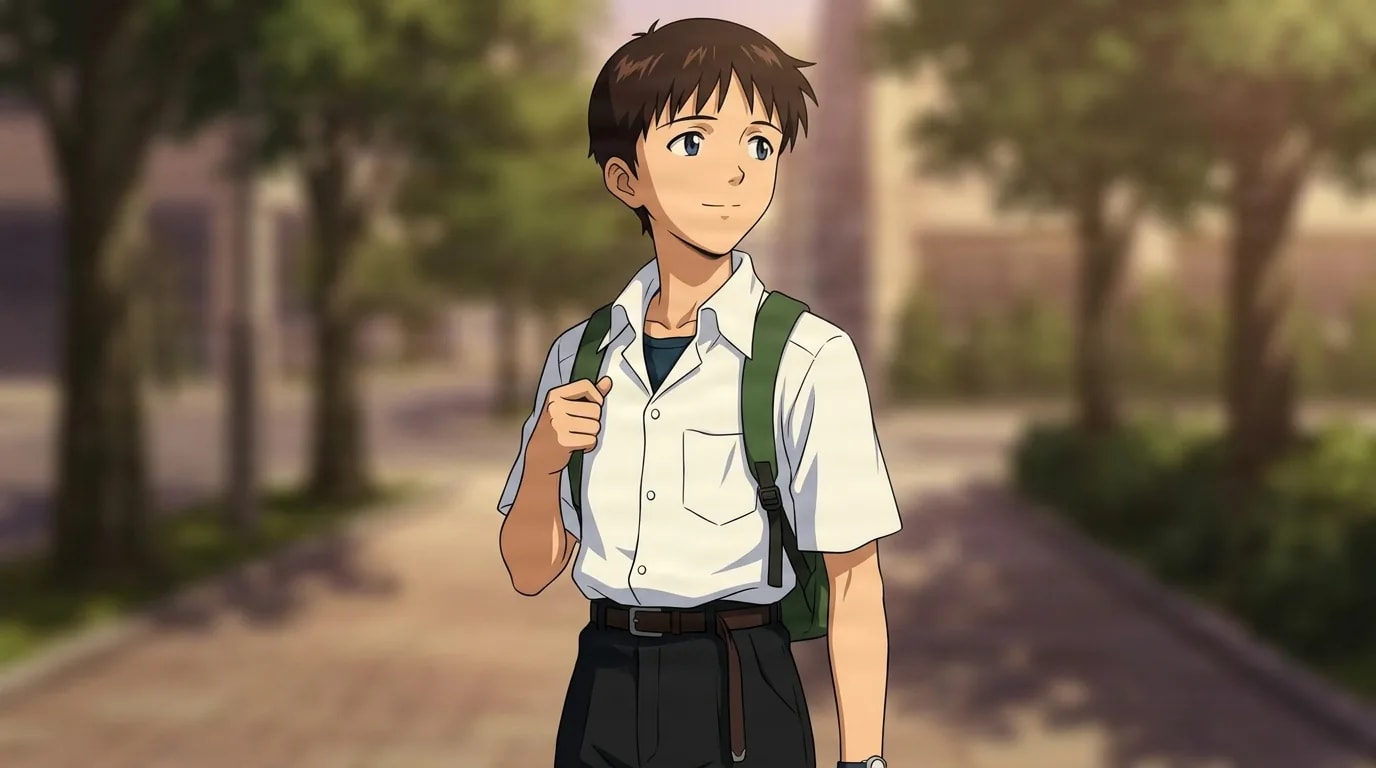
Shinji Ikari
CharacterSummoned to Tokyo-3 by the father who discarded him, fourteen-year-old Shinji Ikari becomes the Third Child and the pilot of Evangelion Unit-01. The reluctant heart of Neon Genesis Evangelion fights Angels not out of courage but out of a desperate hunger for approval, and his final choice decides the shape of every human soul.
Appearance
Grey-blue eyes look out from beneath a neat crop of straight brown hair. Shinji's frame is slight, almost frail, and his habit of keeping his shirt tucked in marks him as an orderly boy. Whether at headquarters or off wandering town, he layers a white dress shirt over a blue tee with dark trousers and white sneakers, trading the outfit for something looser at home. His plug suit sets a pale blue chest against darker blue limbs broken up by black paneling.
Personality
Years in his teacher's quiet household leave Shinji passive and compliant, and his first act at NERV is refusal: he wants nothing to do with Unit-01. What finally puts him in the entry plug is hunger for approval, above all his father's, however firmly he denies it. His private mantra, "I mustn't run away," doubles as a plea to stop clinging to the past.
Abandonment shaped him. Convinced he was left behind for failing to be good enough, he dreads emotional pain, hatred, and being cast off, and he has grown so cut off from other people that social gatherings leave him visibly adrift. When the world presses too close he retreats behind the headphones of his SDAT player. Yet he is neither cold nor unkind: gentle in manner, painfully conscious of his own faults, and gifted with a precise memory, he is the only pilot who keeps searching for a reason the Angels must be fought at all. Even his flights from the cockpit are often framed as attempts to spare others harm, and at his most extreme he will risk any number of lives, his own included, to rescue one person.



History
Shinji is about three when the Contact Experiment swallows his mother into Unit-01 before his eyes. Gendō sends the boy away to a teacher's care, then summons him to Tokyo-3 eleven years later with a nearly blank letter. He refuses to pilot until the sight of Rei Ayanami, bandaged and bleeding on a stretcher, shames him into the entry plug. Against Sachiel he blacks out almost at once; the berserk Unit-01 wins the fight without him. Misato Katsuragi takes him into her apartment rather than leave him alone, and at school he gains friends in Tōji and Kensuke.
The battles mount. He kills Shamshel at the price of a panicked rampage through the city, destroys Ramiel with a positron beam while Rei shields him, and learns cooperation when Israfel forces him and the newly arrived Asuka through days of synchronized dance training. He drops his knife into a volcano to save her from Sandalphon, braces the falling Sahaquiel, and is dragged with his Eva into Leliel's shadow before the machine rips itself free. His synch scores finally overtake Asuka's, and confidence arrives just in time to be shattered: Gendō's dummy plug butchers the Angel-infested Unit-03 with Tōji inside, and Shinji quits NERV in fury. Kaji talks him back for the stand against Zeruel, where the berserk Unit-01 devours the Angel's S² engine and then absorbs Shinji bodily into its core; he returns only after recognizing his mother's presence in the Eva. Armisael's attack costs Rei her life and exposes her clones, and the discovery that his one new friend, Kaworu Nagisa, is the final Angel breaks him entirely. At Kaworu's own request, Shinji crushes him in Unit-01's grip.
The television finale turns inward: guided through Instrumentality, Shinji confronts his self-loathing, accepts that he holds worth as an individual, and chooses to live. The End of Evangelion stages that choice in flesh. After Misato's death and Third Impact itself, Rei places control of Instrumentality in his hands, and he rejects a merged humanity in favor of a world of separate, wounding, real others, waking on the shore beside Asuka.
Yoshiyuki Sadamoto's manga redraws him as angrier and more sarcastic, quicker to lash out and closer to Rei, and it ends with him beginning again in a remade world, Misato's cross pendant tied to his suitcase. Spin-offs from the Raising Project to Gakuen Datenroku and the video games recast him freely, and the Rebuild films retell his story from the start. Sadamoto designed him as a male reworking of Nadia, Hideaki Anno wrote him as a mirror of his own conscious self, and his given name honors animator Shinji Higuchi.
Related Reading
See all
Naruto vs Luffy: Does the Fight Change if Luffy Tickles Hinata?
Naruto vs Luffy with the twist nobody asked for: Luffy tickled Hinata on date night, and she kind of liked it. We break down the whole fight and commit to a winner....
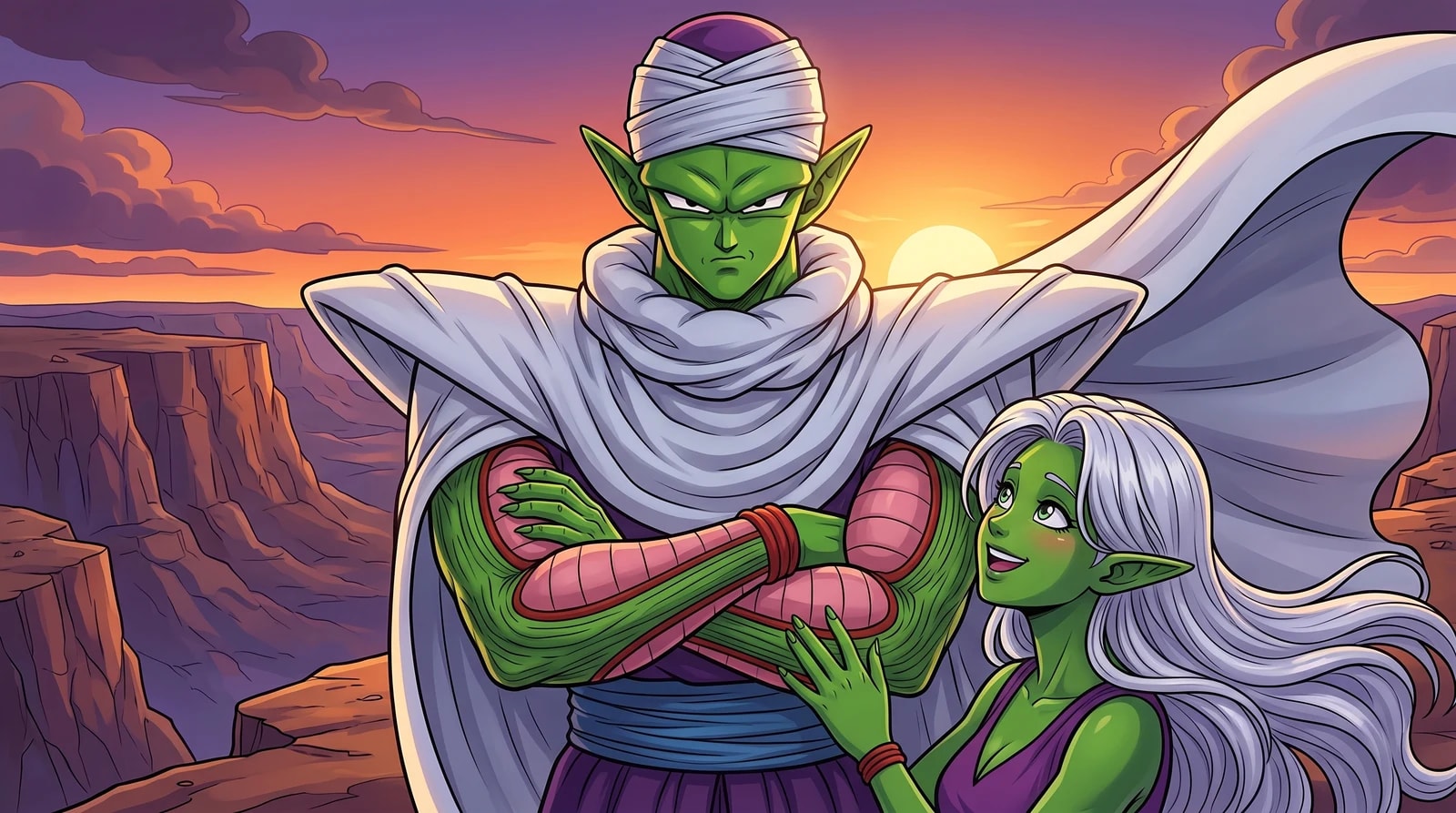
Piccolo Gets the Namek Hoes: Namek Has No Women, and He Pulls Anyway
There are no women on Namek. That isn't an oversight, it's the biology. Why we handed Piccolo the one thing his own species rules out, and why it had to be trap soul....
Frequently Asked Questions
Who does Shinji Ikari end up with?
At the end of The End of Evangelion, Shinji Ikari rejects a merged humanity and chooses a world of separate, real individuals, waking on the shore beside Asuka Langley Sohryu. The manga version instead ends with him beginning again in a remade world.
Why does Shinji Ikari refuse to pilot Evangelion Unit-01 at first?
Shinji Ikari initially refuses to pilot Evangelion Unit-01 because years in his teacher's quiet household left him passive and unwilling. He only agrees after seeing Rei Ayanami wheeled out bandaged and bleeding on a stretcher, which shames him into the entry plug.
What happened to Shinji Ikari's mother?
Shinji Ikari's mother, Yui Ikari, was swallowed into Evangelion Unit-01 during the Contact Experiment when Shinji was about three years old. Gendō then sent the boy away to a teacher's care, only summoning him back eleven years later.
Why does Shinji Ikari kill Kaworu Nagisa?
Shinji Ikari crushes Kaworu Nagisa in Unit-01's grip at Kaworu's own request, after discovering that his new friend is actually the final Angel. The act devastates Shinji, who had only just found someone he trusted.
What choice does Shinji Ikari make about Instrumentality at the end of The End of Evangelion?
After Rei places control of Instrumentality in his hands, Shinji Ikari rejects a merged, undifferentiated humanity in favor of a world of separate, wounding, real other people. This choice follows his earlier realization, guided through Instrumentality, that he holds worth as an individual and chooses to live.
Sources & Information
Looking for more on Shinji Ikari? The Dragon Ball Wiki on Fandom has a dedicated page with community notes.
View on FandomThis content is original writing by Daddy Jim Headquarters based on the Dragon Ball anime series, manga, and official materials. Episode and chapter references are cited where applicable.
Character and scene imagery on this site is original artwork by Daddy Jim Headquarters, not screenshots or licensed imagery. Official cover art is used on three types of pages for editorial commentary:
- Movie pages: theatrical posters and key visuals, credited to Toei Animation and Shueisha.
- Game pages: official box art, credited to Bandai Namco, Atari, and other publishers.
- Manga chapter pages: Jump Comics volume covers, credited to Shueisha and Akira Toriyama.
Official resources:
Help Us Keep This Wiki Accurate
Daddy Jim Headquarters maintains this encyclopedia. If you spot an error, a translation issue, or something that doesn't look right, let us know.