Momo Sohma
CharacterMomo Sohma is Momiji's younger sister, born after their mother chose to forget she ever had a son. Unaware for years that she even has a brother, she is quietly drawn to Momiji and longs to know him, despite their father's constant interference. In Fruits Basket Another she returns as an adult who knows the truth.
Occupations
Appearance
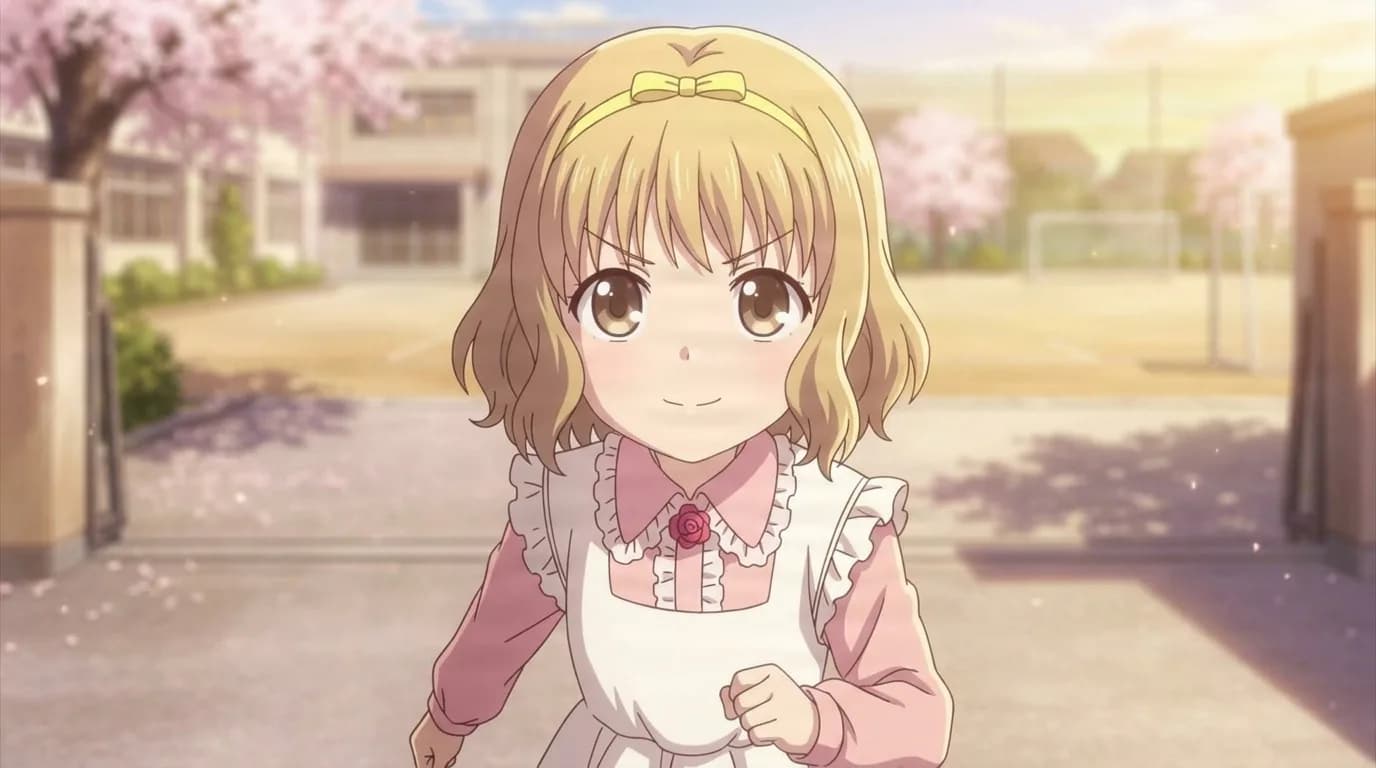
As a child Momo is a small girl with golden-brown eyes and wavy, dirty-blonde hair reaching her shoulders, cut with a straight fringe across her forehead, all inherited from her mother. She favors hair accessories, first appearing with part of her hair braided to one side under a yellow ribbon, and later wearing a ribboned hairband. Grown up in the sequel, she stands much taller but keeps the same short cut, her bangs now looser and framing her face.

Personality
Early on Momo is painfully shy and quiet, rarely speaking; because German is her first language, her Japanese comes out soft and mumbled. Though her face gives little away, she is thoughtful and kind, willing to slip Tohru into the off-limits main estate. Above all she is defined by her attachment to Momiji, wishing for him to be her older brother even though their father forbids the two from meeting. By Fruits Basket Another she has shed that timidity, becoming far more outgoing and openly affectionate, especially toward her niece.
Related Reading
See all
Naruto vs Luffy: Does the Fight Change if Luffy Tickles Hinata?
Naruto vs Luffy with the twist nobody asked for: Luffy tickled Hinata on date night, and she kind of liked it. We break down the whole fight and commit to a winner....
Namek Has No Women, and Piccolo Pulls Anyway
There are no women on Namek. That isn't an oversight, it's the biology. Why we handed Piccolo the one thing his own species rules out, and why it had to be trap soul....
History
Momo first meets Momiji at their father's office building, clinging to their mother while curiously studying the older boy. Later she guides Tohru through a hidden tunnel into the main estate, revealing that she often sneaks in to watch Momiji practice the violin and that she has noticed how much he resembles their mother. Her curiosity deepens into a wish, and she asks Tohru to pass along her hope that Momiji might become her big brother; the message moves Momiji to tears, though he decides he cannot agree without endangering the family's fragile calm.
Years later in Fruits Basket Another she reappears as an adult who now knows the truth, working as Momiji's assistant and helping care for his daughter Mina, confirming that the siblings have finally reconciled.
Frequently Asked Questions
Do Momo and Momiji get together?
Momo Sohma and her older brother Momiji are not a romantic couple, they are siblings. Though their father kept them apart for years, they reconcile by the time of Fruits Basket Another, where Momo works as Momiji's personal assistant.
Does Momo ever find out Momiji is her brother?
Yes, Momo Sohma eventually learns the truth. In Fruits Basket Another she reappears as an adult who knows Momiji is her brother, working as his assistant and helping care for his daughter Mina.
What is Momo Sohma's connection to Tohru Honda?
Momo Sohma guides Tohru Honda through a hidden tunnel into the off-limits main Sohma estate, revealing that she often sneaks in that way to watch her brother Momiji practice the violin.
What is Momo Sohma like as a child?
As a child, Momo Sohma is painfully shy and quiet, rarely speaking. Because German is her first language, her Japanese comes out soft and mumbled, though she is thoughtful and kind underneath her timidity.
What does Momo Sohma do in Fruits Basket Another?
In Fruits Basket Another, Momo Sohma works as Momiji's personal assistant and helps care for his daughter Mina, confirming that the siblings have finally reconciled.
Sources & Information
Looking for more on Momo Sohma? The Fruits Basket Wiki on Fandom has a dedicated page with community notes.
View on FandomThis content is original writing by Daddy Jim Headquarters based on the Fruits Basket anime series, manga, and official materials. Fruits Basket was created by Natsuki Takaya, published by Hakusensha, and animated by TMS Entertainment. All rights to Fruits Basket and its characters belong to their respective owners. Episode and chapter references are cited where applicable.
Rights holders
- Created byNatsuki Takaya
- Published byHakusensha
- Animated byTMS Entertainment
All rights belong to their respective owners.
Character and scene imagery on this site is original artwork by Daddy Jim Headquarters, not screenshots or licensed imagery. Official cover art is used on three types of pages for editorial commentary:
- Movie pages: theatrical posters and key visuals, credited to TMS Entertainment and Hakusensha.
- Game pages: official box art, credited to the game's respective publishers.
- Manga chapter pages: volume covers, credited to Hakusensha and Natsuki Takaya.
Official resources:
Help Us Keep This Wiki Accurate
Daddy Jim Headquarters maintains this encyclopedia. If you spot an error, a translation issue, or something that doesn't look right, let us know.