Yoroi Musha
CharacterEquipped Hero: Yoroi Musha spent years inside the top ten wearing a full suit of samurai armor and saying all the right things about duty. When public opinion turned on heroes after the Paranormal Liberation War, he admitted to himself what he had really been chasing and walked away.
Appearance
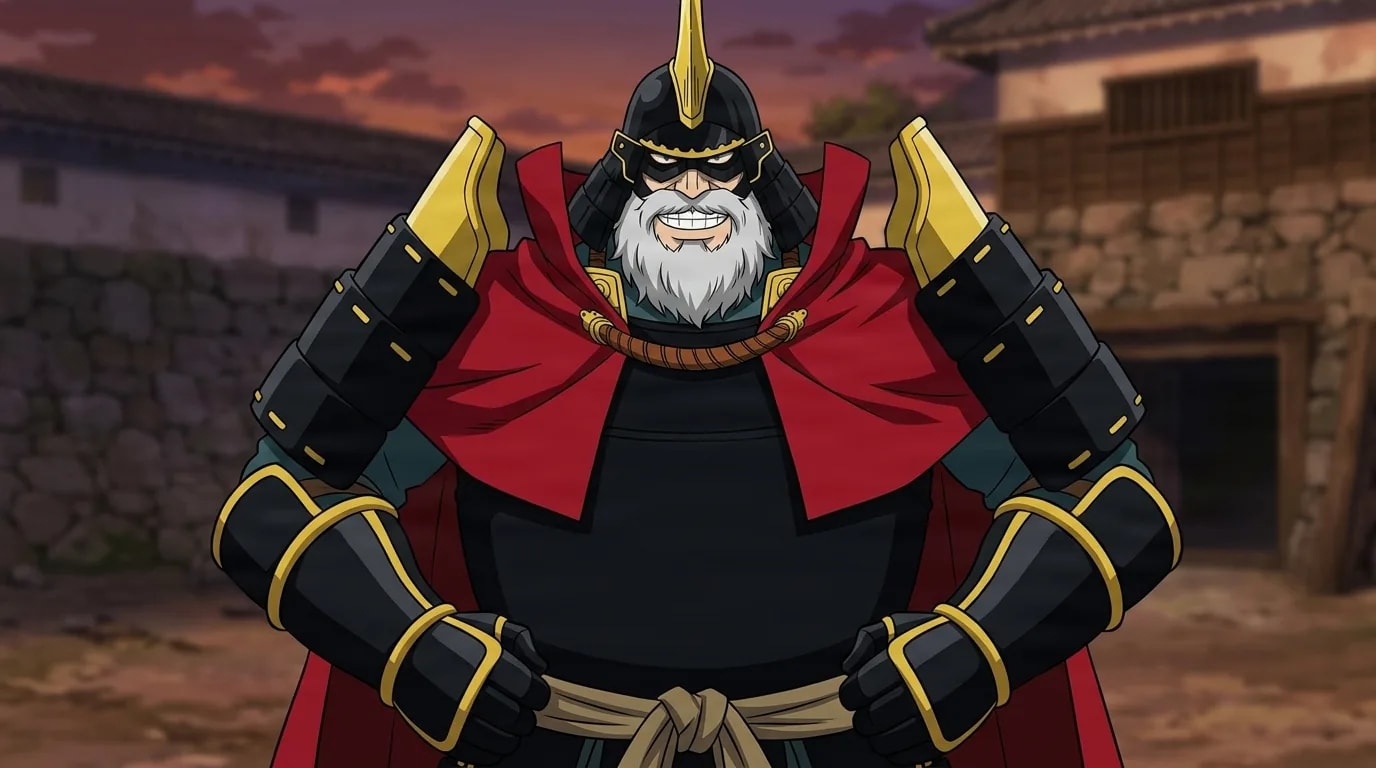
The armor is the entire silhouette: a complete set of Japanese plate, a red cape wound around the torso, and a helmet carrying one large horn that juts straight upward.
Out of costume he looks elderly, bald above a long white beard, with pale orange irises floating in black sclerae.
Personality
Very little of him is on record. What his reaction to a slipped ranking and his brief Hero Billboard Chart JP interview suggest is a man committed to the traditional idea of what a hero owes society.
That commitment did not survive the Paranormal Liberation War. With the public questioning heroes as a whole, he found he lacked the fortitude to keep going and retired.
History
He surfaces when the second-semester rankings for the year are announced, sitting at No. 9, musing that everything below the top three comes down to luck and timing, and answering a request for a statement by saying only that nothing about his duty has changed. During Hero Work-Studies II he took on Yuga Aoyama, Mina Ashido, and Toru Hagakure as interns.
He joined the assault on the Gunga Mountain Villa, where the Paranormal Liberation Front was holed up. The war that followed was a disaster for his side: cities flattened by Gigantomachia, a chilling death toll among heroes and civilians, Dabi's broadcast, and villains scattering, with Tomura Shigaraki cracking prisons open afterward. The backlash pushed many pros to retire and shutter their offices, and Yoroi Musha was among them. Announcing the decision suddenly, he privately conceded that fame and respect had been the point all along, and the crowd jeered him for it, calling it shirking and cowardice.
His Quirk was never revealed beyond what looks like a white glow at his forehead, and none of his fights were ever shown. A ninth-place ranking and a reputation as highly skilled and experienced are the evidence available, and they speak for themselves. Among the top ten he alone retired by choice, and he is one of the few heroes anywhere to step down for reasons other than severe injury or Quirk loss, the other being Death Arms.
Related Reading
See all
Naruto vs Luffy: Does the Fight Change if Luffy Tickles Hinata?
Naruto vs Luffy with the twist nobody asked for: Luffy tickled Hinata on date night, and she kind of liked it. We break down the whole fight and commit to a winner....
Piccolo Gets the Namek Hoes: Namek Has No Women, and He Pulls Anyway
There are no women on Namek. That isn't an oversight, it's the biology. Why we handed Piccolo the one thing his own species rules out, and why it had to be trap soul....
Frequently Asked Questions
What happened to Yoroi Musha?
Yoroi Musha was a former No. 9 hero on the Hero Billboard Chart JP who retired after the Paranormal Liberation War, when public trust in heroes collapsed. He later admitted that fame and respect had driven him all along, and the public jeered his sudden retirement as cowardice.
What does Yoroi Musha mean?
Written in kanji, Yoroi Musha translates to armor warrior, a fitting name for a hero whose entire costume is a full suit of samurai style armor. The character appears to be modeled on the historical warrior monk Benkei.
Who is the number 9 hero?
Yoroi Musha held the No. 9 spot on the Hero Billboard Chart JP before his retirement. He reached that ranking despite never having his Quirk or any of his fights shown, relying instead on a reputation for skill and experience.
What does Yoroi Musha look like?
Yoroi Musha wears a complete set of Japanese plate armor with a red cape wound around his torso and a helmet topped by one large upward pointing horn. Out of costume he is an elderly, bald man with a long white beard and pale orange irises set in black sclerae.
What is Yoroi Musha's Quirk?
Yoroi Musha's Quirk was never named or shown in battle, and the only visible sign of it is a white glow that appears at his forehead. His ninth place hero ranking stands as the main evidence of his ability.
Sources & Information
Looking for more on Yoroi Musha? The Dragon Ball Wiki on Fandom has a dedicated page with community notes.
View on FandomThis content is original writing by Daddy Jim Headquarters based on the Dragon Ball anime series, manga, and official materials. Episode and chapter references are cited where applicable.
Character and scene imagery on this site is original artwork by Daddy Jim Headquarters, not screenshots or licensed imagery. Official cover art is used on three types of pages for editorial commentary:
- Movie pages: theatrical posters and key visuals, credited to Toei Animation and Shueisha.
- Game pages: official box art, credited to Bandai Namco, Atari, and other publishers.
- Manga chapter pages: Jump Comics volume covers, credited to Shueisha and Akira Toriyama.
Official resources:
Help Us Keep This Wiki Accurate
Daddy Jim Headquarters maintains this encyclopedia. If you spot an error, a translation issue, or something that doesn't look right, let us know.