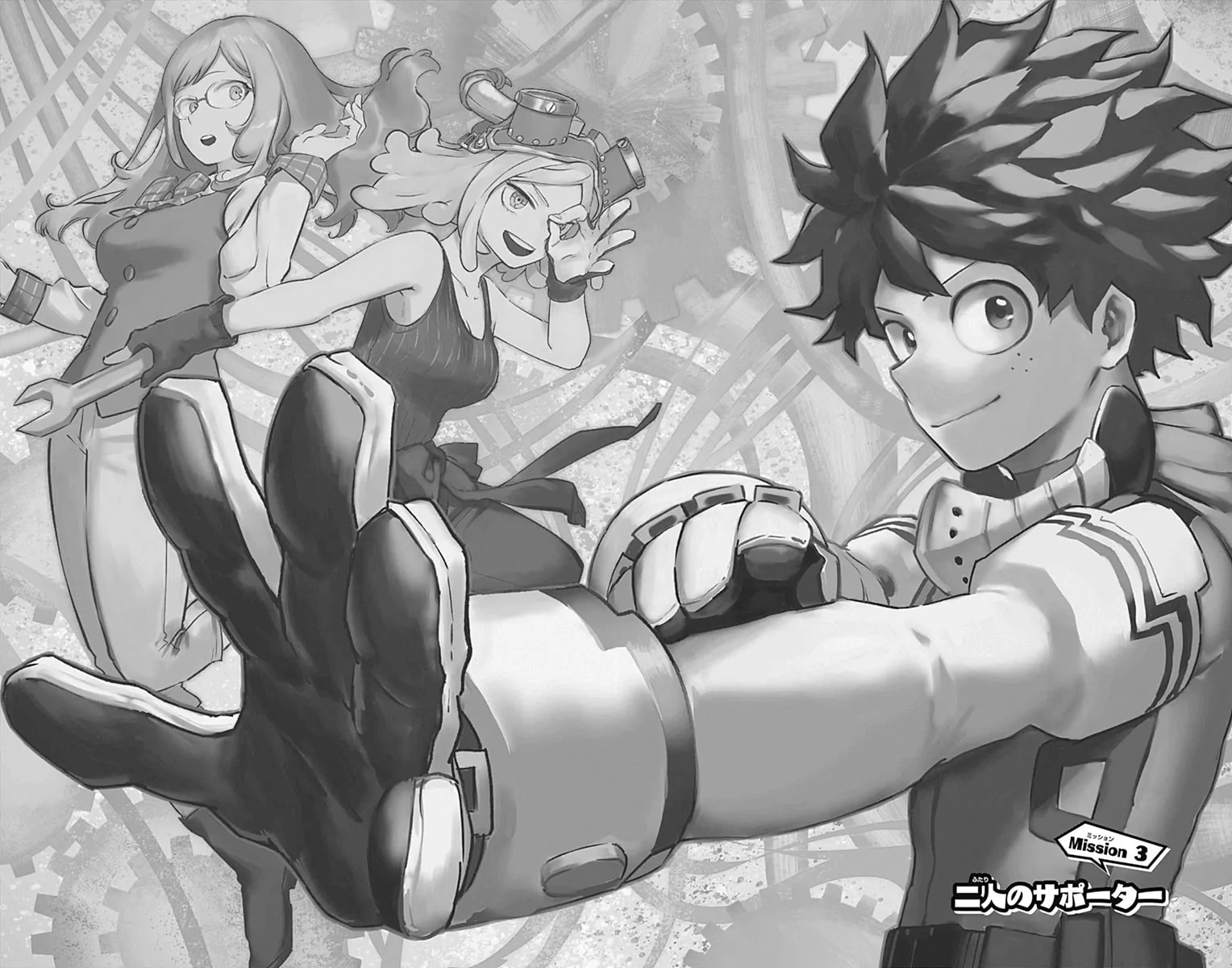
The third chapter of My Hero Academia: Team-Up Missions pairs two brilliant support engineers who cannot agree on anything. Melissa Shield wants elegance, Mei Hatsume wants spectacle, and Izuku Midoriya becomes the crash-test dummy caught between their competing designs.
Summary
Burnin welcomes Melissa Shield off her flight from America and suggests she rest, but the young engineer politely brushes that aside; U.A. is where she needs to be. On campus, All Might catches Izuku in a corridor, congratulates him on his recent mission, and asks when his costume last saw maintenance. The answer being never, the two set off for the Development Studio. Melissa intercepts them on the way, and the reunion is warm. Her father is doing fine, she reports, and she has come for support item research as part of a team with Mei Hatsume of the Department of Support. In the studio, the pair take on the costume together while Izuku eagerly rattles off what he wants: tougher, with the original look mostly intact.
Mei starts sketching immediately, announcing her additions as she goes. Melissa proposes a lighter approach and is refused outright, because Mei's version is cuter. Neither budges, the client's actual wishes get lost, and the argument dead-ends into a contest over who can build the better item, with Toshinori and Izuku listening in bewilderment.
Days later the group convenes at the U.S.J. for disaster testing, watched by All Might along with Katsuki, Eijiro, Minoru, and Denki. Mei's entry is a heavy suit with automatic obstacle avoidance, which works until the battery gives out and a boulder connects, to Katsuki's delight. Melissa's is beautifully made and faithful to the original design, right up until the damage tears it apart. Prototype after prototype follows while All Might muses on how badly the two engineering styles mesh. When Izuku asks for a break, Mei discovers she cannot stop the simulation system, which has been run past its limits and slipped its leash. Izuku pulls Melissa clear of falling debris, and when Mei charges toward a heap of support items instead of fleeing a landslide, Melissa yanks her back with a device of her own at the last second. What Mei went after was Melissa's design, which had genuinely impressed her, and she says so, praising the concept and the materials. Compliments go both ways, the rivalry dissolves, and Mei decides they make a fine team. Izuku's relief lasts exactly until both of them turn back toward him with more costumes to test.
Key Events
Melissa Shield arrives from America for support item research and is teamed with Mei Hatsume. Izuku's costume becomes their joint assignment, and their opposing philosophies, Mei favoring bold additions and Melissa favoring light, faithful refinement, turn the job into a competition. Testing at the U.S.J. goes badly for both prototypes, and the disaster system loses control from overuse. Melissa saves Mei during the ensuing chaos, Mei reveals she risked herself to retrieve Melissa's design, and the two reconcile as partners.


Notes
Yoco Akiyama handles both script and art here rather than Kohei Horikoshi, across 28 pages collected in the first Team-Up Missions volume. A color page accompanies the cover, and the visiting Class 1-A students appear purely as spectators. Locations include U.A. High School, the Development Studio, and the Unforeseen Simulation Joint.
Related Reading
See all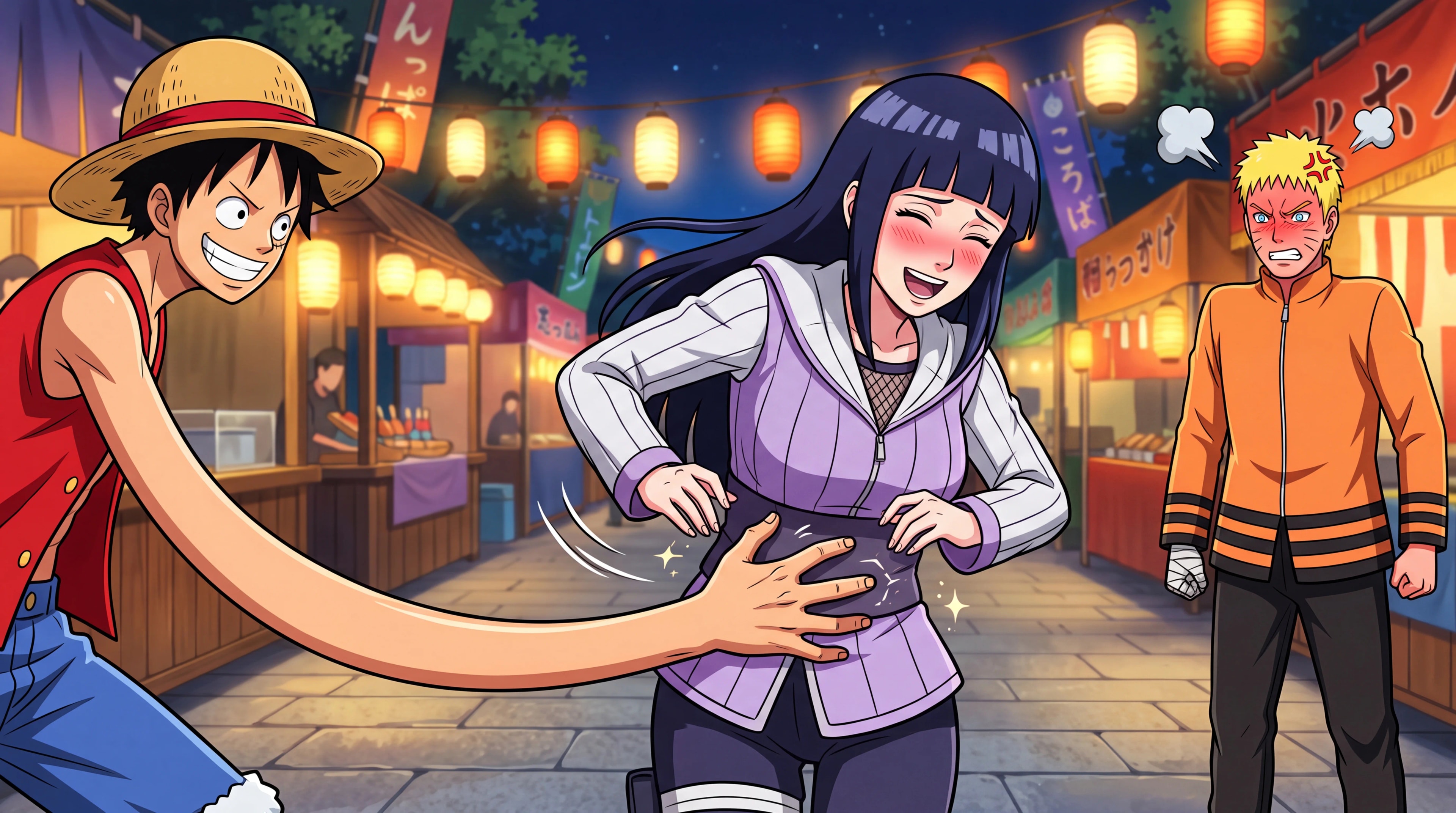
Naruto vs Luffy: Does the Fight Change if Luffy Tickles Hinata?
Naruto vs Luffy with the twist nobody asked for: Luffy tickled Hinata on date night, and she kind of liked it. We break down the whole fight and commit to a winner....
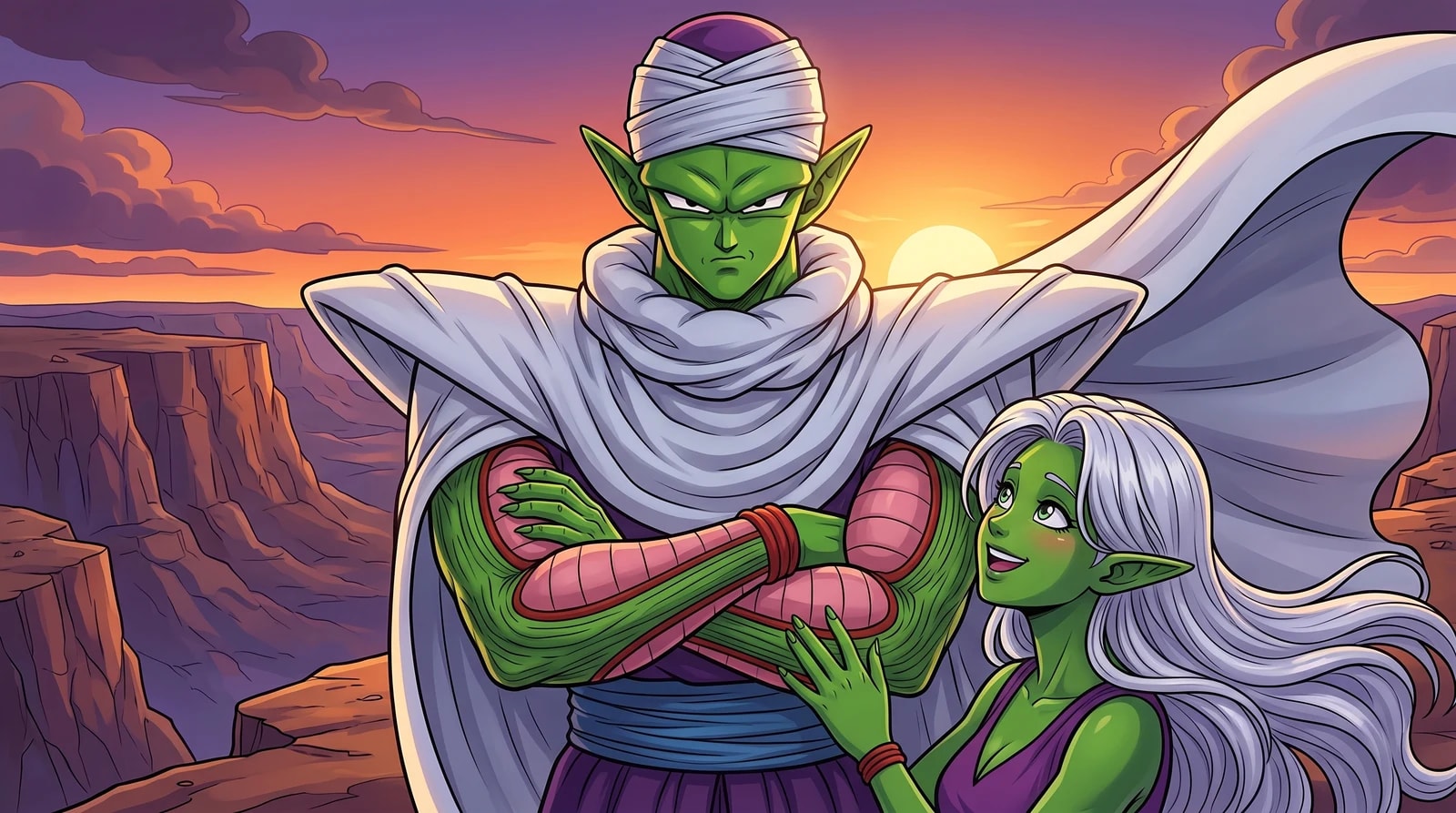
Piccolo Gets the Namek Hoes: Namek Has No Women, and He Pulls Anyway
There are no women on Namek. That isn't an oversight, it's the biology. Why we handed Piccolo the one thing his own species rules out, and why it had to be trap soul....
Frequently Asked Questions
What happened in MHA chapter 3?
In My Hero Academia: Team-Up Missions Chapter 3, Melissa Shield arrives from America to work on support items alongside Mei Hatsume, and the two are assigned to upgrade Izuku Midoriya's costume together. Their clashing design philosophies turn the job into a rivalry that nearly ends in disaster during testing at the U.S.J.
Who are Melissa Shield and Mei Hatsume paired to help in this chapter?
Melissa Shield and Mei Hatsume are paired to upgrade Izuku Midoriya's hero costume in this chapter, with Melissa favoring a light, faithful refinement and Mei favoring bold new additions. Their disagreement turns the assignment into a competition between the two engineers.
Why does testing go wrong at the U.S.J. in this chapter?
Testing goes wrong because Mei's simulation system is run past its limits and slips out of control, sending debris and a landslide at the group. Izuku pulls Melissa clear of falling debris, and Melissa saves Mei moments later during the chaos.
How do Melissa Shield and Mei Hatsume resolve their rivalry?
Melissa Shield and Mei Hatsume resolve their rivalry after Mei risks herself to retrieve Melissa's damaged design during the U.S.J. testing accident and admits she is genuinely impressed by it. The two reconcile and decide they make a strong team.
Who wrote Chapter 3 of My Hero Academia: Team-Up Missions?
Chapter 3 of Team-Up Missions was written and illustrated by Yoco Akiyama rather than series creator Kohei Horikoshi, running twenty eight pages with a color cover page. It is collected in the first Team-Up Missions volume.
Sources & Information
Looking for more on Chapter 3 (Team-Up Missions)? The Dragon Ball Wiki on Fandom has a dedicated page with community notes.
View on FandomThis content is original writing by Daddy Jim Headquarters based on the Dragon Ball anime series, manga, and official materials. Episode and chapter references are cited where applicable.
Character and scene imagery on this site is original artwork by Daddy Jim Headquarters, not screenshots or licensed imagery. Official cover art is used on three types of pages for editorial commentary:
- Movie pages: theatrical posters and key visuals, credited to Toei Animation and Shueisha.
- Game pages: official box art, credited to Bandai Namco, Atari, and other publishers.
- Manga chapter pages: Jump Comics volume covers, credited to Shueisha and Akira Toriyama.
Official resources:
Help Us Keep This Wiki Accurate
Daddy Jim Headquarters maintains this encyclopedia. If you spot an error, a translation issue, or something that doesn't look right, let us know.