A Boruto installment from the Labyrinth Game storyline, where the captives share the reasons they are fighting to live before a crushing ceiling forces them to cooperate, and Sarada closes in on the identity of Ōga's hidden agent.
Main Characters (5)
Summary
Between trials, Batta is eaten up by guilt over the civilians she killed to keep herself and Fugō alive, and she pushes away Yatsume's sympathy while snapping at Shamo and at Boruto when he preaches teamwork. Kiseru stays coolly amused, warning her off any move against him with a flash of his Fire Release, only for Batta to taunt him for tipping his hand until Namua and Boruto settle the room.
To pass the wait, Yatsume asks everyone what they would do if they walked out alive. Her own wish is to finally dye her hair. Boruto wants to grow into the kind of shinobi his teacher Sasuke is, Shamo hopes to please his grandmother, and Fugō is desperate to hand a payment to a client with his company on the line. Namua claims no dream at all, and when Rokuro spots the prison mark on his arm, he admits to a violent, thieving past that left him paranoid until a priest he could not kill turned him toward an ascetic life. Batta at first refuses to talk, but Yatsume catches her saying she needs money rather than wants it.

Key Events
Ōga appears and lets Kiseru choose the next game, "Pressure," which even Ōga calls the cruelest so far. When Shamo hits a switch hoping for light, the ceiling begins descending. Yatsume's lightning chains snap under the weight and Boruto's Rasengan does nothing. More switches only add whirling saws and spikes, though wall alcoves finally open where the group can shelter. Boruto douses Kiseru's dangerous flames with Water Release and notices the water draining away, proving there is empty space beneath the floor. With Batta pinpointing the floor's weakest point like a cutter scoring a diamond, Boruto strikes through it, and the sunken room gives everyone just enough clearance to survive the collapsing ceiling.
Related Reading
See all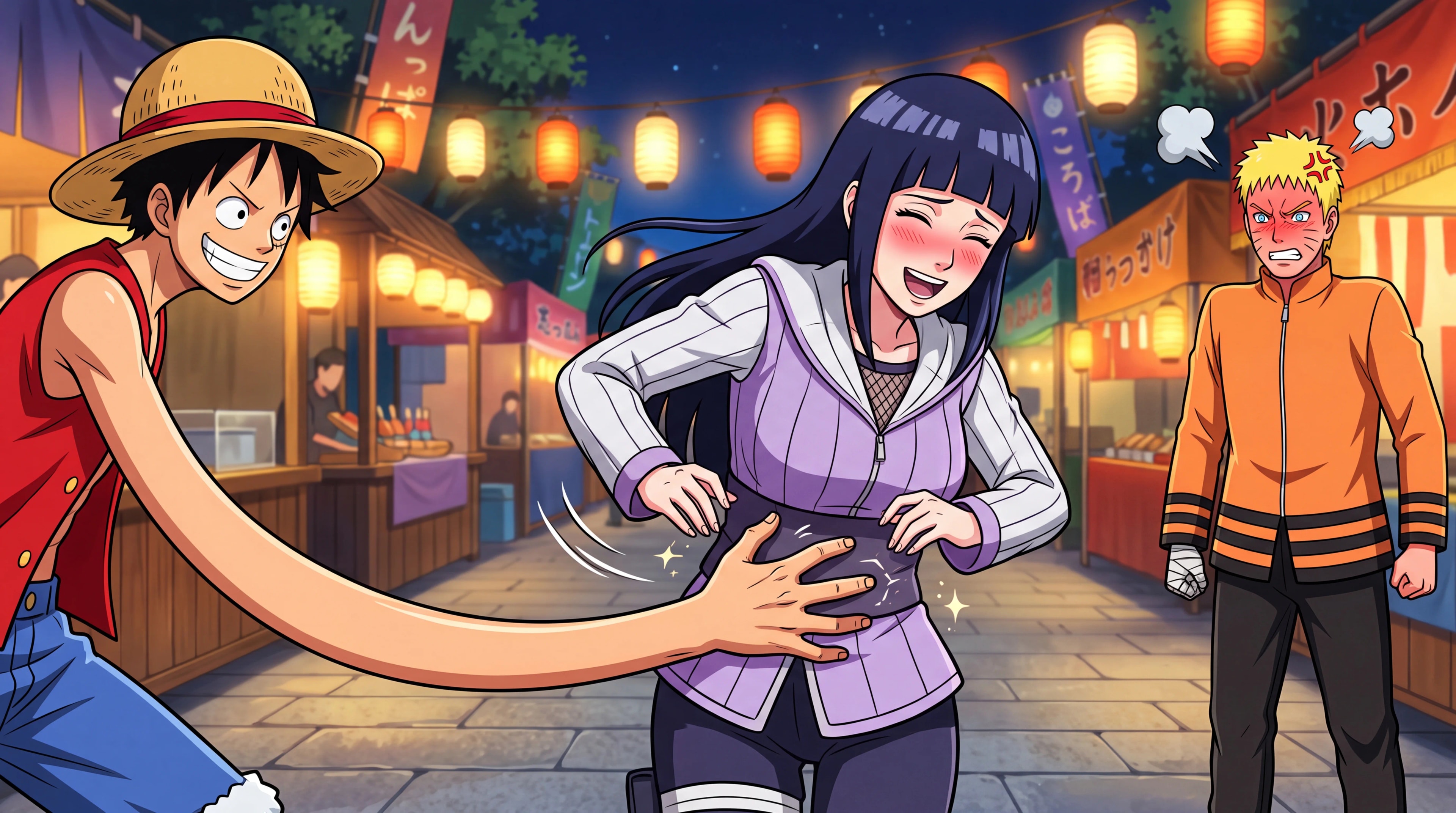
Naruto vs Luffy: Does the Fight Change if Luffy Tickles Hinata?
Naruto vs Luffy with the twist nobody asked for: Luffy tickled Hinata on date night, and she kind of liked it. We break down the whole fight and commit to a winner....

Who Is Naruko? What Naruto's Transformation Jutsu Does to the Whole Hidden Leaf
Naruto built the transformation jutsu himself, and the Hidden Leaf has been quietly not talking about it ever since. The story behind our 90s R&B record about the Naruko question everybody dodges....
Notes
Batta finally confesses her true motive: she means to buy back the homeland that wealthy developers seized for a resort, which is why she framed the money as a need. Afterward Fugō is shown carrying not cash in his briefcase but a family photo and a canteen. Batta quietly tells Boruto that Ōga likely has another plant among them, producing a working communication device she lifted from someone who hid it rather than call for outside help, and she whispers the culprit's name. Meanwhile in Konoha, Sarada and Kawaki cross-reference the Thunder Train's passenger manifest against village files and identify one traveler with a murky background as a former Kara Outer: Kiseru.
Frequently Asked Questions
What happens in Boruto episode 278?
Boruto episode 278, "Musical Chairs," is part of the Labyrinth Game arc. The captives share their reasons for wanting to survive before Ōga forces them into the deadly "Pressure" game, a room with a descending, spike-filled ceiling.
What is the "Pressure" game in the Labyrinth Game arc?
"Pressure" is a game chosen by Kiseru and unleashed by Ōga, in which the ceiling of the room begins descending on the captives while switches add whirling saws and spikes, forcing the group to find a way to survive.
How do Boruto and the others survive the collapsing ceiling?
Boruto notices water draining away after dousing Kiseru's flames, revealing empty space beneath the floor. With Batta pinpointing the floor's weakest point, Boruto strikes through it, and the sunken room gives everyone enough clearance to survive.
What does Batta reveal about her true motive in "Musical Chairs"?
Batta confesses that she needs money to buy back her homeland, which wealthy developers had seized for a resort, explaining why she always insisted she needed money rather than simply wanted it.
How do Sarada and Kawaki identify Ōga's spy among the captives?
Sarada Uchiha and Kawaki cross-reference the Thunder Train's passenger manifest against village files and identify Kiseru, a traveler with a murky background, as a former Kara Outer working for Ōga.
Sources & Information
Looking for more on Musical Chairs? The Naruto Wiki on Fandom has a dedicated page with community notes.
View on FandomThis content is original writing by Daddy Jim Headquarters based on the Naruto anime series, manga, and official materials. Episode and chapter references are cited where applicable.
Rights holders
- Created byMasashi Kishimoto
- Published byShueisha
- Animated byStudio Pierrot
All rights belong to their respective owners.
Character and scene imagery on this site is original artwork by Daddy Jim Headquarters, not screenshots or licensed imagery. Official cover art is used on three types of pages for editorial commentary:
- Movie pages: theatrical posters and key visuals, credited to Studio Pierrot and Toho.
- Game pages: official box art for the Naruto: Ultimate Ninja Storm games, credited to Bandai Namco.
- Manga chapter pages: Jump Comics volume covers, credited to Shueisha and Masashi Kishimoto.
Official resources:
Help Us Keep This Wiki Accurate
Daddy Jim Headquarters maintains this encyclopedia. If you spot an error, a translation issue, or something that doesn't look right, let us know.