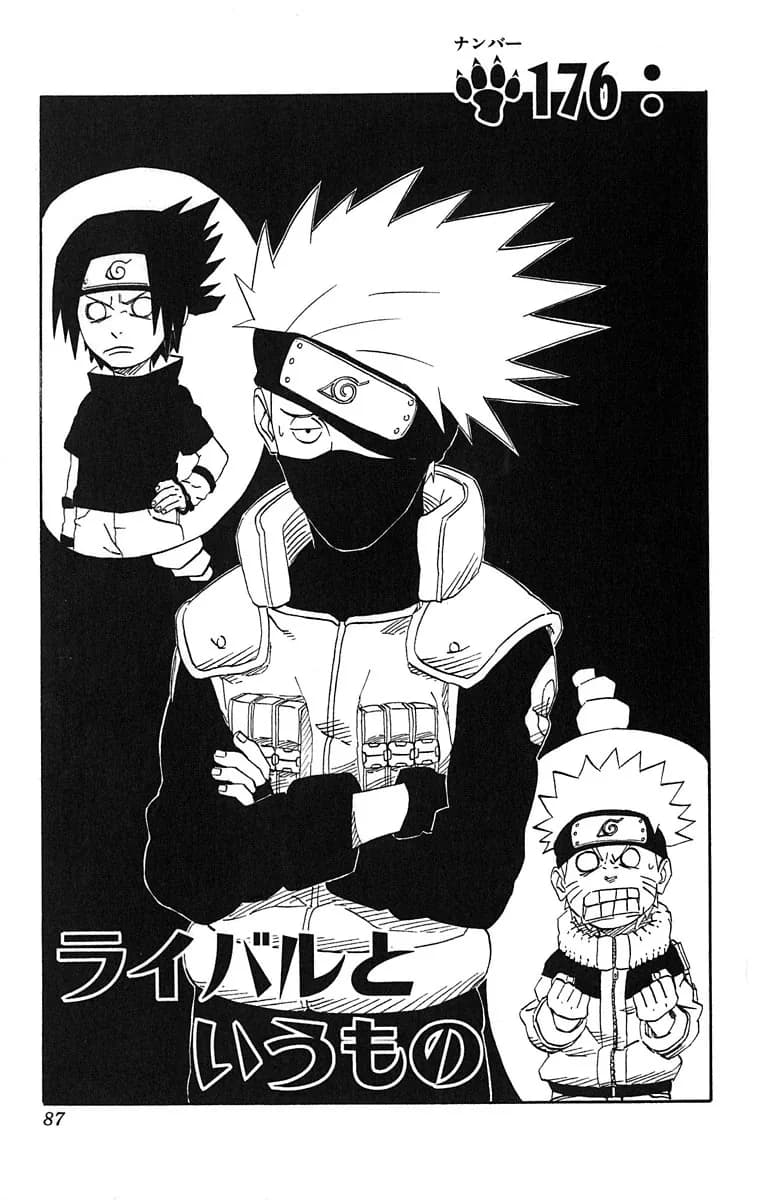
After a spar between Naruto and Sasuke gets dangerously out of hand, Kakashi steps in with a lecture on rivalry, teachers trade blame over the techniques they taught, and old parallels resurface.
Main Characters (3)
Summary
Sakura throws herself between Naruto and Sasuke in a desperate bid to stop them, but neither will pull back, so Kakashi seizes the pair and flings them into a pair of facing water towers. He scolds them for treating a friendly bout as a life-or-death fight and takes Sasuke to task for aiming the Chidori at a comrade. Sasuke shrugs it off, pleased that his strike appears to have carved deeper into the tower than Naruto's Rasengan, only to look again and discover the Rasengan actually did more damage. Bitter and envious, he walks away.
Kakashi then turns his criticism on Jiraiya, arguing that Naruto is too young to be trusted with the Rasengan, and Jiraiya fires back that Kakashi had no business handing the Chidori to a boy consumed by revenge. Kakashi presses further, noting that the two students echo what Orochimaru and Jiraiya once were: Naruto aches to be recognized as Sasuke's equal, while Sasuke stews over falling behind. He promises Sakura that he will have a word with Sasuke. Far off, the Sound Four keep their eyes fixed on Sasuke.

Key Events
The chapter frames the deepening rivalry between Naruto and Sasuke and reveals that Naruto's Rasengan struck harder than Sasuke's Chidori, feeding Sasuke's jealousy. Kakashi and Jiraiya's argument over their teaching choices draws a direct parallel to Orochimaru and Jiraiya's own history, while the watching Sound Four foreshadow Sasuke's coming temptation.
Related Reading
See all
Naruto vs Luffy: Does the Fight Change if Luffy Tickles Hinata?
Naruto vs Luffy with the twist nobody asked for: Luffy tickled Hinata on date night, and she kind of liked it. We break down the whole fight and commit to a winner....
Who Is Naruko? What Naruto's Transformation Jutsu Does to the Whole Hidden Leaf
Naruto built the transformation jutsu himself, and the Hidden Leaf has been quietly not talking about it ever since. The story behind our 90s R&B record about the Naruko question everybody dodges....
Notes
Part of the Sasuke Recovery Mission arc, this installment lingers on the emotional gulf opening between the two teammates. Sasuke's wounded pride at being outdone becomes a key motivator for his later defection, and the Sound Four's surveillance sets that betrayal in motion.
Frequently Asked Questions
Who are the rivals referenced in this Naruto chapter's title?
The title refers to Naruto and Sasuke, whose friendly spar escalates into a dangerous real fight in this chapter, prompting Kakashi to intervene and lecture them about treating rivalry as a life-or-death battle.
Why does Kakashi stop the fight between Naruto and Sasuke?
Kakashi seizes Naruto and Sasuke and throws them into facing water towers because their sparring match turns into an actual life-or-death fight, and he scolds Sasuke in particular for aiming the Chidori at a teammate.
Whose attack does more damage, Naruto's Rasengan or Sasuke's Chidori?
In this chapter, Naruto's Rasengan actually carves deeper into the water tower than Sasuke's Chidori, which stokes Sasuke's jealousy after he initially believed his own strike had done more damage.
How does Kakashi compare Naruto and Sasuke to Orochimaru and Jiraiya?
Kakashi tells Jiraiya that Naruto and Sasuke mirror Orochimaru and Jiraiya's own past rivalry, since Naruto longs to be seen as Sasuke's equal while Sasuke resents falling behind.
Who is watching Sasuke at the end of this chapter?
The Sound Four are shown keeping a close watch on Sasuke at the end of the chapter, foreshadowing his coming defection from Konoha.
Sources & Information
Looking for more on They Who are Called Rivals? The Naruto Wiki on Fandom has a dedicated page with community notes.
View on FandomThis content is original writing by Daddy Jim Headquarters based on the Naruto anime series, manga, and official materials. Episode and chapter references are cited where applicable.
Rights holders
- Created byMasashi Kishimoto
- Published byShueisha
- Animated byStudio Pierrot
All rights belong to their respective owners.
Character and scene imagery on this site is original artwork by Daddy Jim Headquarters, not screenshots or licensed imagery. Official cover art is used on three types of pages for editorial commentary:
- Movie pages: theatrical posters and key visuals, credited to Studio Pierrot and Toho.
- Game pages: official box art for the Naruto: Ultimate Ninja Storm games, credited to Bandai Namco.
- Manga chapter pages: Jump Comics volume covers, credited to Shueisha and Masashi Kishimoto.
Official resources:
Help Us Keep This Wiki Accurate
Daddy Jim Headquarters maintains this encyclopedia. If you spot an error, a translation issue, or something that doesn't look right, let us know.