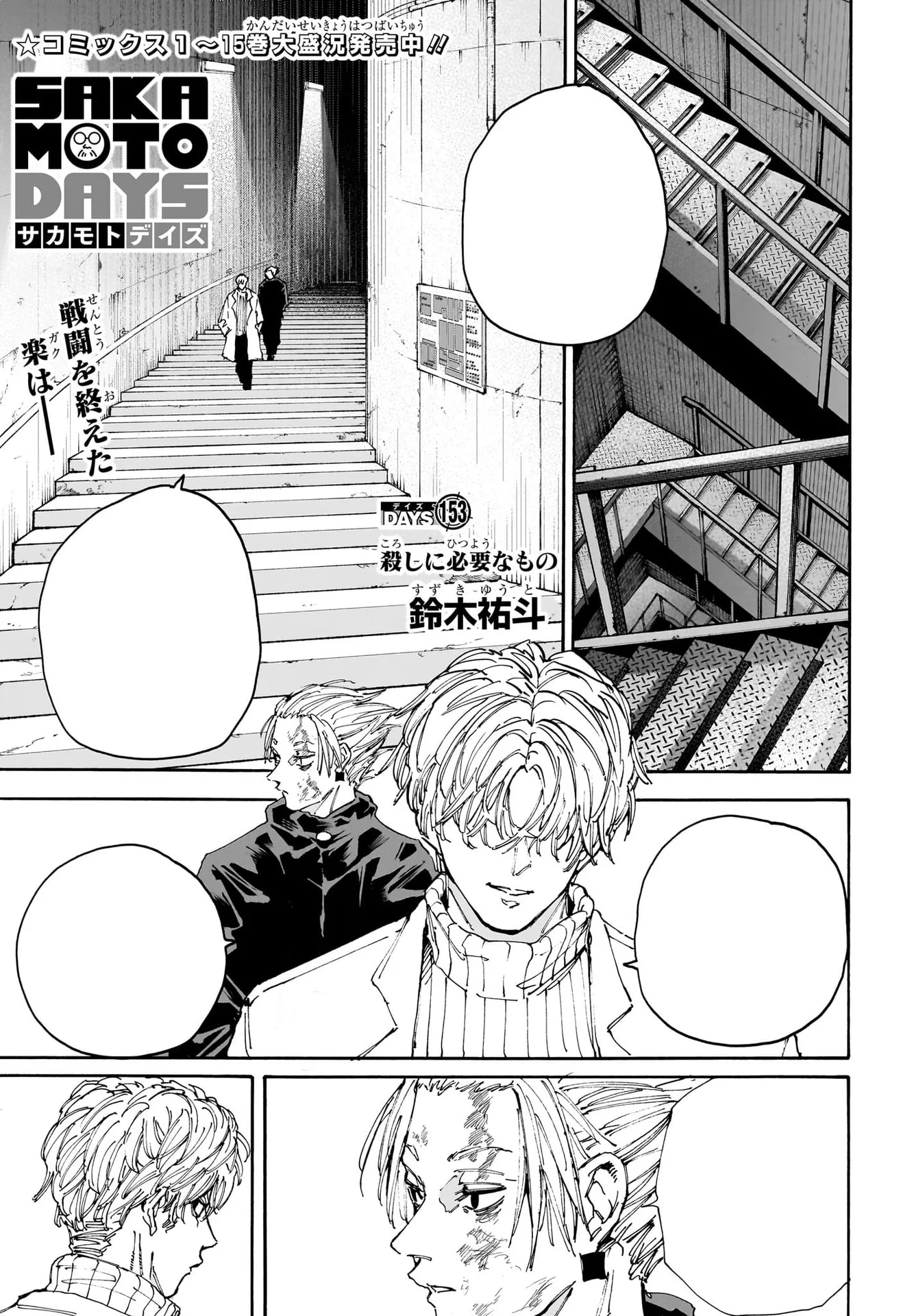
What It Takes to Kill, the 153rd chapter of Sakamoto Days, exposes the swapped identities of Gaku and Nagumo and ties Uzuki's vendetta to the Al Kamar orphanage, as Uzuki moves to kill Chairman Asaki only for the real Nagumo to spring from disguise and stab him.
Summary
Uzuki feels both surprise and satisfaction that Gaku has apparently felled Nagumo, counted among the Order's deadliest assassins. Noting Gaku's relaxed air, though, he reminds him the job is not finished, since one last enemy remains.
Sakamoto finds faint signs of life in the fallen Nagumo and moves to help, but Shin, reading the man's mind, senses only despair, a hint that his end may match that of his fallen comrades. Kashima, who has been following the crisis through the news, arrives in time to give medical aid. As they try to revive him, the man's tattoos start fading, exposing that Gaku had been posing as Nagumo all along.
Deeper in the museum's private wing, Asaki tires of admiring the artwork and challenges Muto over where his loyalty truly lies. Reading the man's small tells, he realizes his own colleagues have cut him off, and though he cannot yet name who is hunting him, he is shaken to learn Uzuki means to take his life. Uzuki states his aim to kill Asaki, meaning to end the suffering born of a failed program at the Al Kamar orphanage that tried to raise assassins equal to the Order. Muto suddenly detonates, yet Asaki walks away unhurt, and Uzuki is blindsided when Nagumo, shedding his disguise, drives a blade into his chest.
Key Events
Uzuki believes Nagumo has been killed and tells Gaku to finish the mission. Kashima arrives to treat the downed man, whose fading tattoos reveal that Gaku had been impersonating Nagumo. Asaki confronts Muto and learns Uzuki intends to kill him to avenge the failed Al Kamar orphanage program. Muto explodes but leaves Asaki unharmed, and the real Nagumo emerges from disguise to stab Uzuki in the chest.

Notes
Part of Volume 18 and the Assassin Exhibition of the Century Arc, this chapter's Japanese title Koroshi ni Hitsuyonamono means What It Takes to Kill. It uncovers the swapped identities of Gaku and Nagumo, ties Uzuki's vendetta to the Al Kamar orphanage project, and turns the confrontation with Chairman Asaki with Nagumo's surprise strike.
Related Reading
See all
Naruto vs Luffy: Does the Fight Change if Luffy Tickles Hinata?
Naruto vs Luffy with the twist nobody asked for: Luffy tickled Hinata on date night, and she kind of liked it. We break down the whole fight and commit to a winner....
Piccolo Gets the Namek Hoes: Namek Has No Women, and He Pulls Anyway
There are no women on Namek. That isn't an oversight, it's the biology. Why we handed Piccolo the one thing his own species rules out, and why it had to be trap soul....
Frequently Asked Questions
What happens in Sakamoto Days Chapter 153?
Chapter 153 of Sakamoto Days, titled What It Takes to Kill, exposes the swapped identities of Gaku and Nagumo, ties Uzuki's vendetta to the Al Kamar orphanage, and ends with the real Nagumo stabbing Uzuki after Muto's explosion leaves Chairman Asaki unharmed.
What is revealed about Gaku and Nagumo's identities in Chapter 153?
In Chapter 153, the fading tattoos on the fallen fighter Kashima treats reveal that Gaku had been impersonating Nagumo all along, meaning the man believed dead was actually Gaku.
Why does Uzuki want to kill Chairman Asaki in Chapter 153?
In Chapter 153, Uzuki explains he wants to kill Chairman Asaki to avenge the suffering caused by a failed program at the Al Kamar orphanage that tried to raise assassins equal to the Order.
Who stabs Uzuki in Chapter 153?
In Chapter 153, the real Nagumo, who had been disguised, stabs Uzuki in the chest just after Erio Muto detonates without harming Chairman Asaki.
What does the title of Chapter 153 mean?
Chapter 153's Japanese title, Koroshi ni Hitsuyonamono, means What It Takes to Kill.
Sources & Information
Looking for more on Chapter 153? The Dragon Ball Wiki on Fandom has a dedicated page with community notes.
View on FandomThis content is original writing by Daddy Jim Headquarters based on the Dragon Ball anime series, manga, and official materials. Episode and chapter references are cited where applicable.
Character and scene imagery on this site is original artwork by Daddy Jim Headquarters, not screenshots or licensed imagery. Official cover art is used on three types of pages for editorial commentary:
- Movie pages: theatrical posters and key visuals, credited to Toei Animation and Shueisha.
- Game pages: official box art, credited to Bandai Namco, Atari, and other publishers.
- Manga chapter pages: Jump Comics volume covers, credited to Shueisha and Akira Toriyama.
Official resources:
Help Us Keep This Wiki Accurate
Daddy Jim Headquarters maintains this encyclopedia. If you spot an error, a translation issue, or something that doesn't look right, let us know.