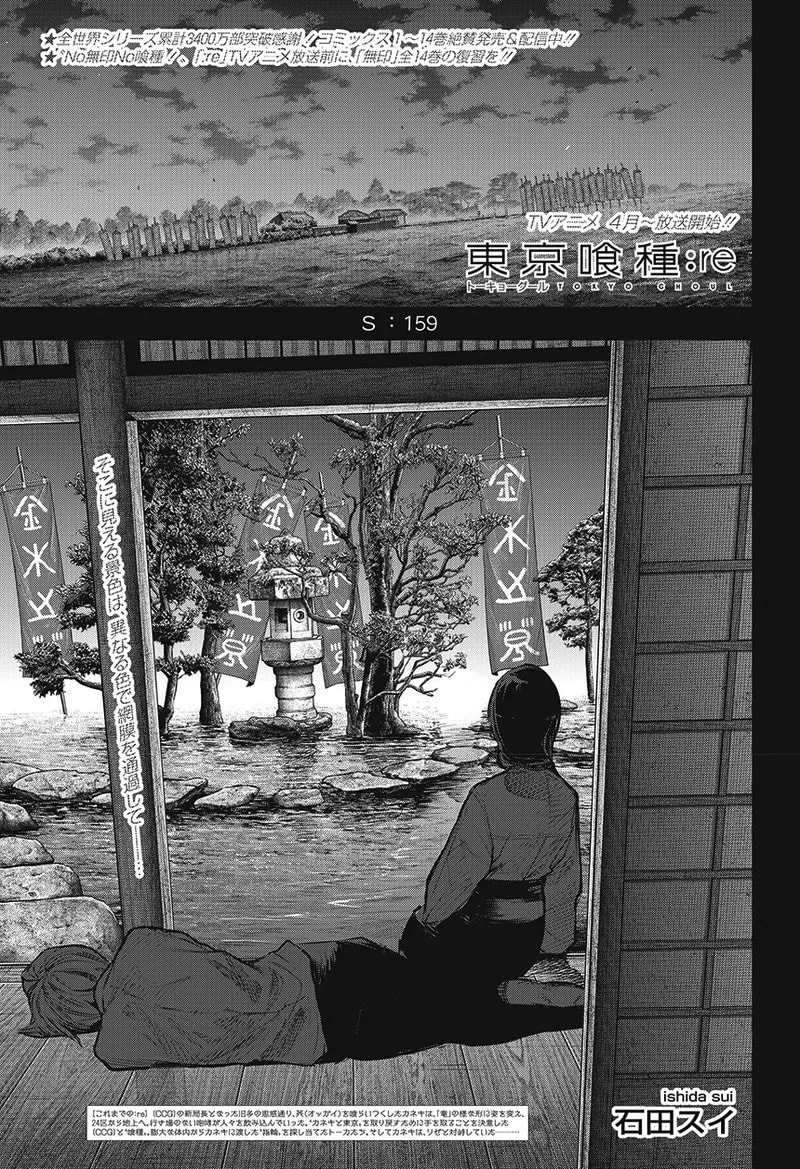
The one hundred fifty-ninth chapter of Tokyo Ghoul:re, titled S. Rize confesses her origins in the Sunlit Garden while pushing Kaneki to admit his true desire, until he reaches a fragile peace and the sky above them splits open.
Summary
From a floating ledge of the shrine, Kaneki and Rize take in an imagined vista of ocean and green. Rize stands tall while Kaneki lies on his side, sunk in grief. She recalls being crushed under steel beams and watches the people they killed drop into the sea, remarking that within these bounds neither of them need ever fear hunger, though Kaneki refuses to look. She then speaks of her time in the Sunlit Garden, where she was raised as a seedbed. Because her blood was that of a pure ghoul, she was deemed inferior; the more human blood one carried, the higher one's standing. Facing a future as a vessel meant only to bear children, she fled, and in the end was cut apart and sealed into small coffins that became the Oggai.

Key Events
Kaneki asks whether the kakuhou he consumed all came from Rize, acknowledging that his eating them cost many lives and that he never foresaw such an outcome. Rize rebukes him, saying feigned ignorance cannot excuse the killing and regret cannot undo it, since blood is bound to spill whenever he fights. She keeps prodding his motives until he confesses his real drive: the wish to be needed by someone. Rize likens him to herself, both of them trampling everything around them for their own ends. Recalling their reunion, she notes he claimed never to have hated her, and admits that she despised him because meeting him led to her wretched fate. Kaneki replies that despite all his suffering, their meeting let him do remarkable things and cross paths with people he was glad to know, and he ends the exchange by saying he was happy. At that, the sky rips apart and people begin to rain down. In an earlier moment, as Kaneki swam the ocean, Rize asked if he meant to look away from his sins, and he answered that he would try to carry them, while she mused that watching him drown would be entertaining.


Related Reading
See all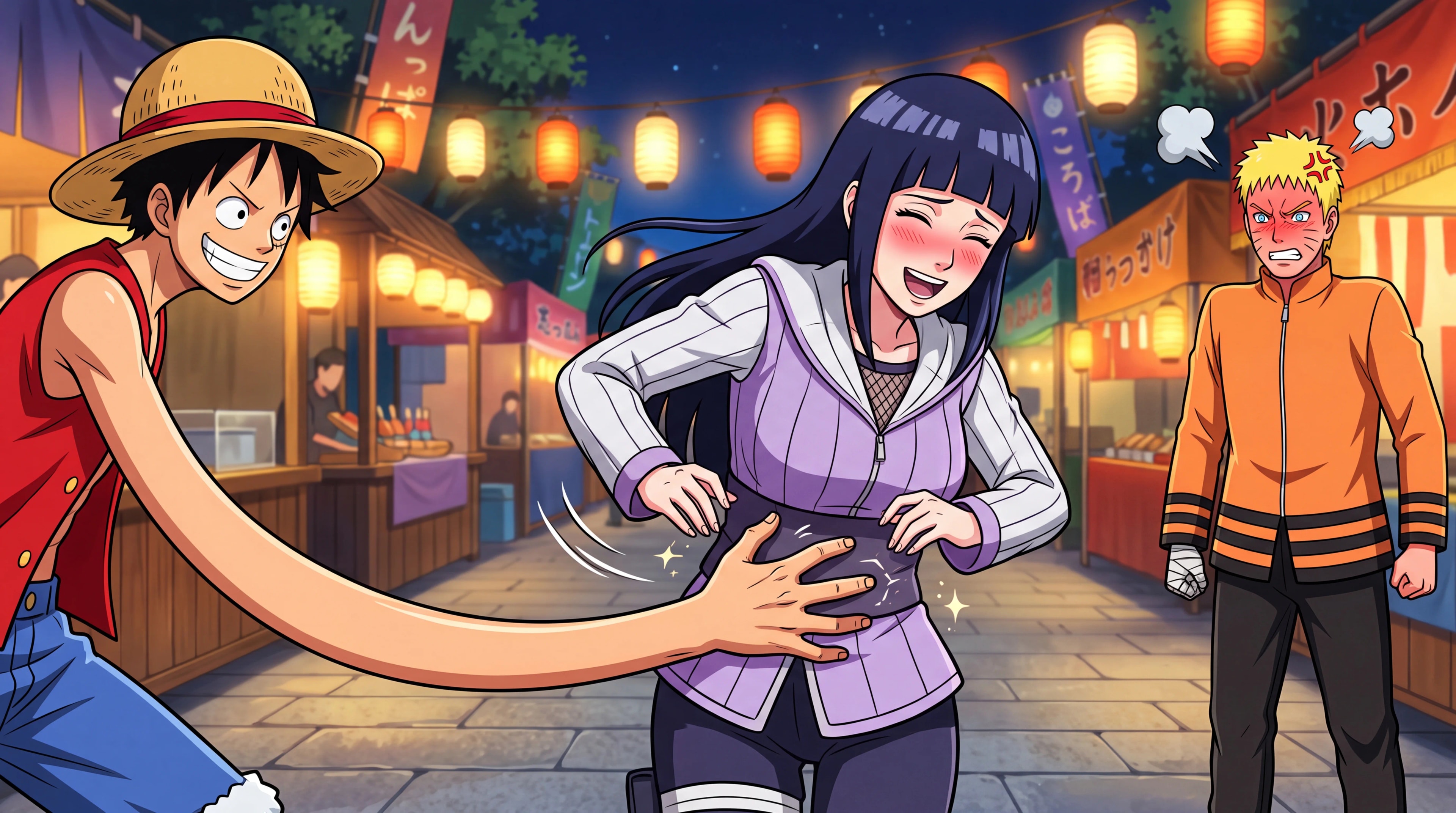
Naruto vs Luffy: Does the Fight Change if Luffy Tickles Hinata?
Naruto vs Luffy with the twist nobody asked for: Luffy tickled Hinata on date night, and she kind of liked it. We break down the whole fight and commit to a winner....
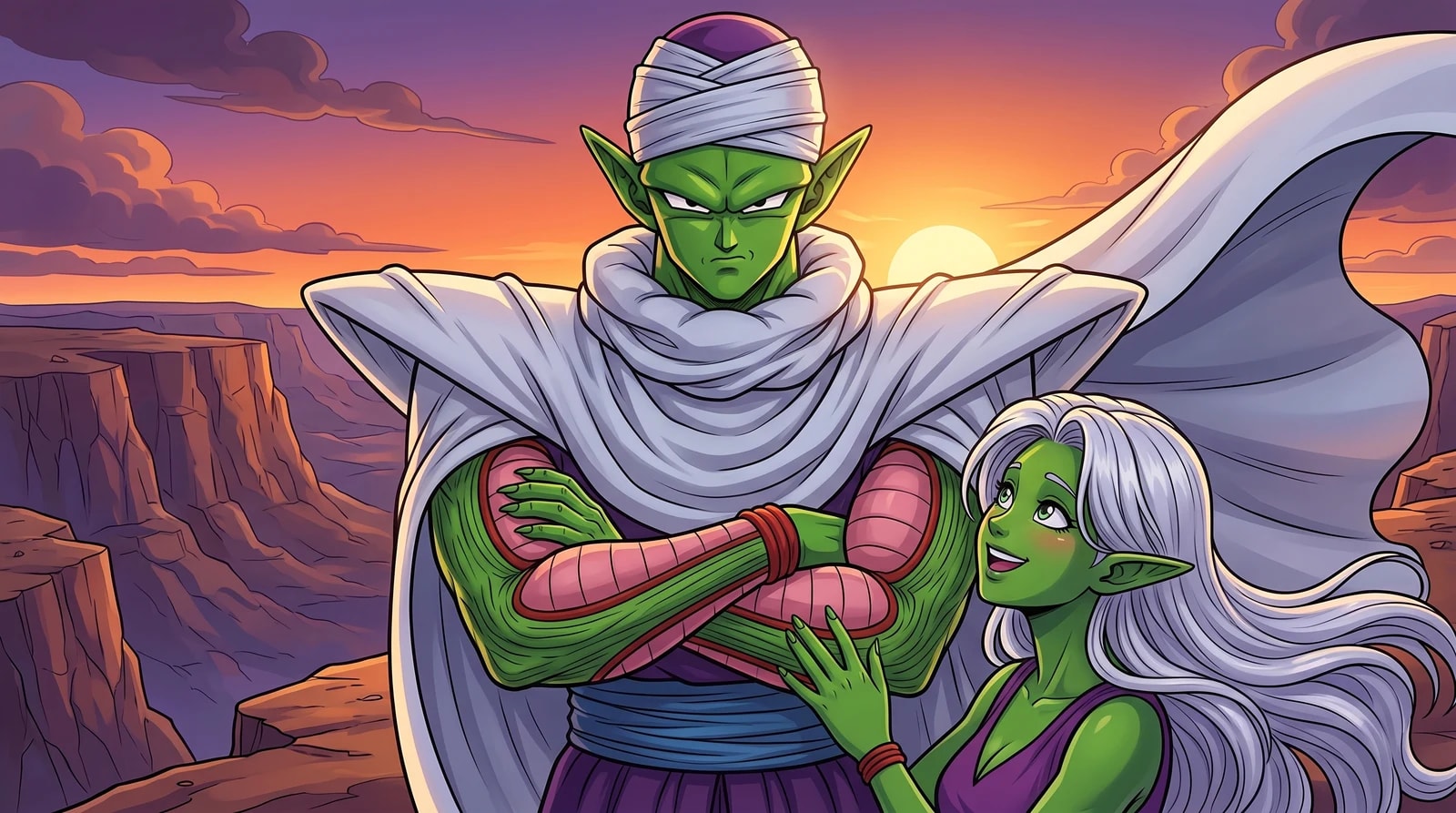
Piccolo Gets the Namek Hoes: Namek Has No Women, and He Pulls Anyway
There are no women on Namek. That isn't an oversight, it's the biology. Why we handed Piccolo the one thing his own species rules out, and why it had to be trap soul....

Frequently Asked Questions
What happens in Tokyo Ghoul re Chapter 159?
Tokyo Ghoul re Chapter 159, titled S, has Rize Kamishiro confess her origins in the Sunlit Garden while pushing Kaneki to admit his true desire. The chapter ends with Kaneki reaching a fragile peace as the sky above them splits open and people begin to rain down.
What does Rize reveal about the Sunlit Garden in Chapter 159?
In Tokyo Ghoul re Chapter 159, Rize explains she was raised as a seedbed in the Sunlit Garden, where pure ghoul blood like hers was deemed inferior to blood carrying more human traits. Facing a future as a vessel meant only to bear children, she fled and was ultimately cut apart and sealed into the small coffins that became the Oggai.
Why does Rize hate Kaneki?
In Tokyo Ghoul re Chapter 159, Rize's illusion admits she despised Kaneki because meeting him led to her wretched fate, since it set in motion her capture and the events that ended with her body cut apart and sealed into the coffins that became the Oggai.
What does Kaneki admit is his true desire in Chapter 159?
In Tokyo Ghoul re Chapter 159, after Rize keeps prodding his motives, Kaneki confesses that his real drive has always been the wish to be needed by someone. Rize likens him to herself, saying both of them trampled everything around them to chase that goal.
When was Tokyo Ghoul re Chapter 159 released?
Tokyo Ghoul re Chapter 159 was published on February 8, 2018 in Issue 2018-10, within Volume 15. Its single-letter Japanese title, S, is read as Esu.
Sources & Information
Looking for more on :re Chapter 159? The Dragon Ball Wiki on Fandom has a dedicated page with community notes.
View on FandomThis content is original writing by Daddy Jim Headquarters based on the Dragon Ball anime series, manga, and official materials. Episode and chapter references are cited where applicable.
Character and scene imagery on this site is original artwork by Daddy Jim Headquarters, not screenshots or licensed imagery. Official cover art is used on three types of pages for editorial commentary:
- Movie pages: theatrical posters and key visuals, credited to Toei Animation and Shueisha.
- Game pages: official box art, credited to Bandai Namco, Atari, and other publishers.
- Manga chapter pages: Jump Comics volume covers, credited to Shueisha and Akira Toriyama.
Official resources:
Help Us Keep This Wiki Accurate
Daddy Jim Headquarters maintains this encyclopedia. If you spot an error, a translation issue, or something that doesn't look right, let us know.