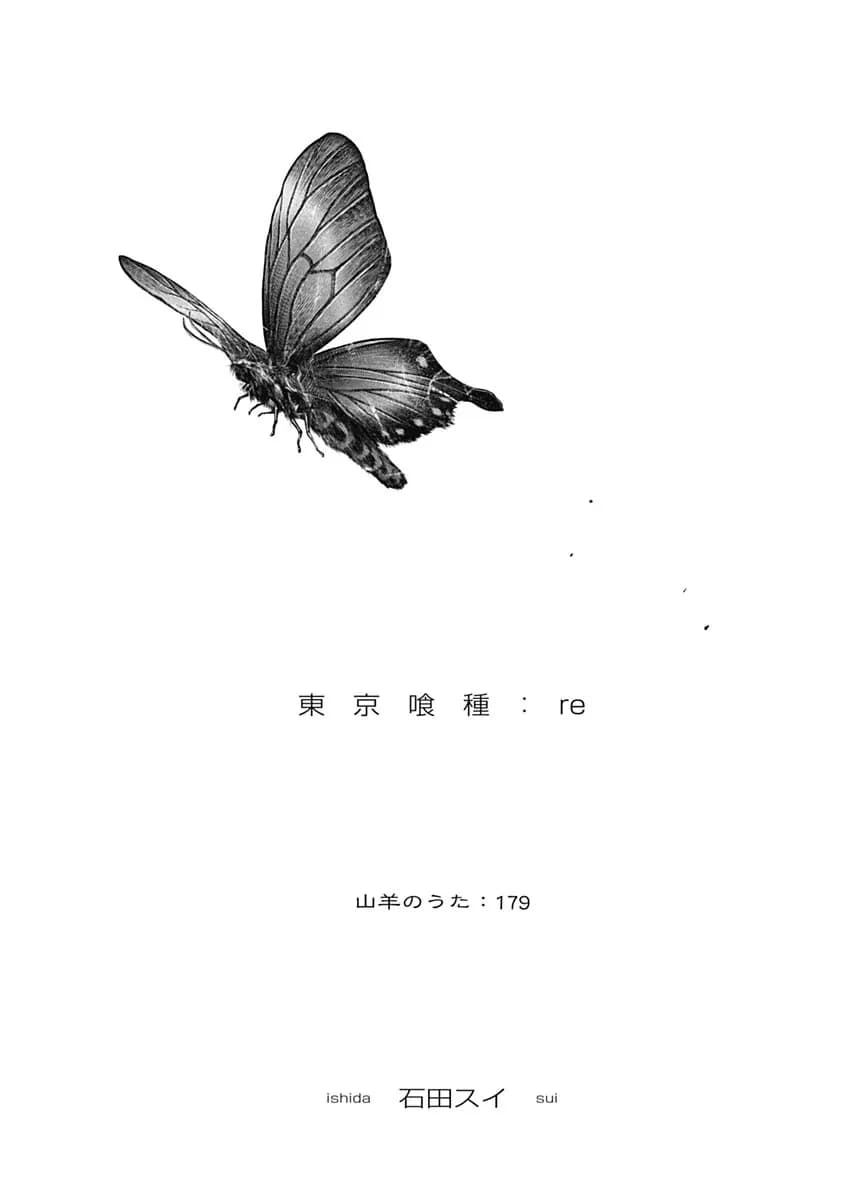
The one hundred seventy-ninth and final chapter of Tokyo Ghoul:re jumps six years past the Dragon War, letting Hide narrate an epilogue that settles the fates of the survivors and leaves Kaneki with a family of his own.
Summary
Hide walks the reader through the six years since the conflict called the Dragon War came to a close, accounting for where each surviving figure has landed. The CCG no longer exists, replaced by the Tokyo Security Committee, a body of ghouls and humans working to hold the peace and to contend with the emerging Dragon Orphans. Kaneki's family and friends gather at his home, and afterward he sets out with Touka and their daughter to walk beneath a clear sky.
The new committee is steered on the human side by Itsuki Marude, with Katsuya Mabuchi as his aide, while Shuu Tsukiyama anchors the ghoul side and Kazuichi Banjou splits his time between committee leadership and the wider ghoul community. Matsuri Washuu takes the surname Suzuki, divorces, and serves in the same organization, and figures such as Kiyoko Aura, Koori Ui, and a retired Take Hirako, now a funeral director, move into quieter roles. Kuki Urie and Yusa Arima track down the last Dragon Orphans, Yukinori Shinohara recovers alongside the loyal Suzuya and his subordinates, and Naki and Miza raise nine children with the White Suits still at their side.
Other threads close in their own way: Saiko Yonebayashi beats her illness to become the heart of the Quinx household, Tooru Mutsuki is forgiven and works on a side branch, and Ayato Kirishima and Hinami Fueguchi end up together, as do the exonerated Takeomi and Yoriko Kuroiwa with their child. Seidou Takizawa and Kurona Yasuhisa roam hunting rogue ghouls, the Clowns persist with Uta still trying to kill Yomo, and Nico drifts the world seeking love. At the center of it all, Kaneki and Touka live as a settled married couple raising their daughter Ichika, with Touka expecting a second child.

Key Events
The chapter confirms the CCG's dissolution and the founding of the Tokyo Security Committee as a joint human and ghoul institution. It resolves the postwar lives of the entire principal cast, from Marude and Tsukiyama's leadership to the recoveries of Saiko, Haru Shirazu, and others. Kaneki and Touka are shown building a family with their daughter Ichika, and a second pregnancy signals the series ending on continuation and renewal.
Related Reading
See all
Naruto vs Luffy: Does the Fight Change if Luffy Tickles Hinata?
Naruto vs Luffy with the twist nobody asked for: Luffy tickled Hinata on date night, and she kind of liked it. We break down the whole fight and commit to a winner....
Namek Has No Women, and Piccolo Pulls Anyway
There are no women on Namek. That isn't an oversight, it's the biology. Why we handed Piccolo the one thing his own species rules out, and why it had to be trap soul....

Notes
This installment sits in the sixteenth volume and closes Tokyo Ghoul:re under the Japanese title Yagi no uta. The title nods to the Greek tragōidia, the word for tragedy, which derives from roots meaning goat song. The concluding page carries Sui Ishida's message of thanks to the readers.
Frequently Asked Questions
Does Tokyo Ghoul have 179 chapters?
Yes, :re Chapter 179, titled "Goat's Song," is confirmed as the final chapter of Tokyo Ghoul:re, bringing the manga's total to 179 chapters.
Is Tokyo Ghoul Re still ongoing?
No, Tokyo Ghoul:re concluded with :re Chapter 179, which jumps six years past the Dragon War to close out the story in an epilogue narrated by Hide.
Who is Kaneki's girlfriend?
By the epilogue of :re Chapter 179, Ken Kaneki's partner is Touka Kirishima. The two live as a married couple raising their daughter Ichika, with a second child on the way.
What replaces the CCG in the epilogue of this chapter?
In :re Chapter 179, the CCG no longer exists; it is replaced by the Tokyo Security Committee, a joint body of ghouls and humans working to hold the peace and contend with the emerging Dragon Orphans.
What is the significance of the title "Goat's Song"?
The Japanese title of :re Chapter 179, "Yagi no uta," nods to the Greek word tragoidia, the root of "tragedy," which literally translates to "goat song," fitting the chapter's role as the series' bittersweet finale.
Sources & Information
Looking for more on :re Chapter 179? The Tokyo Ghoul Wiki on Fandom has a dedicated page with community notes.
View on FandomThis content is original writing by Daddy Jim Headquarters based on the Tokyo Ghoul anime series, manga, and official materials. Tokyo Ghoul was created by Sui Ishida, published by Shueisha, and animated by Studio Pierrot. All rights to Tokyo Ghoul and its characters belong to their respective owners. Episode and chapter references are cited where applicable.
Rights holders
- Created bySui Ishida
- Published byShueisha
- Animated byStudio Pierrot
All rights belong to their respective owners.
Character and scene imagery on this site is original artwork by Daddy Jim Headquarters, not screenshots or licensed imagery. Official cover art is used on three types of pages for editorial commentary:
- Movie pages: theatrical posters and key visuals, credited to Studio Pierrot and Shueisha.
- Game pages: official box art, credited to the game's respective publishers.
- Manga chapter pages: volume covers, credited to Shueisha and Sui Ishida.
Official resources:
Help Us Keep This Wiki Accurate
Daddy Jim Headquarters maintains this encyclopedia. If you spot an error, a translation issue, or something that doesn't look right, let us know.