
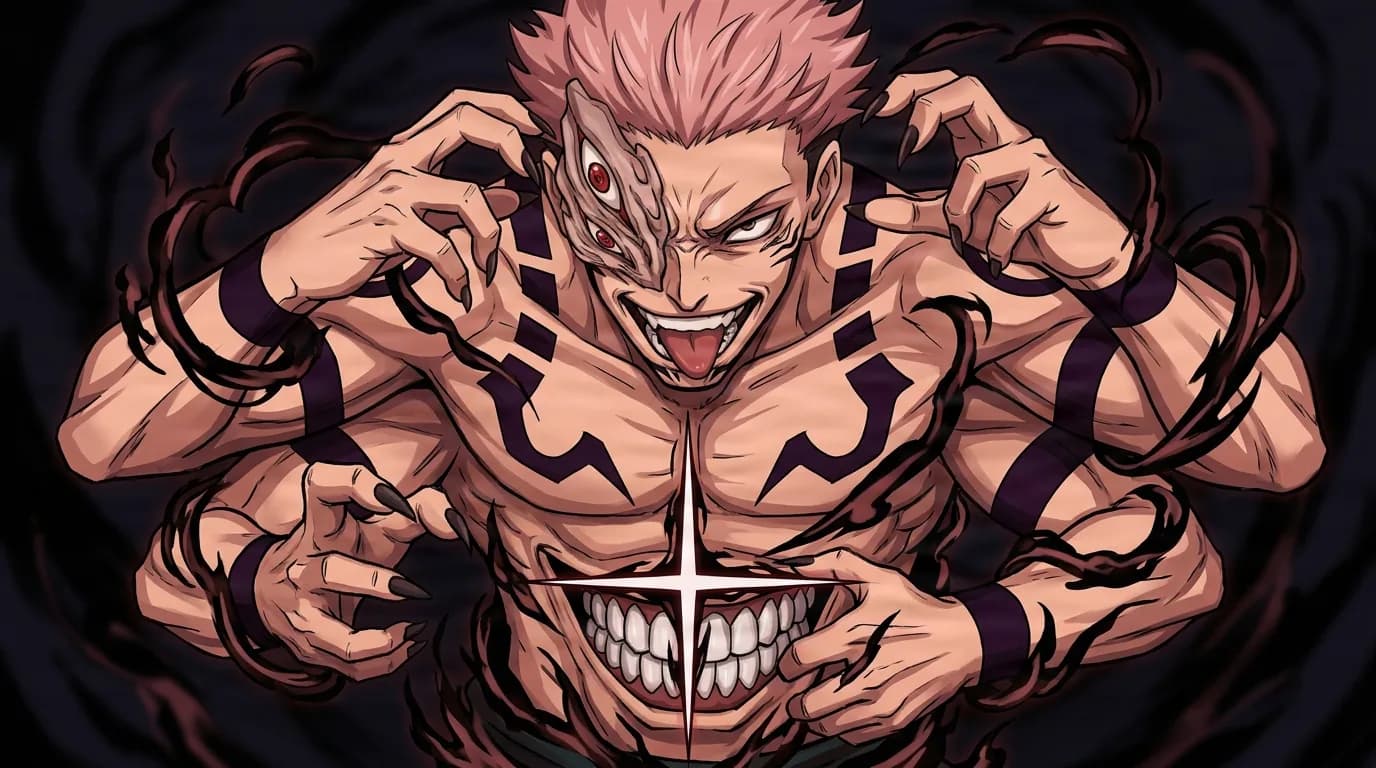
The Strongest Sorcerer Alive Against the King of Curses
Gojo vs Sukuna is the rare versus argument where the source material answered the question and the argument only got louder. Jujutsu Kaisen, JJK to most of the people still arguing about it, spent its entire run building two characters who were each told by everyone around them that they were the ceiling. Satoru Gojo is a special grade sorcerer described in his own profile as the strongest alive, the first person in four centuries to carry both the Limitless and the Six Eyes. Ryomen Sukuna is the strongest sorcerer who ever lived, a Heian era calamity who beat death by splitting his soul across twenty fingers that cannot be destroyed. Two ceilings, one series, and only one of them gets to be the real one.
That tension has kept the debate running for years across forums and versus communities, and it survived the fight itself. Part of it is timing. The matchup resolves in print, so the Gojo vs Sukuna manga chapters stay in heavy circulation long after they published, while the anime audience meets the same fight on a completely different schedule. ScreenRant has made the case that a Gojo vs Sukuna movie is the honest format for a fight this dense, fourteen chapters end to end, rather than a stretch of television episodes. The other part is that the ending arrived with conditions bolted to it, and conditions are exactly what versus arguments feed on.
Satoru Gojo's Case Starts With Limitless
Gojo's inherited technique is Limitless, and his profile does not dress it up: near absolute control over space. The practical expression is Infinity, an unending series stacked between Gojo and anything moving toward him, which means nothing ever actually arrives. Fists stop. Blades stop. Cursed spirits stop. On top of that permanent floor he runs three offensive expressions of the same technique. Cursed Technique Lapse: Blue creates negative space and drags matter inward. Cursed Technique Reversal: Red inverts the principle and blows outward hard enough to flatten a district. Hollow Technique: Purple slams the two together into an imaginary mass collision that erases what it passes through instead of merely pushing it.
What makes that set unfair is not the ceiling on any single attack. It is that the defense costs him almost nothing to keep running. His profile records him holding Limitless active perpetually while cycling reverse cursed technique through his own brain as maintenance, and expanding his domain several times in a single day. Most sorcerers get one domain expansion and then they are finished for the fight. Gojo gets several and never lowers his guard between them. Anyone asking who would win has to solve that problem before anything else, because until Infinity is answered this is not a fight, it is a man throwing punches at a wall that does not exist.
The Six Eyes Turn Talent Into Efficiency
The Six Eyes are the quieter half of Gojo's kit and the reason the loud half functions. They grant flawless perception and control of cursed energy, which converts straight into efficiency: he spends a fraction of what an ordinary sorcerer burns to produce the same effect. That is why the economics of the fight tilt toward him. It is also why he can fire Unlimited Void for as little as 0.2 seconds and still land the effect, a detail from his profile that matters enormously against an opponent whose only counter is reacting faster than the domain forms.
Unlimited Void itself is the most abstract weapon in the series. It does not cut, burn, or crush anything. It floods everyone caught inside with limitless information, and a mind handed infinity simply stops issuing commands to the body. Victims lock up. Gojo can also reshape the domain's conditions at will, which turns one technique into a toolkit rather than a finisher he gets to use once. Add the Six Eyes reading an opponent's cursed energy in real time and Gojo is not guessing at what is coming next. He is watching it be assembled. Against any technique user who telegraphs through energy signature, that is functionally precognition.
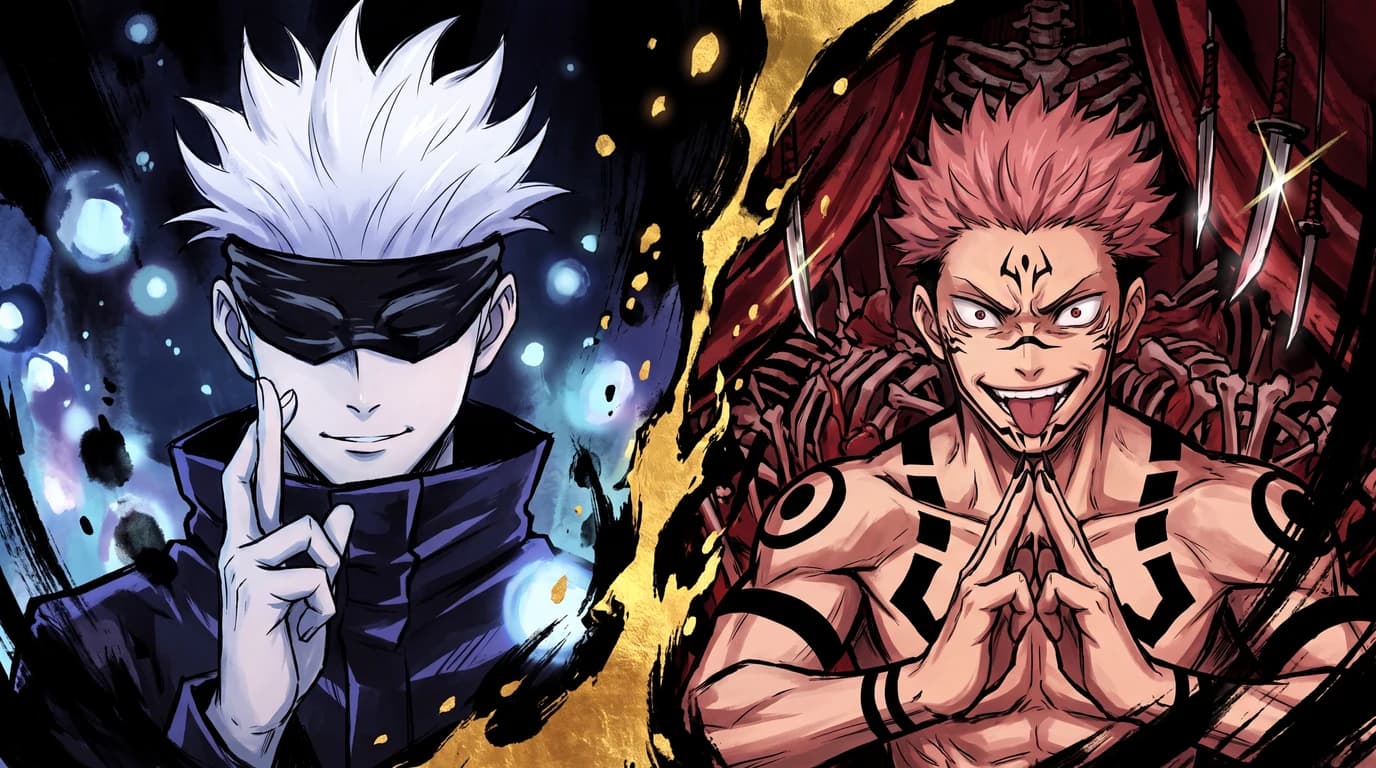
Gojo's Record Before Shinjuku
Reputation is cheap. Gojo's record is not. He killed Jogo and Hanami, two special grade cursed spirits, and held off their coordinated assault at the same time. Kenjaku, a schemer with a millennium of accumulated technique and a habit of never losing, flatly admitted he could not beat Gojo head on. That is why the Shibuya plan was never a fight. It was a seal. Gojo only went down because Kenjaku wore Suguru Geto's face and used the one wound Gojo could not walk past to buy the seconds the Prison Realm needed.
The physical record is just as blunt. His profile names him the fastest sorcerer alive, credits him with cutting down a thousand transfigured humans in minutes, and puts him keeping pace with Sukuna, Mahoraga, and Merged Beast Agito at the same time. In pure martial arts he is rated a match for Kenjaku, who has had a thousand years to practice. As a teenager he survived being impaled by Toji Fushiguro and came back stronger from it, the fight where he declared himself the honored one of heaven and earth. The jujutsu higher ups feared him enough to reverse their own execution orders on his word. Nothing in that record belongs to a man who loses cleanly.
Sukuna's Case Is a Thousand Years of Bodies
Sukuna's claim does not rest on projection. It rests on a body count. He fought through the Heian era, jujutsu's golden age, when the discipline was at its strongest and the best practitioners alive came looking for him on purpose. His profile records thousands killed, including the Fujiwara Clan's elite Sun, Moon, and Stars Squad and the Five Empty Generals wiped out together in a single rampage. Those were not cursed spirits. Those were trained sorcerers from the period that produced the finest sorcerers in the history of the craft. He walked out of it with two titles, King of Curses and Strongest Sorcerer in History, and neither was awarded by popular vote.
Then he refused to die properly. Sukuna divided his soul across twenty fingers that cannot be destroyed, which is less a technique than a permanent structural problem for everyone else in the story. Reduced to a single finger inside Yuji Itadori he was still felling large cursed spirits with one swing. At four fingers he shrugged off Mahito's Idle Transfiguration outright, a technique that reshapes souls on contact. After Yuji consumed sixteen, Sukuna crushed Jogo and then beat Mahoraga alone, something no wielder of the Ten Shadows Technique had ever managed in the entire history of that technique.
Shrine, Malevolent Shrine, and a Borrowed Army
Sukuna's innate technique is Shrine, and it is a spread of cutting tools rather than one signature attack. Dismantle fires an unseen, high velocity slash. Cleave scales its cutting power to the toughness of whatever it strikes, which means durability alone is no defense against it. Spiderweb sweeps the ground. Divine Flame reaches targets he never has to close on. His domain expansion, Malevolent Shrine, saturates the open air around it with ceaseless slashes out to nearly two hundred meters, and unlike every other domain in the series it runs without a barrier, so it fills real space instead of a sealed pocket.
His reserves match the arsenal. His profile calls his cursed energy pool likely the largest ever recorded, more than double Yuta Okkotsu's, with control clean enough that he kept his own heart beating after it had been run through. He is deeply skilled with reverse cursed technique, repairing limbs, burnt out techniques, and his own soul. And in Shinjuku he was not working with his own kit alone. Occupying Megumi Fushiguro handed him the Ten Shadows Technique, its complete shikigami lineup, and the tamed Mahoraga. That single borrowed asset is the whole ballgame, and the verdict comes back to it.
Two Temperaments That Decide Fights
Neither man is a machine, and both personalities leak into their combat decisions. Gojo grades people almost entirely by strength and turns indifferent toward anyone he rates as weak, which has cost him before. He is easygoing with his students and openly contemptuous toward the executives he considers rot. In a true crisis he becomes willing to let an enemy's victims die when the loss looks unavoidable, though he will not harm innocents himself to buy an advantage. In a duel staged inside a populated ward, that is a live constraint on how he fights, not a character note.
Sukuna's flaw is appetite. He gorges on battle the way he gorges on everything else, so he stretches fights out against strong opponents when finishing quickly would serve him far better. His pride is bottomless and offered mercy enrages him, because being pitied reads to him as being called weak. But his profile is explicit that the pride must never be mistaken for foolishness. This is the same person who tore out Yuji's heart to force a binding vow and who talked Hana Kurusu into lowering her guard. Sukuna plays with his food and then closes with something nobody saw coming. Gojo sets the terms and expects them honored.
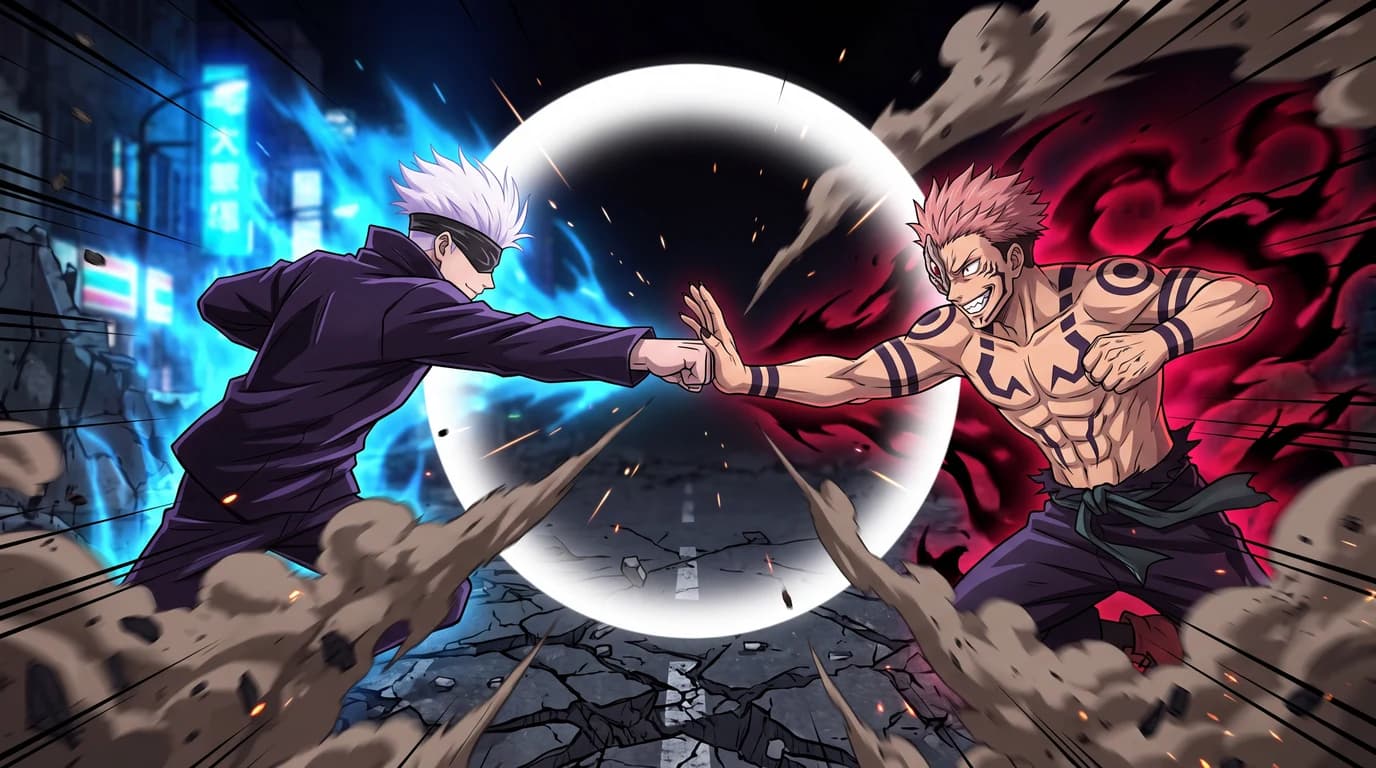
Power, Speed, and Domain Expansion Compared
Sukuna vs Gojo is unusual among versus arguments because the tape exists. Most matchups get scaled, estimated, and shouted about. This one got a fight that ran the length of an arc, with two fighters solving each other in real time, so every axis below checks against what actually happened instead of what fans picture happening.
Cursed Energy Reserves and Output Efficiency
On raw volume Sukuna wins and it is not close. His profile puts his reserve at likely the largest ever measured, more than twice Yuta Okkotsu's, and Yuta is a special grade whose ceiling the series treats as absurd on its own. Gojo's pool is enormous but his profile never frames volume as his edge. His edge is conversion. The Six Eyes let him produce a given effect for a fraction of the cost, which is how he holds Infinity up permanently, runs reverse cursed technique on his own brain as upkeep, and still has enough left to expand Unlimited Void several times a day.
That difference shows up as tempo rather than damage. Both fighters burn out their cursed technique and both refill it with reverse cursed technique mid battle, but Gojo refills faster and more completely, which repeatedly let him open a domain before Sukuna could answer with one. Peak output tells a different story. Gojo's ceiling attack is Hollow Purple, and the version that opened the Shinjuku fight was pushed past its normal limit. CBR's breakdown of chapter 223 explains the mechanism: by activating slowly through chants, hand signs, and ritual movement, Gojo traded activation speed for potency and reached two hundred percent effectiveness on Limitless, with Utahime Iori running her own technique at a hundred and twenty percent alongside him, the whole ritual hidden behind a cloaking barrier until the attack was already in Sukuna's face.
Speed, Reflexes, and Hand to Hand
Gojo takes this axis cleanly and his profile is not shy about it. He is the fastest sorcerer alive. He cut down a thousand transfigured humans in minutes and matched Sukuna, Mahoraga, and Merged Beast Agito simultaneously. In pure martial ability he is rated the equal of a man who has been refining his fighting for a thousand years. Against Sukuna specifically he outclassed the King of Curses in the martial exchanges, opened critical wounds by hand, and knocked Sukuna unconscious with a single Black Flash straight to the heart. Nothing else in the series ever did that to Sukuna.
The uncomfortable part is that Sukuna is not slow either. He slipped past Maximum: Meteor, parried Mahoraga, split a school roof hard enough to compromise the building, and drove Jogo through skyscrapers. He overwhelmed Megumi Fushiguro bare handed and fought Yuji Itadori and Maki Zenin at the same time without visible strain. But when these two stood across from each other and traded, Gojo was the faster and the more technically complete striker, and the fight demonstrated it over and over. Sukuna's answer was never going to be out boxing Gojo. His answer was to stop needing to touch him at all.
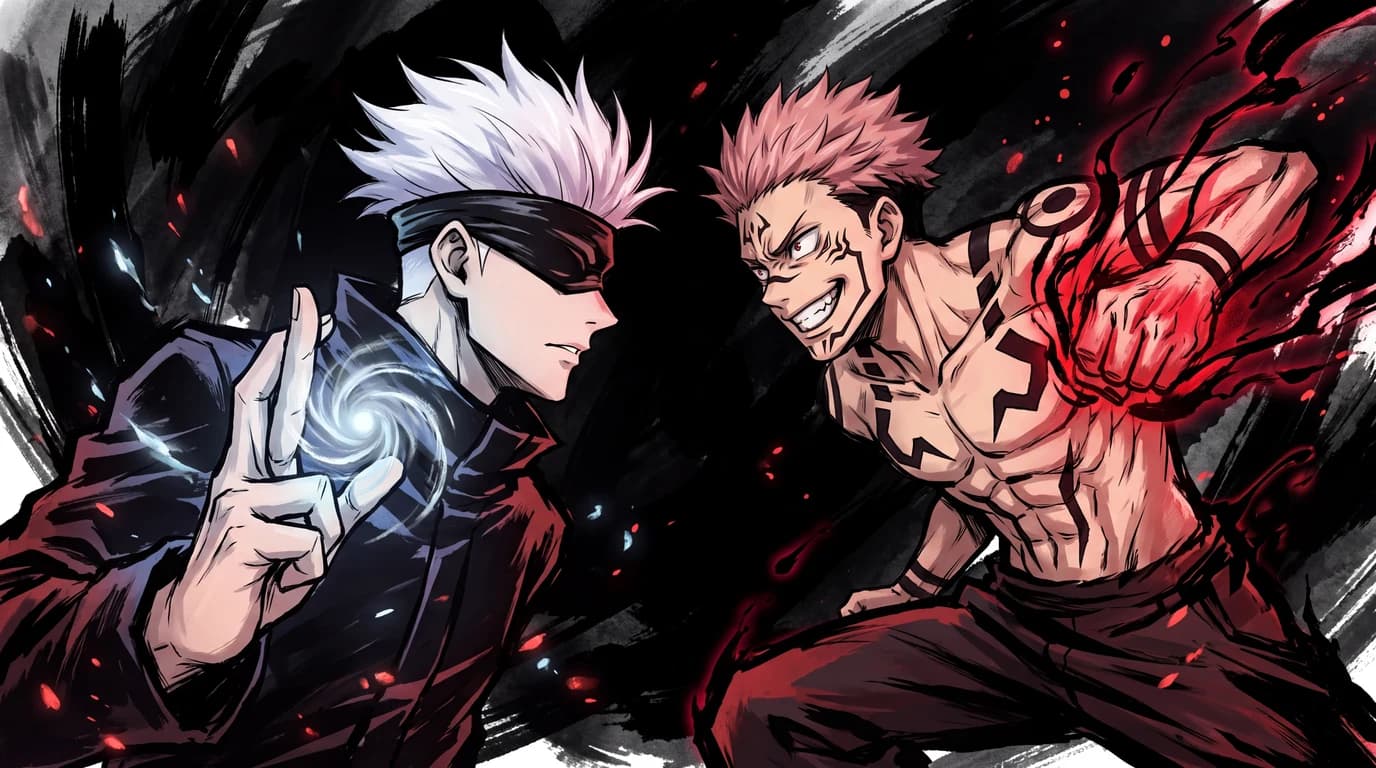
The Gojo vs Sukuna Domain Clash, Round by Round
The domain exchange is the technical spine of this matchup and it went six deep. GameRant's breakdown of every Gojo vs Sukuna domain clash tracks the sequence, and the shape of it matters more than any single moment inside it. Malevolent Shrine took the first exchange because it runs as an open barrier domain, which let Sukuna stand outside Gojo's sealed barrier and break it from the exterior with slashes while his own domain gave up nothing. Gojo lost the second as well, after Sukuna paid a binding vow that surrendered his domain's guaranteed hit on the interior in exchange for far heavier output against the barrier itself.
Then Gojo adapted and the fight turned. He shrank Unlimited Void down below the size of a basketball, a refinement he worked out during the months he spent sealed inside the Prison Realm, which made his barrier far harder to shatter and freed him to pour his own external output into Sukuna. The third exchange ended in a mutual break. So did the fourth, once Sukuna copied Gojo's trick of refilling a burnt out technique with reverse cursed technique in the middle of the fight.
The fifth is the one Gojo readers point at, and they are right to. He refilled faster, forced Sukuna to open late, destroyed Malevolent Shrine outright after roughly two minutes and forty seconds, and landed a clean Unlimited Void hit on the King of Curses. Sukuna survived that only because Mahoraga's adaptation had already started accounting for the domain. A sixth Gojo vs Sukuna domain expansion never happened at all, because both men had refilled so many times that neither had a technique left to expand with. On domains alone the ledger reads two losses, two ties, one clear win, and one cancellation. That is not the ledger of a man being outclassed.
Infinity Against Adaptation
Durability is where the comparison stops being symmetrical. Gojo's defense is not toughness, it is a category error forced onto the attacker, because Infinity means the strike never arrives in the first place. Sukuna's defense is toughness plus repair, and it is monstrous in its own right. He weathered a full power Hollow Purple with grave but survivable wounds and rebuilt himself with reverse cursed technique afterward, and his profile credits him with mending not only limbs and scorched techniques but his own soul. Gojo healed in real time as well, riding out Malevolent Shrine's endless slashes and repairing the damage while it was still landing.
The asymmetry is that Sukuna's defense can be beaten by sufficient force and Gojo's cannot be beaten by force at any quantity. Infinity has to be solved, not overpowered, and for most of the series nobody had a solution to offer. Mahoraga is the solution. The shikigami adapts to any phenomenon it is exposed to, and by feeding it Gojo's techniques Sukuna obtained a working model of what adapting to Limitless actually looks like, then applied that model to his own cursed energy. That is the hinge the entire matchup turns on, and it did not come from Sukuna's innate technique.
Stamina, Experience, and Win Conditions
Experience nominally belongs to Sukuna by roughly a thousand years, and the quality of it is high, since he built his name against Heian era sorcerers at the absolute peak of the craft. But Gojo's experience is better matched to this particular opponent. He has spent his adult life fighting special grades, teaching other people how to fight them, and being hunted by enemies who had to invent bespoke plans to handle him rather than simply engaging. Kenjaku's whole Shibuya operation existed to avoid fighting him directly.
Win conditions are where it resolves. Gojo's win condition is a clean Unlimited Void landing long enough for him to finish an immobilized target, or enough accumulated Hollow Purple damage that reverse cursed technique cannot keep pace with the destruction. He achieved the first one and Sukuna's borrowed adaptation blunted it. Sukuna's win condition was narrower and considerably stranger. He needed an attack that did not have to reach Gojo to hurt him. Stamina decided which condition got met, because once both men had exhausted their capacity to refill a technique, the fighter still holding a novel answer was the one who closed the fight.
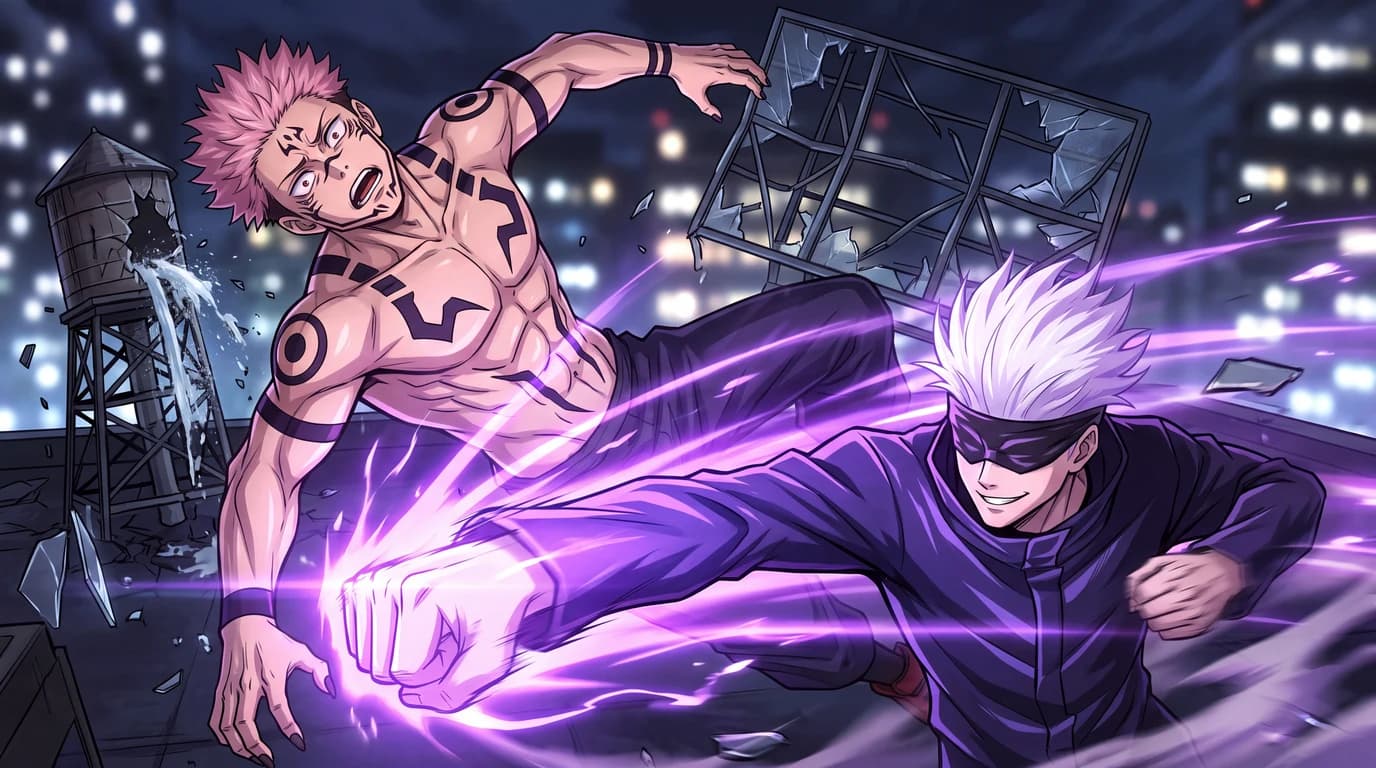
The Verdict and the Version That Changes It
Sukuna wins. The published record settles it in chapter 236, where a Dismantle retargeted at the world itself cut through space and left Gojo's body in two pieces. For anyone weighing who would win on feats alone, that is the answer the manga delivered, and no amount of parsing conditions makes the body stand back up. But the shape of the win is specific enough to deserve stating precisely, because the conditions that produced it are not conditions that hold in every version of this fight.
Sukuna Takes the Published Fight
Sukuna wins because he solved the only problem that ever mattered. Infinity had never been beaten by force, so he stopped trying to reach Gojo and started cutting the space Gojo was standing in. The model came from Mahoraga. The shikigami adapts to whatever it is exposed to, it had been exposed to Limitless, and Sukuna studied that result and reproduced it in his own cursed energy. The slash that killed Gojo did not need to penetrate Infinity because it was not aimed at a person. It was aimed at everything, and Gojo happened to be inside everything.
Two supporting facts make the result harder to argue away. Sukuna absorbed a clean Unlimited Void hit and a full power Hollow Purple and kept fighting, which means Gojo's best did not close the deal. And CBR's reading of chapter 236 argues that Sukuna was managing his reserves rather than emptying them, holding back deliberately because spending everything on Gojo would only have handed the kill to Yuta, Kashimo, or Maki afterward. The same piece notes that Gojo, reflecting after the fact, carried no regret about the fight but did wonder whether he could ever have won it.
The Version Where Gojo Wins
Strip the borrowed technique and the result inverts. Sukuna fought this entire battle piloting Megumi Fushiguro rather than the four armed body he was born with, and that vessel handed him a technique that was never his: the Ten Shadows, its full shikigami roster, and a tamed Mahoraga. Shrine on its own has no answer to Infinity. Dismantle, Cleave, Spiderweb, and Divine Flame are all attacks that have to arrive somewhere, and arriving is precisely the thing Limitless forbids. Malevolent Shrine's slashes are relentless and Gojo simply healed through them while they were still falling.
So the conditional verdict is clean. Sukuna in his own body, running only his own innate technique, loses to Gojo. He gets no adaptation model, which means he never crosses Infinity, which means the fight ends the way the fifth domain exchange was already trending, with Unlimited Void landing clean and nothing left standing between Gojo and an immobilized target. Sukuna's own profile notes that even Gojo conceded a duel between them would prove a struggle, while Gojo's profile records him claiming he could beat Sukuna at full power if he chose to. It took Megumi Fushiguro's body to make that claim false.
The Fight From First Exchange to Final Slash
The sequence is worth walking, because it explains why both readings hold. Gojo opens with an ambush, a Hollow Purple amplified through slow ritual activation and concealed behind a barrier, landing before Sukuna can read the energy building. Sukuna survives with severe wounds and repairs them. They trade in close quarters and Gojo is plainly the better fighter there, carving out critical wounds by hand and eventually dropping the King of Curses unconscious with a Black Flash to the heart.
The domains then decide the middle. Sukuna's open barrier takes the early exchanges, Gojo's basketball sized Unlimited Void takes the later ones, and the fifth is a clean Gojo win that Mahoraga's adaptation only barely absorbs. By the sixth attempt neither man can expand anything. Both are out of technique, out of refills, running on physical reserves and stubbornness. That is the moment Sukuna produces the one thing Gojo could not have prepared for, because nothing in the series had ever done it before: a slash aimed at the world rather than at a target. Gojo is cut through the middle. His legs were still standing when his torso hit the ground.
Where the Record Leaves It
The scoreboard reads Sukuna, and it reads Sukuna under conditions that favored him in exactly one respect and worked against him in several others. He was piloting a stolen body. He was facing the one opponent alive who could out strike him. He was forced to spend binding vows and reverse cursed technique at a rate nothing else in the series ever demanded of him. And he still won, because he was the only one of the two who found a new answer under pressure. Gojo brought the better toolkit to a fight that came down to who could invent faster.
Anchored to the completed manga, with both fighters at their strongest published versions, Sukuna vs Gojo ends with the King of Curses left standing. Anchored instead to Sukuna's own body and his own innate technique, with the Ten Shadows off the table, it ends with Gojo. Both answers come out of the same fourteen chapters, which is exactly why an argument that was supposed to die with the ending has comfortably outlived it. The strongest sorcerer alive lost to the strongest sorcerer who ever lived, and he lost by a margin measured in one borrowed shikigami.