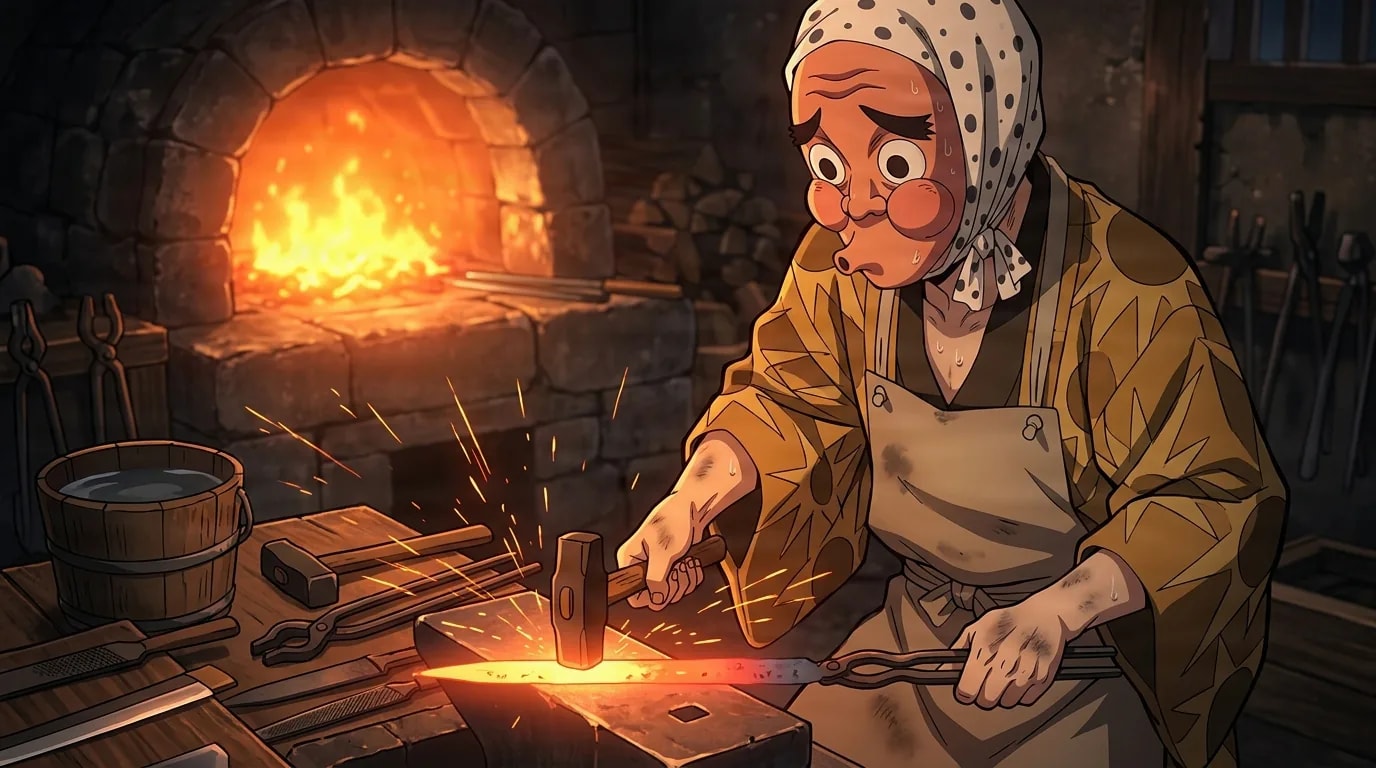
Hotaru Haganezuka
CharacterHotaru Haganezuka is the temperamental swordsmith tasked with forging and repairing Tanjiro Kamado's Nichirin blade. Famous for his explosive temper and obsessive devotion to his craft, he hides behind a festival mask and chases Tanjiro with knives whenever a sword breaks.
Appearance
Hotaru dresses in a dark yukata layered with a sunflower-print haori, and like the other smiths he hides his features behind a wooden Hyottoko festival mask. A spotted scarf wraps his head, and when traveling he adds a wide woven hat strung with floral wind chimes.
When his anger boils over he sheds the haori, opens his yukata, and twists the scarf into a headband that holds a pair of knives, exposing his long black hair. Later, after a stint of mountain training during the Swordsmith Village events, he reappears with a far more muscular frame. Once unmasked, he is shown to have sharp eyes and thick eyebrows, though Gyokko's assault leaves him scarred across the body, including an X-shaped mark on his face and the loss of sight in one eye.

Personality
Hotaru is intensely hot-blooded and cares about little beyond the weapons he creates. His passion lets him discuss blades endlessly, but it also makes him erupt at any swordsman who damages his work, Tanjiro most of all. He soothes his temper by eating mitarashi dango, and bystanders can subdue him by pinning him down or tickling his sides, after which he goes limp.
Socially awkward and unmarried, his abrasive manner has cost him clients and earned the dislike of other smiths, yet he is quietly grateful that Tanjiro keeps trusting him. His focus while forging is so absolute that he ignores even a demon wounding him. Beneath the volatility lies real respect for the Corps, and he has firmly defended the dignity of demon slaying when pressed.
History
Born into the Haganezuka line of swordsmiths, Hotaru was such a difficult toddler that his parents broke down, and the village chief Tecchin Tecchikawahara raised him instead. The chief gave him the first name he resents for sounding too cute, and recalls a boy prone to constant tantrums and disappearing.
Trained by the other smiths, Hotaru took up forging and polishing Nichirin Swords for the Corps. After Tanjiro cleared the Final Selection, Hotaru was assigned to make his blade, beginning a long and combative partnership. During the Swordsmith Village attack he restores an ancient blade hidden inside Yoriichi Type Zero while enduring Gyokko's repeated attacks without breaking concentration, and that weapon proves decisive in felling Hantengu.
Related Reading
See all
Demon Slayer Infinity Castle Is the Biggest Anime Movie Ever but It Still Lost in Japan
Demon Slayer: Infinity Castle earned $778 million globally and nearly 40 billion yen in Japan, but it still couldn't top Mugen Train's domestic record. Here's why that barely matters....
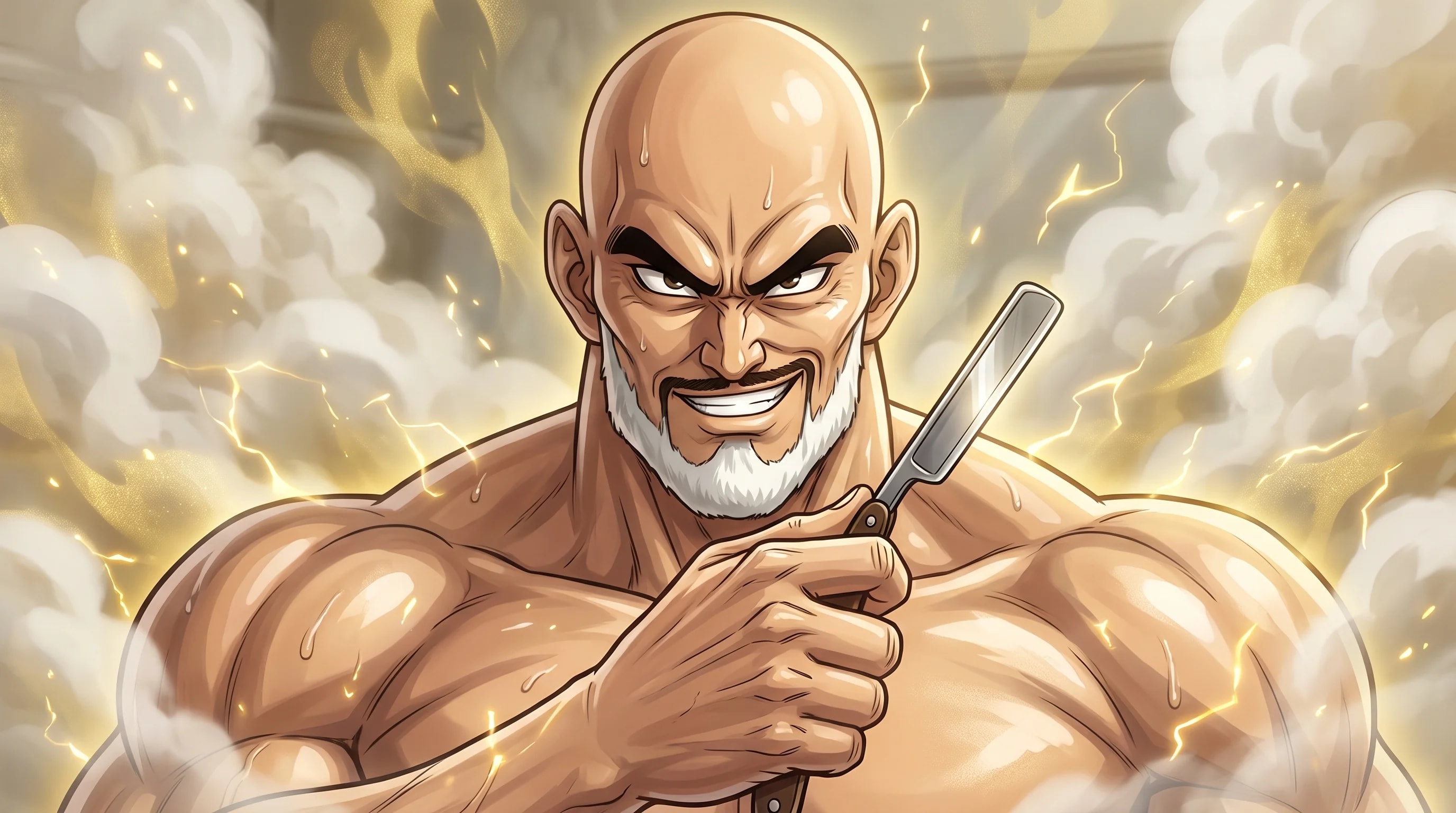
Super Saiyan Pubes: The Song About Where Super Saiyan Hair Actually Goes
The transformation everyone knows, the follow-up question nobody would touch. Why we made a smooth R&B track about the golden glow Dragon Ball never talks about....
Frequently Asked Questions
Who is Haganezuka in Demon Slayer?
Hotaru Haganezuka is the temperamental swordsmith tasked with forging and repairing Tanjiro Kamado's Nichirin blade. He is famous for his explosive temper and hides his face behind a wooden Hyottoko festival mask.
What happened to Hotaru Haganezuka in Demon Slayer?
During the Swordsmith Village attack, Hotaru Haganezuka restored an ancient blade hidden inside Yoriichi Type Zero while enduring Gyokko's repeated assaults without breaking concentration. The attack left him scarred across the body, including an X-shaped mark on his face and the loss of sight in one eye.
What does Hotaru Haganezuka look like under his mask in Demon Slayer?
Once unmasked, Hotaru Haganezuka is shown to have sharp eyes, thick eyebrows, and long black hair. After Gyokko's assault he also bears an X-shaped scar on his face and is blind in one eye.
Does Hotaru Haganezuka hate Tanjiro in Demon Slayer?
Hotaru Haganezuka erupts in anger and chases Tanjiro with knives whenever a sword breaks, but he does not truly hate him. He is quietly grateful that Tanjiro keeps trusting him with his work.
How old is Hotaru Haganezuka in Demon Slayer?
Hotaru Haganezuka is 37 years old in Demon Slayer.
Sources & Information
Looking for more on Hotaru Haganezuka? The Demon Slayer Wiki on Fandom has a dedicated page with community notes.
View on FandomThis content is original writing by Daddy Jim Headquarters based on the Demon Slayer anime series, manga, and official materials. Episode and chapter references are cited where applicable.
Character and scene imagery on this site is original artwork by Daddy Jim Headquarters, not screenshots or licensed imagery. Official cover art is used on three types of pages for editorial commentary:
- Movie pages: theatrical posters and key visuals, credited to ufotable and Aniplex.
- Game pages: official box art, credited to Sega, Aniplex, and other publishers.
- Manga chapter pages: Jump Comics volume covers, credited to Shueisha and Koyoharu Gotouge.
Official resources:
Help Us Keep This Wiki Accurate
Daddy Jim Headquarters maintains this encyclopedia. If you spot an error, a translation issue, or something that doesn't look right, let us know.