Kamanue
CharacterHolding the freshly opened seat of Lower Rank Six within the Twelve Kizuki, Kamanue is an anxious, feeble demon. After Rui dies, Nakime pulls him into the Infinity Castle, where Muzan Kibutsuji devours him during the assembly of the Lower Ranks.
Look and Disposition
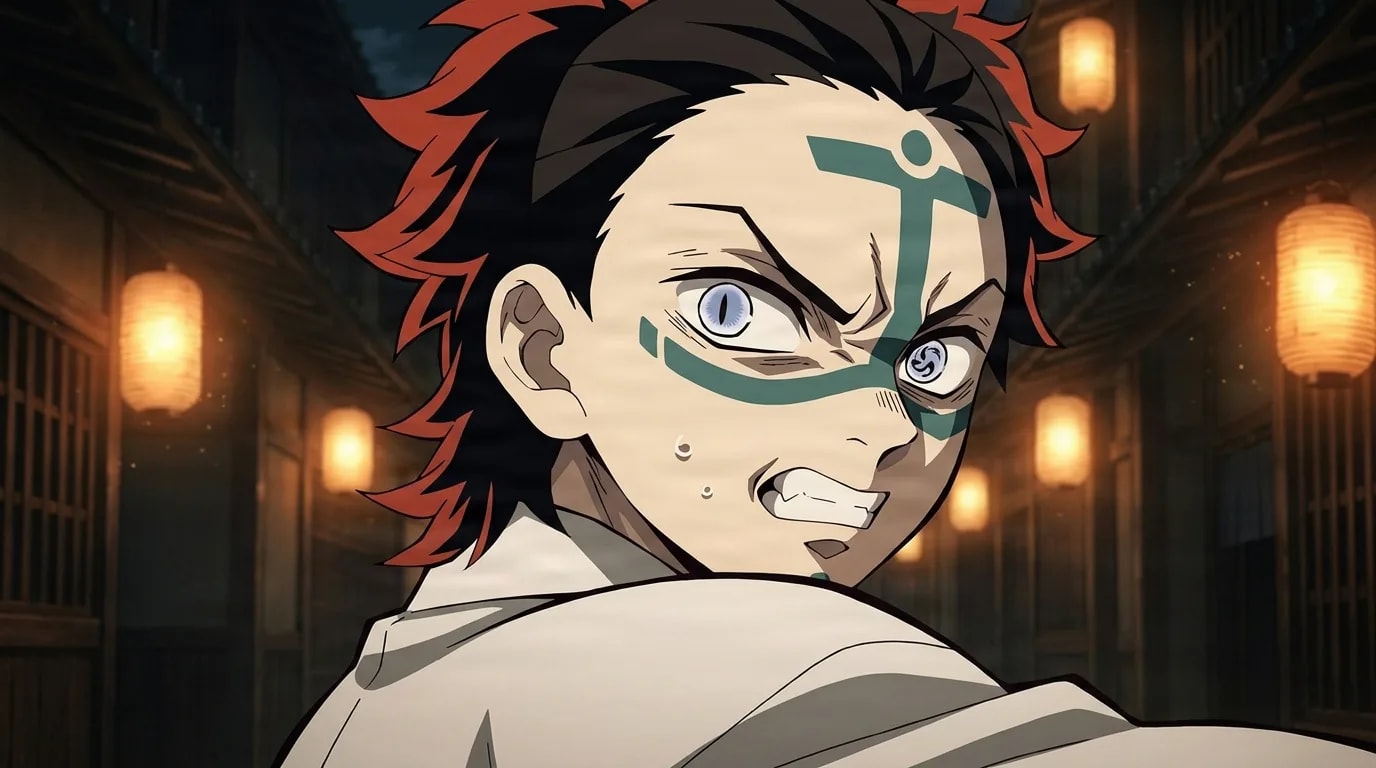
Kamanue is a short young man with pale skin, his face marked by a thick dark-green stripe that runs below the eyes and over the nose, rising into shorter strokes on his forehead, with large dots set at the ends. His cat-like eyes have slit pupils and pale blue irises ringed in white, and the characters denoting his rank are inscribed on his left eye. His dark brown hair, tipped in bright orange, is swept back yet fluffed out around his head.
He is a deeply nervous and uneasy figure, wearing a frightened look because, sitting at the very bottom among the Lower Ranks, he feels utterly feeble. Like most demons his obedience to Muzan rests on terror; merely hearing his master speak makes him break into a heavy sweat, and he freezes once told to keep voicing his thoughts.

The Gathering and His Death
Following the demise of Lower Rank Five, Rui, Nakime summons Kamanue to the Infinity Castle. Bewildered by the vast fortress he has never seen, he spots Wakuraba, Mukago, Enmu, and Rokuro nearby and realizes that the Lower Ranks have never been assembled like this before. Nakime then moves them onto a platform before a disguised figure who turns out to be Muzan himself.
The demon king berates them for their weakness, explaining that their only worth is to consume blood for his benefit and contrasting their constant replacement with the Upper Ranks' century of stability. When Kamanue silently scoffs that Muzan speaks too easily, Muzan, able to read his demons' thoughts, demands he voice the complaint. As Kamanue tearfully tries to apologize, Muzan extends a tentacle-like arm and devours him on the spot.
Power and Name
Little is known of Kamanue's strength, since he is killed before showing any of it. Belonging to the Twelve Kizuki, he was presumably far above an ordinary demon and likely outmatched Kyogai, the earlier holder of his rank whose seat he inherited.
His name first appeared in an official fanbook rather than the main story. The characters that compose it carry the meanings of pot or kettle and of a chimera-like creature, fitting the unsettling, lowly figure he cuts among the demon ranks.
Related Reading
See all
Demon Slayer Infinity Castle Is the Biggest Anime Movie Ever but It Still Lost in Japan
Demon Slayer: Infinity Castle earned $778 million globally and nearly 40 billion yen in Japan, but it still couldn't top Mugen Train's domestic record. Here's why that barely matters....
Super Saiyan Pubes: The Song About Where Super Saiyan Hair Actually Goes
The transformation everyone knows, the follow-up question nobody would touch. Why we made a smooth R&B track about the golden glow Dragon Ball never talks about....

Frequently Asked Questions
Who is Kamanue in Demon Slayer?
Kamanue is an anxious, feeble demon who held the freshly opened seat of Lower Rank Six within the Twelve Kizuki. Sitting at the very bottom of the Lower Ranks, he was a deeply nervous figure whose obedience to Muzan rested on terror.
Who killed Kamanue in Demon Slayer?
Muzan Kibutsuji killed Kamanue. During the gathering of the Lower Ranks in the Infinity Castle, Muzan read Kamanue's silent doubt, demanded he voice it, and then extended a tentacle-like arm and devoured him on the spot.
What is Kamanue's Blood Demon Art in Demon Slayer?
Kamanue's Blood Demon Art is unknown, since he was killed before showing any of his power. As a member of the Twelve Kizuki he was presumably far above an ordinary demon and likely outmatched Kyogai, the earlier holder of his rank.
How does Kamanue die in Demon Slayer?
After Lower Rank Five Rui dies, Nakime summons Kamanue to the Infinity Castle for an assembly of the Lower Ranks. There Muzan berates them for their weakness, and when Kamanue silently scoffs, Muzan devours him as he tearfully tries to apologize.
What is the gender of Kamanue in Demon Slayer?
Kamanue is male. He is described as a short young man with pale skin, a thick dark-green stripe across his face, and cat-like eyes with slit pupils and pale blue irises.
Sources & Information
Looking for more on Kamanue? The Demon Slayer Wiki on Fandom has a dedicated page with community notes.
View on FandomThis content is original writing by Daddy Jim Headquarters based on the Demon Slayer anime series, manga, and official materials. Episode and chapter references are cited where applicable.
Character and scene imagery on this site is original artwork by Daddy Jim Headquarters, not screenshots or licensed imagery. Official cover art is used on three types of pages for editorial commentary:
- Movie pages: theatrical posters and key visuals, credited to ufotable and Aniplex.
- Game pages: official box art, credited to Sega, Aniplex, and other publishers.
- Manga chapter pages: Jump Comics volume covers, credited to Shueisha and Koyoharu Gotouge.
Official resources:
Help Us Keep This Wiki Accurate
Daddy Jim Headquarters maintains this encyclopedia. If you spot an error, a translation issue, or something that doesn't look right, let us know.