Tetsumotonaka
CharacterTetsumotonaka is a Swordsmith Village craftsman attached to the Demon Slayer Corps. He surfaces during the demonic assault on the village, appearing first in chapter 125 of the manga and episode 55 of the anime.
Appearance
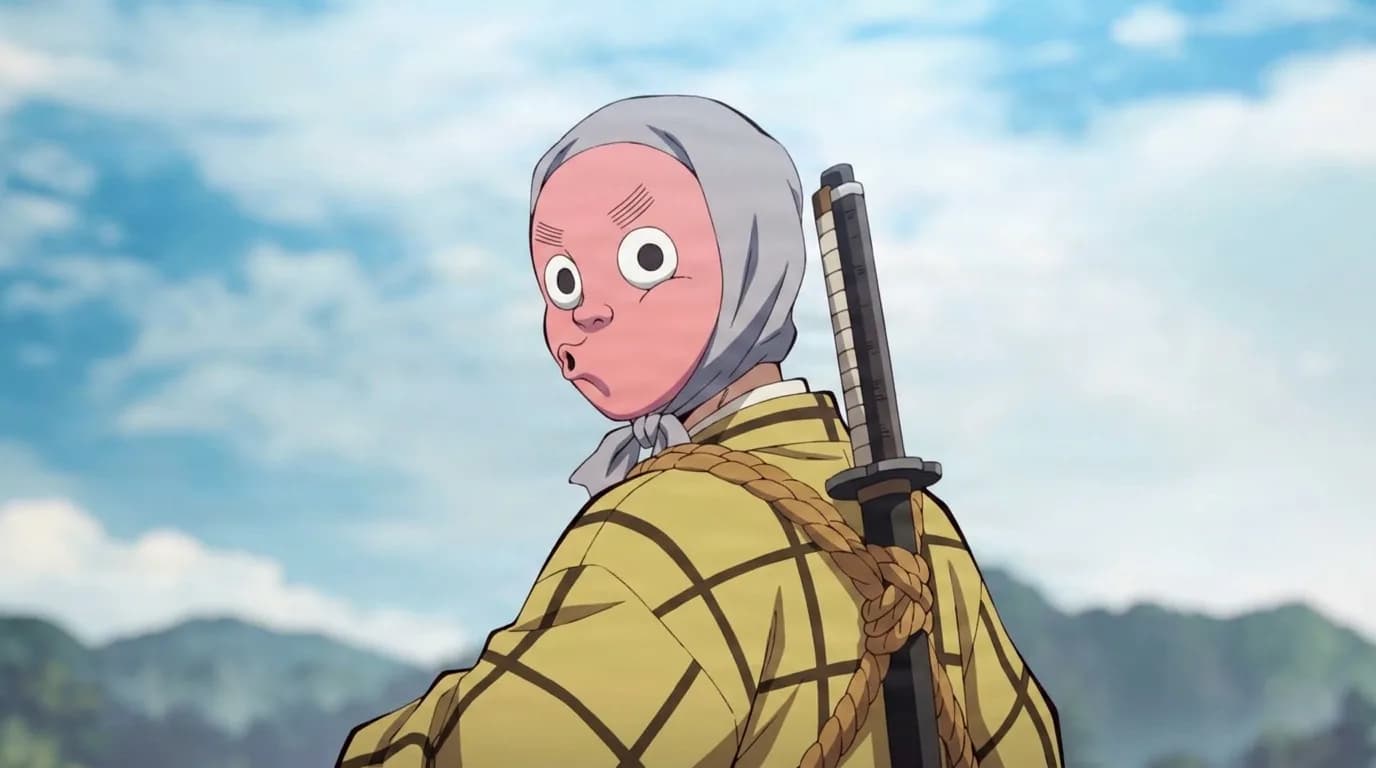
As with all the village smiths, Tetsumotonaka keeps a Hyottoko mask over his face, his distinguished by short, bushy eyebrows. He wears a yellow haori striped in black, loose black trousers gathered above the ankles, and a gray cloth wrapped about his head.

Personality
His nature is only faintly drawn. Loyalty to the village reads as strong, given that he and the others are first shown holding swords, seemingly to protect them through the turmoil. Compassion shows in him as well: he weeps at the sight of Tanjiro clutching the sister he thought dead, and afterward he helps tend the wounded slayer once he collapses.
Related Reading
See all
Demon Slayer Infinity Castle Is the Biggest Anime Movie Ever but It Still Lost in Japan
Demon Slayer: Infinity Castle earned $778 million globally and nearly 40 billion yen in Japan, but it still couldn't top Mugen Train's domestic record. Here's why that barely matters....
Naruto vs Luffy: Does the Fight Change if Luffy Tickles Hinata?
Naruto vs Luffy with the twist nobody asked for: Luffy tickled Hinata on date night, and she kind of liked it. We break down the whole fight and commit to a winner....
History
In the closing phase of the Swordsmith Village attack, Tetsumotonaka hides in brush at the village outskirts with Tetsudoji and Tetsutani, guarding a store of blades. They are sighted by Urami, the resentment born of Upper Rank Four Hantengu. Armless and gravely hurt, the towering demon seeks humans to restore his fading regeneration and pursues the fleeing smiths.
A wounded Tanjiro, armed by the Mist Hashira Muichiro Tokito, catches and beheads Urami, who simply regrows and resumes the chase. Sunrise sets both demons aflame, yet Urami's mass lets him withstand the light long enough to endanger the smiths, prompting Nezuko to kick Tanjiro free so he can rescue them. Tanjiro cuts off Urami's arms, frees the smiths, and slices the demon open to expose and kill Hantengu's true form. Believing his sister gone, Tanjiro grieves until Tetsumotonaka and Tetsutani tell him she lives, and the two carry the injured boy to her. When Tanjiro then faints, Tetsumotonaka urges him to hold on and snaps at Tetsudoji for declaring him dead. Later, when Hotaru Haganezuka furiously demands the unfinished sword, Tetsumotonaka admits he holds it, but his words are drowned out. He is presumed to have relocated to a backup village afterward and is implicitly referenced when Gyomei Himejima praises Tanjiro's choice to protect the smiths.
Frequently Asked Questions
Who is Tetsumotonaka in Demon Slayer?
Tetsumotonaka is a Swordsmith Village craftsman attached to the Demon Slayer Corps. He appears during the demonic assault on the village, debuting in chapter 125 of the manga and episode 55 of the anime.
What does Tetsumotonaka look like in Demon Slayer?
Tetsumotonaka wears a Hyottoko mask like all the village smiths, his distinguished by short, bushy eyebrows. He also wears a yellow haori striped in black, loose black trousers gathered above the ankles, and a gray cloth wrapped about his head.
What does Tetsumotonaka do during the Swordsmith Village attack?
During the closing phase of the attack, Tetsumotonaka hides in brush at the village outskirts with Tetsudoji and Tetsutani, guarding a store of blades. They are pursued by Urami, a demon born of Upper Rank Four Hantengu, until a wounded Tanjiro rescues them.
Does Tetsumotonaka help Tanjiro in Demon Slayer?
Yes, Tetsumotonaka and Tetsutani tell the grieving Tanjiro that his sister Nezuko is alive and carry the injured boy to her. When Tanjiro faints, Tetsumotonaka urges him to hold on and snaps at Tetsudoji for declaring him dead.
What happens to Tetsumotonaka after the Swordsmith Village arc?
Tetsumotonaka is presumed to have relocated to a backup village afterward. He is also implicitly referenced when Gyomei Himejima praises Tanjiro's choice to protect the smiths.
Sources & Information
Looking for more on Tetsumotonaka? The Demon Slayer Wiki on Fandom has a dedicated page with community notes.
View on FandomThis content is original writing by Daddy Jim Headquarters based on the Demon Slayer anime series, manga, and official materials. Episode and chapter references are cited where applicable.
Rights holders
All rights belong to their respective owners.
Character and scene imagery on this site is original artwork by Daddy Jim Headquarters, not screenshots or licensed imagery. Official cover art is used on three types of pages for editorial commentary:
- Movie pages: theatrical posters and key visuals, credited to ufotable and Aniplex.
- Game pages: official box art, credited to Sega, Aniplex, and other publishers.
- Manga chapter pages: Jump Comics volume covers, credited to Shueisha and Koyoharu Gotouge.
Official resources:
Help Us Keep This Wiki Accurate
Daddy Jim Headquarters maintains this encyclopedia. If you spot an error, a translation issue, or something that doesn't look right, let us know.