Mitsuri arrives to rescue the village chief, Muichiro confronts Gyokko and his horrific creation, and Nezuko's blood turns Tanjiro's sword crimson, letting him fell Hantengu's three split forms in a single dragon-shaped strike.
Summary
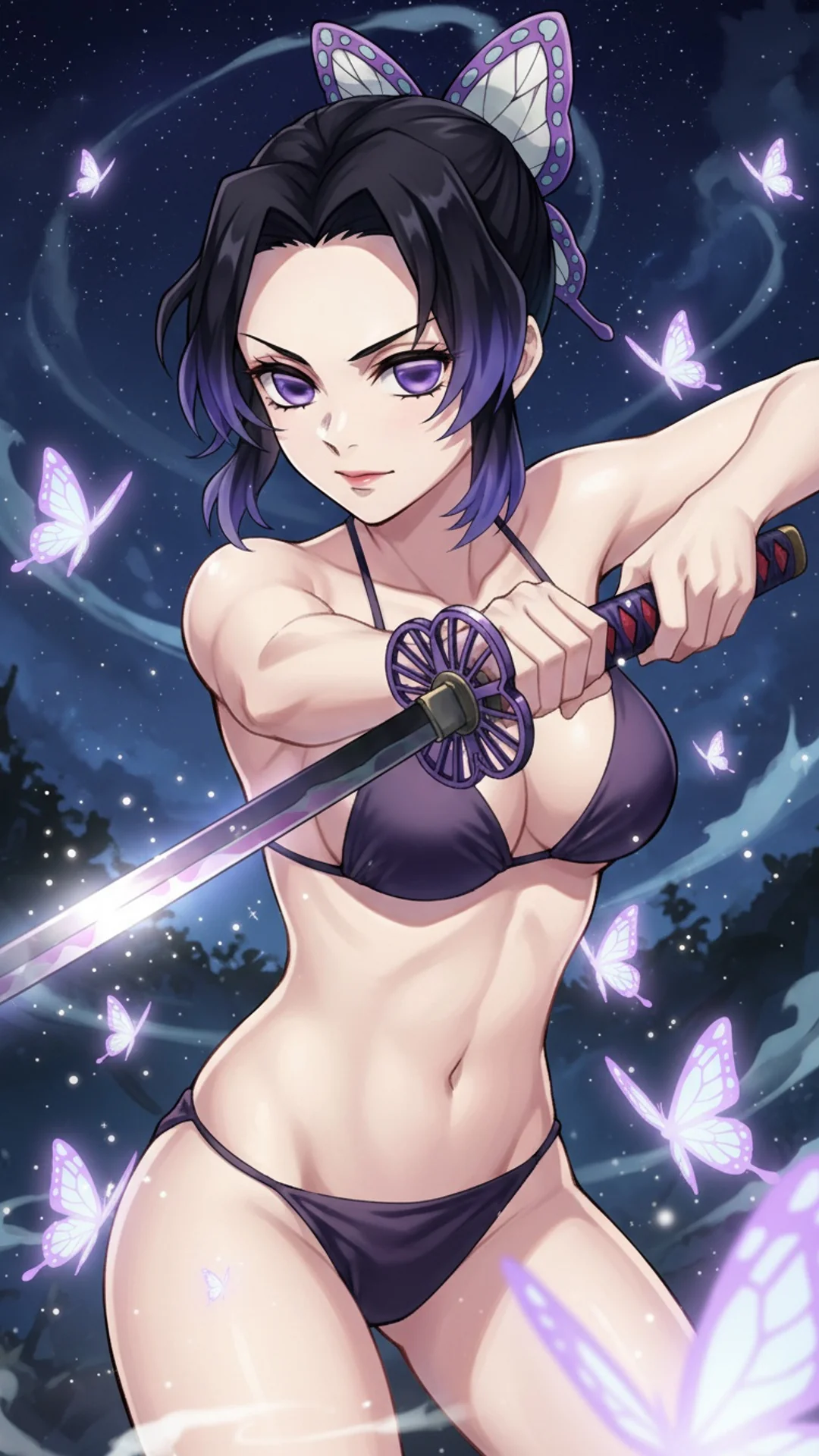
The 49th anime episode and fifth of the third season adapts portions of chapters 110 through 113, taking its title from chapter 113. Muichiro reaches Kanamori and clears the path to the work shed, only to be intercepted by Upper Rank Five, Gyokko. In the settlement, the Love Hashira Mitsuri Kanroji cuts down swarms of fish demons and saves the chief, Tecchin, from being crushed. Cornered alongside Genya, Tanjiro witnesses an inherited memory and watches his blade ignite into a brilliant red, a transformation that finally lets him overcome Hantengu's manifestations.


Key Events
Mitsuri and Gyokko
Mitsuri arrives just in time, using her whip-like Nichirin sword to eviscerate the giant fish demon holding Tecchin. Meanwhile Gyokko unveils a grotesque sculpture made from mutilated swordsmiths, enraging Muichiro, who learns the demon can be killed by decapitation since he dodges every neck strike.
The crimson sword
Trapped under debris, Nezuko grips Tanjiro's blade and coats it in her blood before using Exploding Blood, turning the steel bright red. Tanjiro experiences a vision of his ancestor Sumiyoshi watching a black-bladed swordsman whose sword likewise reddened in battle.
Three felled at once
Empowered, Tanjiro performs Sun Halo Dragon Head Dance and slices through Urogi, Karaku, and Sekido in one fluid motion. Sekido recognizes the red blade from Muzan's memories as belonging to the swordsman who once nearly destroyed the demon progenitor. Searching for the final demon, Tanjiro finds Genya transformed, sporting fangs and altered eyes.
Notes
The second eyecatcher loosely recreates chapter 111's cover. The anime adjusts Karaku's destruction of the building, showing him chase the siblings inside and attack twice rather than leveling it in a single motion. Gyokko's goldfish fire their needles upward at a rooftop Muichiro in the adaptation, reversing the manga's overhead angle. The English dub also contains a noted blooper where Muichiro's actor says "feeling" instead of "fleeing" while comparing the demons' instincts.
Related Reading
See all
Demon Slayer Infinity Castle Is the Biggest Anime Movie Ever but It Still Lost in Japan
Demon Slayer: Infinity Castle earned $778 million globally and nearly 40 billion yen in Japan, but it still couldn't top Mugen Train's domestic record. Here's why that barely matters....
Super Saiyan Pubes: The Song About Where Super Saiyan Hair Actually Goes
The transformation everyone knows, the follow-up question nobody would touch. Why we made a smooth R&B track about the golden glow Dragon Ball never talks about....

Frequently Asked Questions
What happens in Demon Slayer episode 49 Bright Red Blade?
Bright Red Blade is the 49th anime episode of Demon Slayer and the fifth of the third season. In it Mitsuri rescues the village chief, Muichiro confronts Gyokko, and Nezuko's blood turns Tanjiro's sword crimson, letting him fell Hantengu's three split forms in a single strike.
How does Tanjiro's blade turn bright red in Demon Slayer episode 49?
In Bright Red Blade, while trapped under debris, Nezuko grips Tanjiro's blade and coats it in her blood before using Exploding Blood, turning the steel bright red. This transformation finally lets Tanjiro overcome Hantengu's manifestations.
What is the meaning of the bright red Nichirin blade in Demon Slayer episode 49?
In Bright Red Blade, Sekido recognizes the red blade from Muzan's memories as belonging to the swordsman who once nearly destroyed the demon progenitor. Tanjiro also sees a vision of his ancestor Sumiyoshi watching a black-bladed swordsman whose sword likewise reddened in battle.
How does Tanjiro defeat Hantengu's forms in Demon Slayer episode 49?
Empowered by the red blade, Tanjiro performs Sun Halo Dragon Head Dance and slices through Urogi, Karaku, and Sekido in one fluid motion. The dragon-shaped strike fells Hantengu's three split forms at once.
What chapters does Demon Slayer episode 49 Bright Red Blade adapt?
Bright Red Blade adapts portions of chapters 110 through 113 of the manga and takes its title from chapter 113. The episode is part of the Swordsmith Village Arc.
Sources & Information
Looking for more on Bright Red Blade? The Demon Slayer Wiki on Fandom has a dedicated page with community notes.
View on FandomThis content is original writing by Daddy Jim Headquarters based on the Demon Slayer anime series, manga, and official materials. Episode and chapter references are cited where applicable.
Character and scene imagery on this site is original artwork by Daddy Jim Headquarters, not screenshots or licensed imagery. Official cover art is used on three types of pages for editorial commentary:
- Movie pages: theatrical posters and key visuals, credited to ufotable and Aniplex.
- Game pages: official box art, credited to Sega, Aniplex, and other publishers.
- Manga chapter pages: Jump Comics volume covers, credited to Shueisha and Koyoharu Gotouge.
Official resources:
Help Us Keep This Wiki Accurate
Daddy Jim Headquarters maintains this encyclopedia. If you spot an error, a translation issue, or something that doesn't look right, let us know.