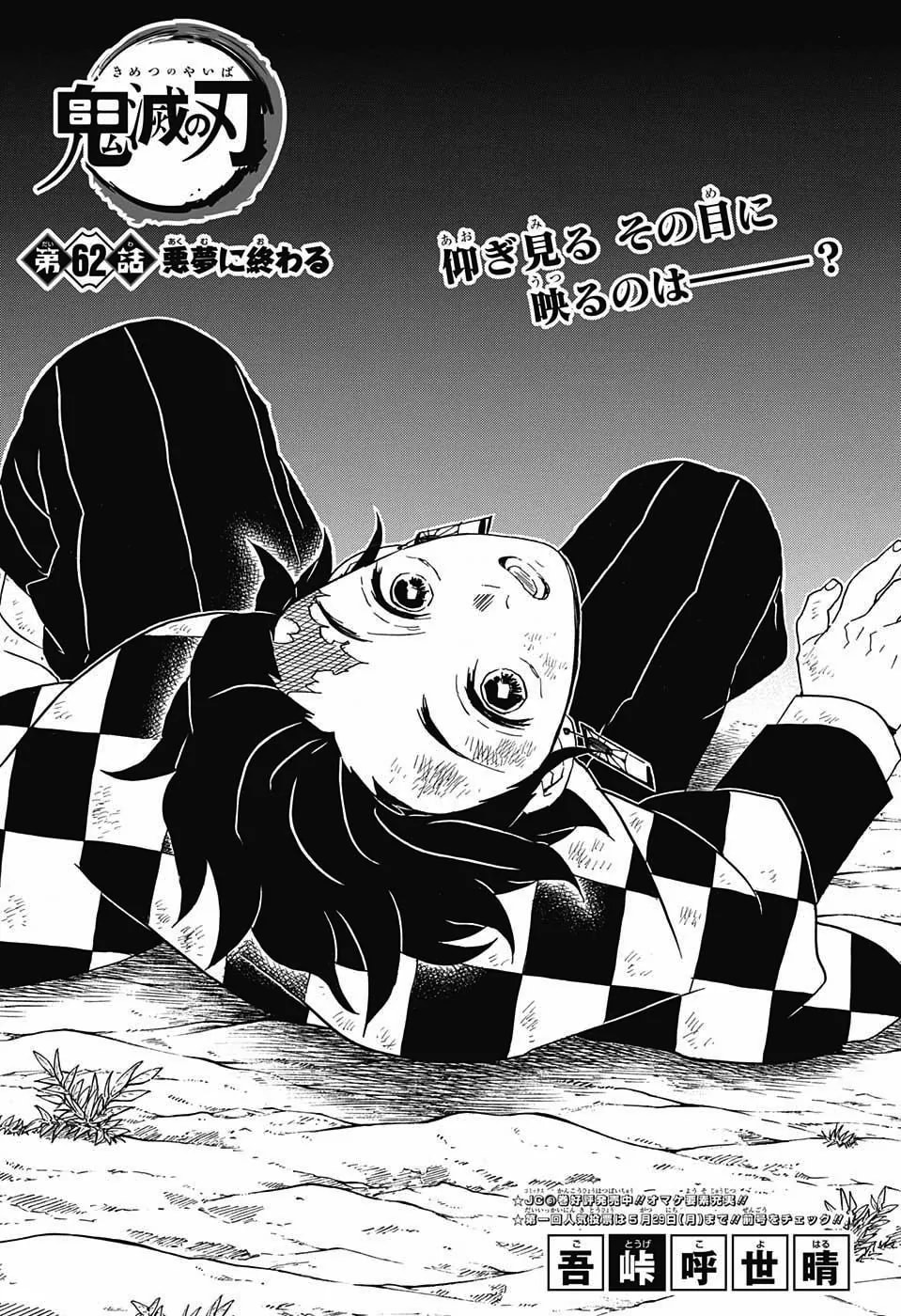
The sixty-second chapter of Kimetsu no Yaiba closes the battle against Enmu as the Mugen Train derails and the demon dissolves into nothing. Tanjiro, gravely wounded, learns to staunch his own bleeding under Kyojuro's guidance, only for a new blast to shatter the calm.
Summary
Tanjiro's Hinokami Kagura strike has cut the locomotive apart, and Enmu screams as he registers his own decapitation. His thrashing flesh wrenches the train off its rails, and after the wreck settles on its side in farmland, Inosuke finds Tanjiro alive, cushioned by the demon's springy flesh during the crash. Despite his stab wound, Tanjiro insists Inosuke help the trapped engineer, refusing to let the man die and become a killer. Inosuke grudgingly agrees while threatening to pull out his hair afterward.
The last shreds of Enmu crawl from the wreckage, unable to regenerate. He laments never using his full strength, never eating a single passenger, and being outmatched by Kyojuro, Zenitsu, and Nezuko. Bitter that only the lower demons ever fall while the Upper Ranks endure for a century, he begs for one more chance and crumbles to dust.



Key Events
The Mugen Train crashes during Enmu's death throes, and the demon finally disintegrates, mourning his inferiority to the Upper Ranks. Tanjiro's compassion forces Inosuke to rescue the engineer pinned beneath the wreckage.
Kyojuro reaches Tanjiro and praises his use of Total Concentration: Constant, calling it the first of countless steps toward becoming a Hashira. Guiding him to breathe with precision, Kyojuro helps Tanjiro find the severed blood vessel within his own body and stop the bleeding. A reassuring tap on the head steadies him, the wound holds, and Kyojuro confirms that all the passengers have survived. Then a violent explosion erupts behind them.
Notes
Part of the Mugen Train Arc, this chapter is adapted across Episodes 31 and 32. It resolves the Enmu fight with a meditation on the gulf between lower and upper demons, foreshadowing the threat ahead. The breathing lesson also demonstrates Total Concentration as a survival tool, while the closing explosion introduces the arc's true antagonist.
Related Reading
See all
Demon Slayer Infinity Castle Is the Biggest Anime Movie Ever but It Still Lost in Japan
Demon Slayer: Infinity Castle earned $778 million globally and nearly 40 billion yen in Japan, but it still couldn't top Mugen Train's domestic record. Here's why that barely matters....
Super Saiyan Pubes: The Song About Where Super Saiyan Hair Actually Goes
The transformation everyone knows, the follow-up question nobody would touch. Why we made a smooth R&B track about the golden glow Dragon Ball never talks about....

Frequently Asked Questions
What happens in Chapter 62 of Demon Slayer, Ending in a Dream?
In Chapter 62 of Demon Slayer, Ending in a Dream, the battle against Enmu ends as the Mugen Train derails and the demon dissolves into nothing. Tanjiro, gravely wounded, learns to stop his own bleeding under Kyojuro's guidance before a new explosion shatters the calm.
How does Enmu die in Chapter 62 of Demon Slayer?
In Chapter 62, Tanjiro's Hinokami Kagura strike decapitates Enmu, whose thrashing flesh wrenches the Mugen Train off its rails. The last shreds of Enmu crawl from the wreckage unable to regenerate, lamenting his inferiority to the Upper Ranks, and finally crumble to dust.
How does Tanjiro survive the train crash in Chapter 62?
In Chapter 62 of Demon Slayer, Inosuke finds Tanjiro alive after the wreck because the demon's springy flesh cushioned him during the crash. Despite his stab wound, Tanjiro insists Inosuke rescue the trapped engineer pinned beneath the wreckage.
What does Kyojuro teach Tanjiro in Chapter 62 of Demon Slayer?
In Chapter 62, Kyojuro praises Tanjiro's use of Total Concentration: Constant, calling it the first of countless steps toward becoming a Hashira. He guides Tanjiro to breathe with precision to find the severed blood vessel within his own body and stop the bleeding.
Which episodes adapt Chapter 62 of Demon Slayer?
Chapter 62, Ending in a Dream, is part of the Mugen Train Arc and is adapted across Episodes 31 and 32. It resolves the Enmu fight and ends with a violent explosion that introduces the arc's true antagonist.
Sources & Information
Looking for more on Ending in a Dream? The Demon Slayer Wiki on Fandom has a dedicated page with community notes.
View on FandomThis content is original writing by Daddy Jim Headquarters based on the Demon Slayer anime series, manga, and official materials. Episode and chapter references are cited where applicable.
Character and scene imagery on this site is original artwork by Daddy Jim Headquarters, not screenshots or licensed imagery. Official cover art is used on three types of pages for editorial commentary:
- Movie pages: theatrical posters and key visuals, credited to ufotable and Aniplex.
- Game pages: official box art, credited to Sega, Aniplex, and other publishers.
- Manga chapter pages: Jump Comics volume covers, credited to Shueisha and Koyoharu Gotouge.
Official resources:
Help Us Keep This Wiki Accurate
Daddy Jim Headquarters maintains this encyclopedia. If you spot an error, a translation issue, or something that doesn't look right, let us know.