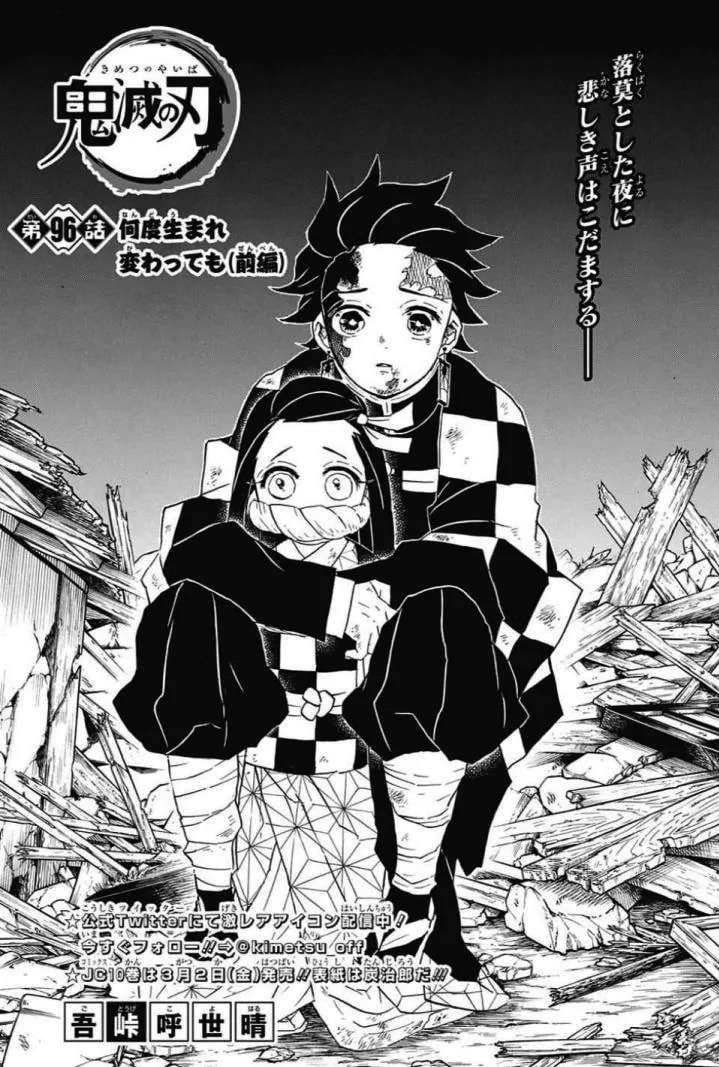
Chapter 96 of Kimetsu no Yaiba opens the tragic human history of Gyutaro and his sister Ume, tracing their cruel childhood in the pleasure quarter, the injustice that destroyed them, and the night that drove the dying siblings to accept demonhood.
Summary
As their heads dissolve, Daki and Gyutaro keep snarling at one another, with Gyutaro hurling vicious words and saying his life would have been easier without her. Tanjiro steps in and covers his mouth, insisting that the demon does not truly mean it and that they should not waste their last moments in spite.
Daki, terrified, begs her sibling to rescue her. As she fades, Gyutaro calls her by her human name, Ume, and his memories return. Born to a courtesan in the Kirimise, he was loathed for his looks and voice and was nearly killed by his own dying mother.
His sister's beauty became his only pride, and he grew into a feared debt collector. When Ume, at thirteen, blinded a samurai and was burned alive in punishment, the grief-stricken Gyutaro took bloody revenge before collapsing in the snow. An Upper Rank found the dying pair and offered them new life, which Gyutaro accepted without hesitation.
Key Events
Daki finishes disintegrating as her brother watches helplessly.
The shared backstory of Gyutaro and Daki, born Ume, is revealed in flashback.
A younger Doma appears as the Upper Rank who turned the siblings into demons.
Notes
This chapter is the first half of a two-part flashback and belongs to Volume 11, adapted in Episode 44. It reframes the antagonists as products of extreme poverty, abuse, and injustice in the historic pleasure district. The reveal of the children's birth names underscores the bond at the heart of their villainy.
Related Reading
See all
Demon Slayer Infinity Castle Is the Biggest Anime Movie Ever but It Still Lost in Japan
Demon Slayer: Infinity Castle earned $778 million globally and nearly 40 billion yen in Japan, but it still couldn't top Mugen Train's domestic record. Here's why that barely matters....
Super Saiyan Pubes: The Song About Where Super Saiyan Hair Actually Goes
The transformation everyone knows, the follow-up question nobody would touch. Why we made a smooth R&B track about the golden glow Dragon Ball never talks about....
Frequently Asked Questions
What happens in Chapter 96 of Demon Slayer?
Chapter 96 of Kimetsu no Yaiba, titled No Matter How Many Lives, Part 1, opens the human history of Gyutaro and his sister Ume. As Daki finishes disintegrating, Gyutaro's memories return and a flashback reveals their cruel childhood in the pleasure quarter, the injustice that destroyed them, and the night they accepted demonhood.
What is Daki's real human name in Chapter 96?
In Chapter 96, as Daki fades, Gyutaro calls her by her human name, Ume. She was born to a courtesan in the Kirimise, and her beauty became Gyutaro's only pride.
How did Gyutaro and Ume become demons in Chapter 96?
In Chapter 96, after Ume was burned alive as punishment for blinding a samurai at age thirteen, the grief-stricken Gyutaro took bloody revenge before collapsing in the snow. An Upper Rank found the dying siblings and offered them new life, which Gyutaro accepted without hesitation.
Which Upper Rank turned Gyutaro and Daki into demons in Chapter 96?
Chapter 96 reveals a younger Doma as the Upper Rank who found the dying siblings and turned Gyutaro and Ume into demons.
What volume and episode does Chapter 96 of Demon Slayer belong to?
Chapter 96 belongs to Volume 11 and is part of the Entertainment District Arc. It is the first half of a two-part flashback and was adapted in Episode 44.
Sources & Information
Looking for more on No Matter How Many Lives, Part 1? The Demon Slayer Wiki on Fandom has a dedicated page with community notes.
View on FandomThis content is original writing by Daddy Jim Headquarters based on the Demon Slayer anime series, manga, and official materials. Episode and chapter references are cited where applicable.
Character and scene imagery on this site is original artwork by Daddy Jim Headquarters, not screenshots or licensed imagery. Official cover art is used on three types of pages for editorial commentary:
- Movie pages: theatrical posters and key visuals, credited to ufotable and Aniplex.
- Game pages: official box art, credited to Sega, Aniplex, and other publishers.
- Manga chapter pages: Jump Comics volume covers, credited to Shueisha and Koyoharu Gotouge.
Official resources:
Help Us Keep This Wiki Accurate
Daddy Jim Headquarters maintains this encyclopedia. If you spot an error, a translation issue, or something that doesn't look right, let us know.