Cecil Stedman
CharacterCecil Stedman runs the Global Defense Agency, steering Earth's response to superhuman threats from the shadows. Pragmatic to a fault, he trades clean morality for results, clashing repeatedly with Invincible even as the two keep saving the world together.
Appearance
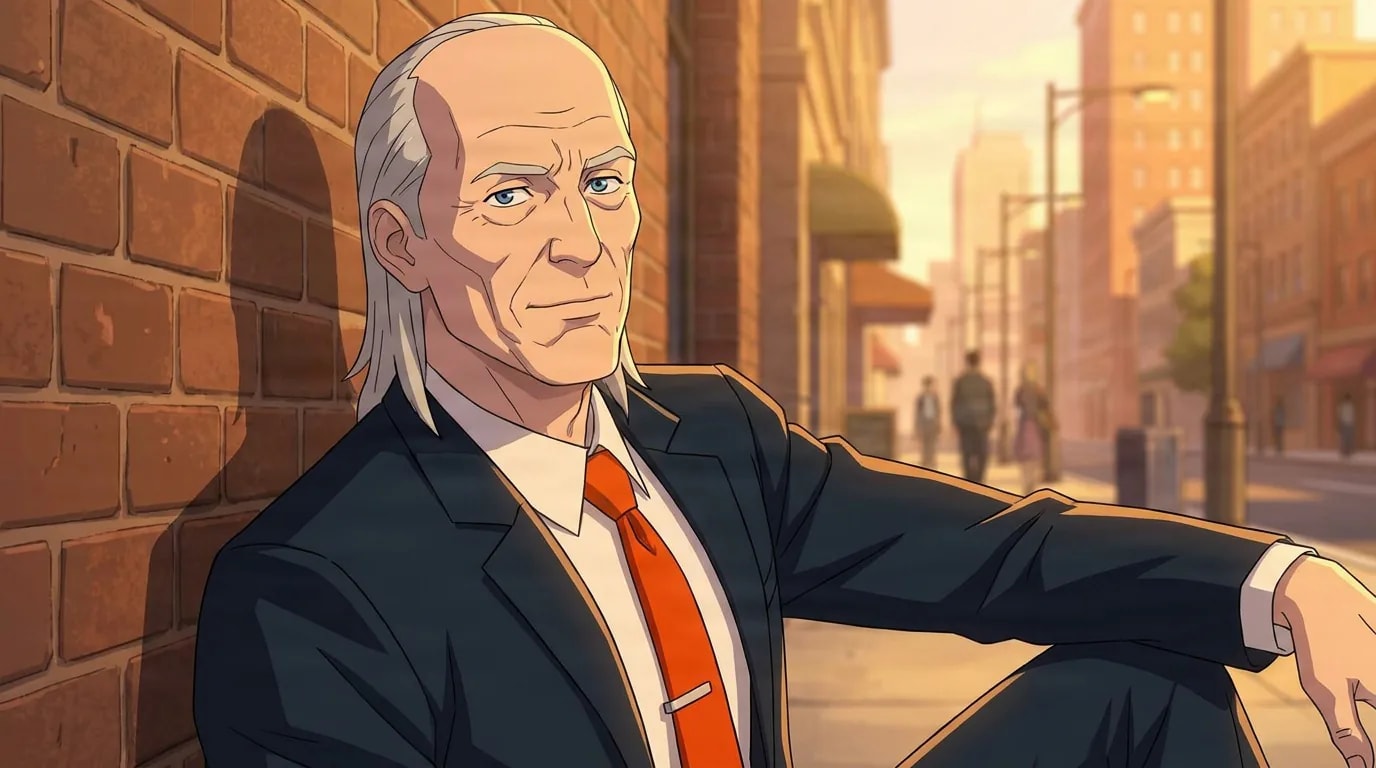
A jagged scar cutting across his left jaw, the mark of a corrosive-gas exposure, is the detail that stays with people who meet Cecil. Middle-aged and lean, he wears his silver hair to the shoulders while it thins across the crown.
His usual dress is all business: a black suit over a white shirt and red tie, finished with a brown belt and shoes and a small American flag pinned to his lapel.

Personality
Cecil keeps a calm, guarded surface, rarely showing emotion, yet a genuine care for humanity drives nearly everything he does. He did not always bend his principles. As a younger man he saw the world in stark rights and wrongs and refused to deal with criminals no matter the payoff. Three years locked inside Payton Penitentiary, surrounded by the worst supervillains, reshaped that rigidity into flexibility, and the way he held order there eventually won him the directorship of the Global Defense Agency.
Running the agency, he governs by results, ready to reach for harsh or questionable tools whenever he decides the outcome justifies them. Following his old mentor Radcliffe, he favors reforming dangerous people over destroying them, folding figures like D.A. Sinclair and Darkwing II into agency work; both later served during the Invincible War, and Darkwing II gave his life dragging a variant into the Shadow Verse. That same cold calculus repeatedly sets him against Mark Grayson. He will move against Invincible when he judges it necessary, from unleashing ReAnimen to arming failsafes, choices that fractured the Guardians of the Globe and pushed some members away.
He would rather cage and study a threat than end it outright, which is why he quietly locks Conquest away for interrogation. Toward Nolan he stays icy after their reunion, furious at the man's past and uneasy that the Viltrum Empire was left standing, yet pragmatic enough to demand Nolan return with allies should the invaders come. With a war-scarred Mark he softens into something almost fatherly, spotting the hero's untreated trauma and arranging counseling when asked.



History
As the Global Defense Agency's director, Cecil sits at the center of Earth's defense, marshaling the Guardians of the Globe, Omni-Man, and countless agents against superpowered dangers. When the original Guardians were slaughtered, his investigation pinned the killings on Omni-Man, and with Invincible's help the rogue Viltrumite was halted before he could finish conquering the planet.
Once Omni-Man fled after razing Chicago, Cecil poured his energy into hardening the world against what might come next, greenlighting the ReAnimen program and pressing Invincible through relentless training in preparation for a Viltrumite assault. The two often grated against each other, yet stood together through crisis after crisis, including the Invincible War. After Conquest was beaten, Cecil had the Viltrumite spirited away to The Block, holding him for interrogation and experiments aimed at building weapons against the empire.
His authority rests less on raw power than on command instincts and old field training in combat, firearms, and covert work, backed by the agency's arsenal. Among his tools sits the kill switch, a sonic device that can cripple or kill a Viltrumite once implanted, while the lingering damage from the corrosive gas forces him into regular chemical baths to preserve his artificial skin.
Related Reading
See all
Naruto vs Luffy: Does the Fight Change if Luffy Tickles Hinata?
Naruto vs Luffy with the twist nobody asked for: Luffy tickled Hinata on date night, and she kind of liked it. We break down the whole fight and commit to a winner....
Piccolo Gets the Namek Hoes: Namek Has No Women, and He Pulls Anyway
There are no women on Namek. That isn't an oversight, it's the biology. Why we handed Piccolo the one thing his own species rules out, and why it had to be trap soul....

Frequently Asked Questions
Is Cecil Stedman good or bad?
Cecil Stedman is morally gray rather than purely good or bad. As director of the Global Defense Agency he genuinely cares about protecting humanity, but he governs by results and readily reaches for harsh or questionable tools, including ReAnimen and failsafes against Invincible, whenever he decides the outcome justifies them.
What happened to Cecil Stedman?
Cecil Stedman was once a younger man who saw the world in strict rights and wrongs and refused to deal with criminals. Three years locked inside Payton Penitentiary surrounded by supervillains reshaped that rigidity into flexibility, and the order he held there eventually won him the directorship of the Global Defense Agency.
How did Cecil Stedman get his scars?
Cecil Stedman's jagged scar across his left jaw comes from a corrosive gas exposure, damage that also forces him into regular chemical baths to preserve his artificial skin.
What is Cecil Stedman's role in Invincible?
Cecil Stedman runs the Global Defense Agency, steering Earth's response to superhuman threats and marshaling the Guardians of the Globe, Omni-Man, and countless agents against superpowered dangers.
What weapon does Cecil Stedman use against Viltrumites?
Cecil Stedman relies on the kill switch, a sonic device that can cripple or kill a Viltrumite once implanted.
Sources & Information
Looking for more on Cecil Stedman? The Dragon Ball Wiki on Fandom has a dedicated page with community notes.
View on FandomThis content is original writing by Daddy Jim Headquarters based on the Dragon Ball anime series, manga, and official materials. Episode and chapter references are cited where applicable.
Character and scene imagery on this site is original artwork by Daddy Jim Headquarters, not screenshots or licensed imagery. Official cover art is used on three types of pages for editorial commentary:
- Movie pages: theatrical posters and key visuals, credited to Toei Animation and Shueisha.
- Game pages: official box art, credited to Bandai Namco, Atari, and other publishers.
- Manga chapter pages: Jump Comics volume covers, credited to Shueisha and Akira Toriyama.
Official resources:
Help Us Keep This Wiki Accurate
Daddy Jim Headquarters maintains this encyclopedia. If you spot an error, a translation issue, or something that doesn't look right, let us know.