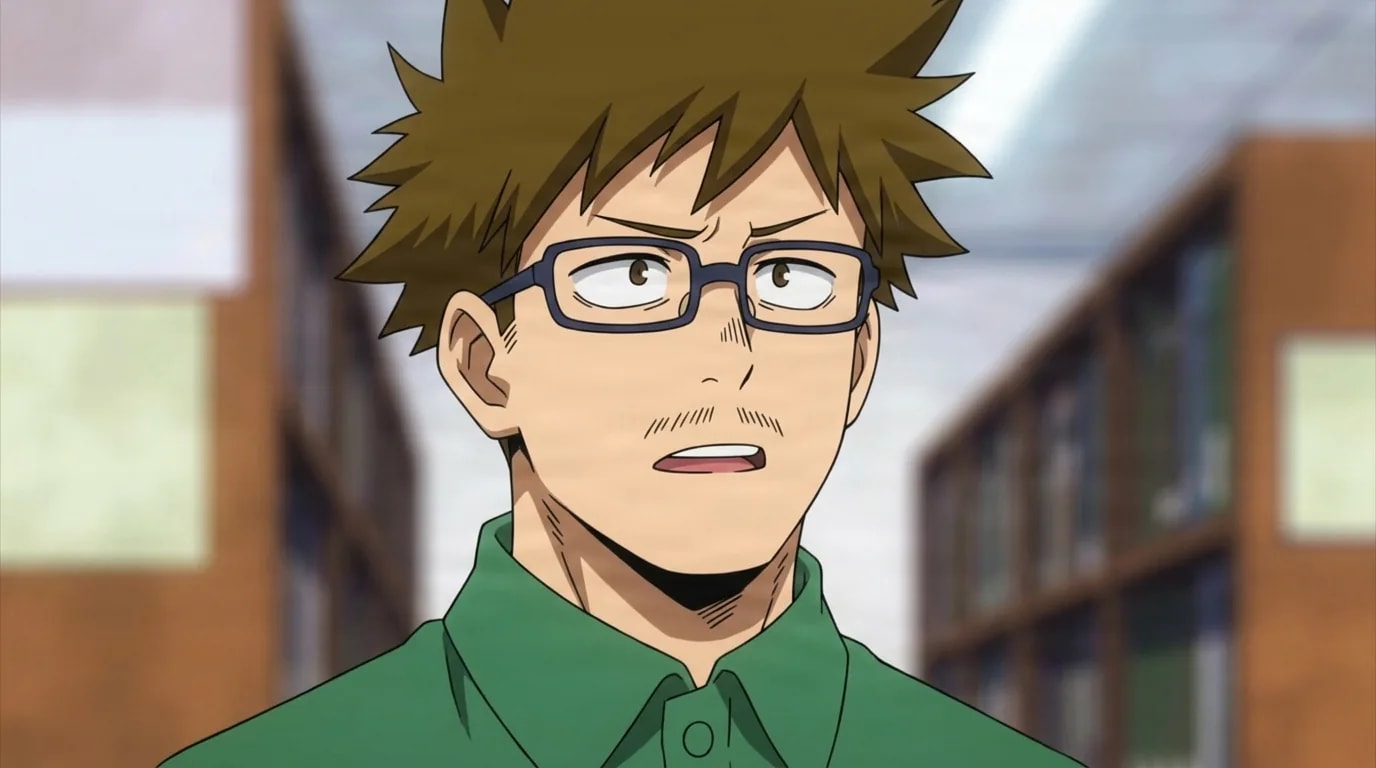
Masaru Bakugo
CharacterMasaru Bakugo is the quiet half of the household that produced Katsuki. He works in fashion, defers to his wife, and carries the acid-sweat Quirk his son turned into a weapon. Most of his story is spent watching, from an evacuation shelter or a hospital room, while the rest of his family does the shouting.
Appearance
Rectangular glasses and a short mustache sit on a middle-aged face. His height and build are both unremarkable. The brown hair is cut short, following roughly the same pattern his wife and son wear.
Personality
Where Mitsuki and Katsuki run hot, Masaru stays level and rarely reaches for a fight. Having the two of them bicker in front of Katsuki's teachers visibly unsettled him.
That temperance is not distance. He loves his family plainly, gets along with his wife, and shares her low opinion of their son's arrogance.
History
A Pro Hero career was the ambition; the fashion design industry was where he actually found work. He met Mitsuki on a job, was pursued by her with considerable force, and married her, and Katsuki followed.
Toshinori Yagi and Shota Aizawa's home visit found him trying to calm an argument between his wife and son. Once things settled, Mitsuki named the problem herself, that Katsuki's gifts combined with his rashness had earned him pampering and shallow praise and left him arrogant, and thanked Shota for seeing her son rather than his talents. She left Katsuki in U.A.'s care, since the Pro Heroes had brought him home unharmed, and asked that he be made into a fine hero.
Once the Paranormal Liberation War ended, the family joined the civilians sheltering at U.A. and was housed there for safety. About a month later the heroes began their push against the villains, and Class 1-A said their goodbyes on the way out. Katsuki got his farewell with Mitsuki still needling him about his cocky attitude.
The Final War kept the couple in the shelter. Mitsuki watched the cumulonimbus storm swell over Japan and the typhoon build behind it, and wondered aloud what her rain-hating son would do next, unaware he had just come close to dying at Tomura Shigaraki's hands. Katsuki lived, and his fight against All For One was broadcast worldwide. Masaru turned away, too afraid to watch; Mitsuki told him they owed their son that much, since the boy was surely out there grinning the way he always does. They saw Katsuki hold his ground, answer the villain's ultimate attack with Explosions of his own, and win. The same broadcast carried Izuku Midoriya's last battle against Tomura, through to the villain's body disintegrating into ash.
A week later they visited their hospitalized son and got the prognosis from the doctor: his body will not return to normal, the right arm is stitched together but mangled by what Tomura and All For One did to it, and no further surgery improves on that. The bone fragments were reassembled, with no guarantee rehabilitation restores use of the arm. Prosthetics of the kind Mirko received were suggested, and Katsuki refused, since Explosion works out of his palms, and pushed for rehab instead. He was told to keep it to low-level exercise and rest, having been dead until Edgeshot sutured and restarted his heart. He ignored that, went to find Izuku and All Might over his parents' shouting, and walked in on the news that Izuku had lost One For All and would be Quirkless once the embers faded.
His Quirk, Acid Sweat, seeps acidic perspiration with combustive properties from his palms. Unlike his son he cannot force the secretion, so it emerges the way ordinary sweat would, and rubbing his hands together is enough to produce explosions.
Related Reading
See all
Naruto vs Luffy: Does the Fight Change if Luffy Tickles Hinata?
Naruto vs Luffy with the twist nobody asked for: Luffy tickled Hinata on date night, and she kind of liked it. We break down the whole fight and commit to a winner....
Piccolo Gets the Namek Hoes: Namek Has No Women, and He Pulls Anyway
There are no women on Namek. That isn't an oversight, it's the biology. Why we handed Piccolo the one thing his own species rules out, and why it had to be trap soul....
Frequently Asked Questions
Does Masaru Bakugo have a quirk?
Yes, Masaru Bakugo has a quirk called Acid Sweat, which lets him secrete acidic, combustive perspiration from his palms. Unlike his son Katsuki, he cannot force the secretion, so simply rubbing his hands together is enough to trigger explosions.
Who is Masaru Bakugo's wife?
Masaru Bakugo's wife is Mitsuki Bakugo. The two met while working in the fashion industry, and Mitsuki pursued him with considerable force before they married.
Is Masaru Bakugo Katsuki's father?
Yes, Masaru Bakugo is the father of Katsuki Bakugo. He is the quieter, more level headed half of the household, often trying to calm arguments between his wife Mitsuki and their son.
What does Masaru Bakugo do for a living?
Masaru Bakugo works in the fashion design industry. He originally hoped for a career as a Pro Hero but ended up finding work in fashion instead.
How did Masaru Bakugo react to Katsuki's injuries after the Final War?
After the Final War, Masaru Bakugo visited his hospitalized son Katsuki and learned his right arm had been mangled by Tomura Shigaraki and All For One and would never fully return to normal. Too afraid to watch Katsuki's final battle live, Masaru turned away while Mitsuki insisted they owed their son the effort of watching.
Sources & Information
Looking for more on Masaru Bakugo? The Dragon Ball Wiki on Fandom has a dedicated page with community notes.
View on FandomThis content is original writing by Daddy Jim Headquarters based on the Dragon Ball anime series, manga, and official materials. Episode and chapter references are cited where applicable.
Character and scene imagery on this site is original artwork by Daddy Jim Headquarters, not screenshots or licensed imagery. Official cover art is used on three types of pages for editorial commentary:
- Movie pages: theatrical posters and key visuals, credited to Toei Animation and Shueisha.
- Game pages: official box art, credited to Bandai Namco, Atari, and other publishers.
- Manga chapter pages: Jump Comics volume covers, credited to Shueisha and Akira Toriyama.
Official resources:
Help Us Keep This Wiki Accurate
Daddy Jim Headquarters maintains this encyclopedia. If you spot an error, a translation issue, or something that doesn't look right, let us know.