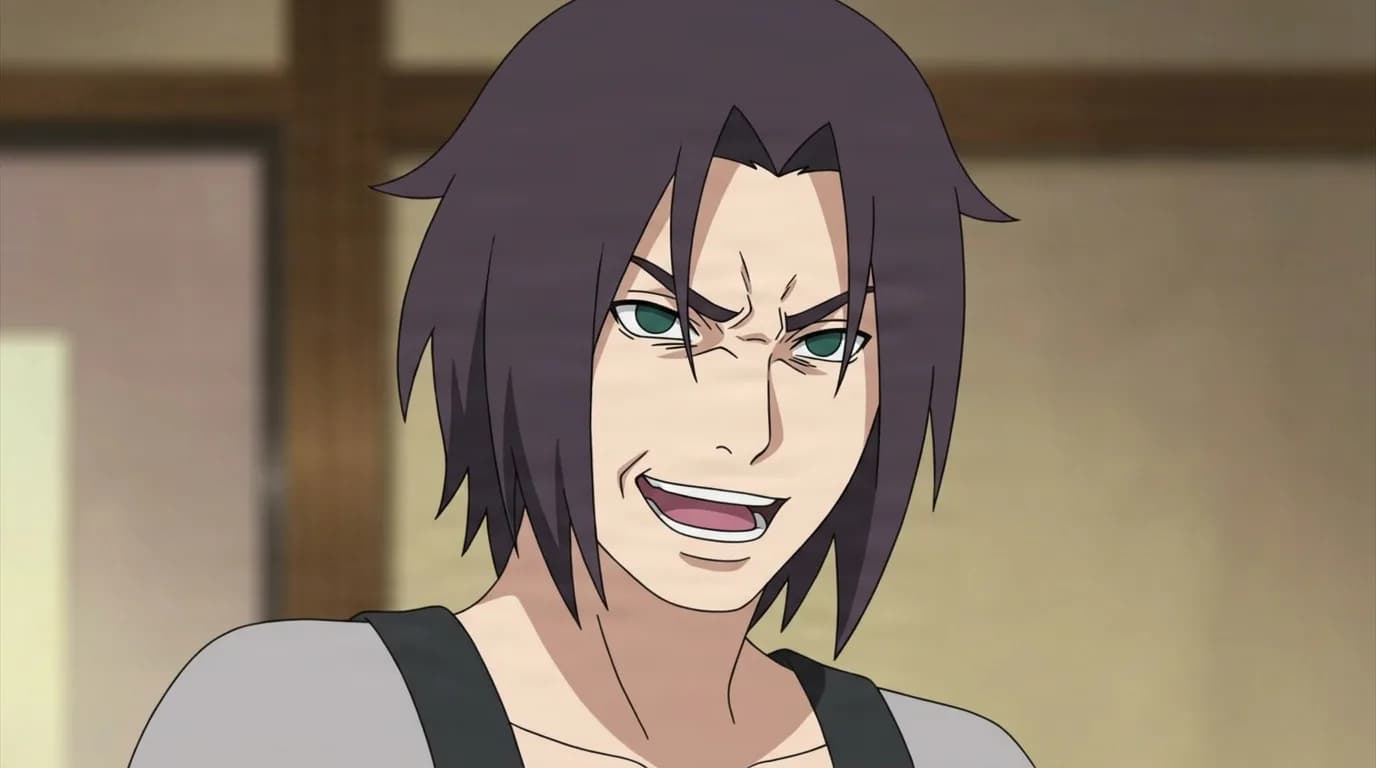
Haguruma
CharacterHaguruma is a talented game programmer whose employer frames him and gets him blacklisted, sinking him into debt and a doomed bank heist. Boruto Uzumaki talks him down from the ledge, and he later rebuilds his career writing code for the Kaminarimon Company.
Appearance
His black hair falls to roughly the neck in an untidy sweep, and his eyes are a dark green. Day to day he dresses in a grey shirt, green trousers, and brown sandals, though a suit became his outfit both at the game studio and, afterward, at the workplace he joins next.

Personality
Committed to his craft, Haguruma tolerated a punishing workload to get the job done, yet timid as he was, he still found the nerve to object to it. Being dismissed hardened him into a grim resolve: he meant to take his own life the moment his game went on sale, a final jab at the studio that betrayed him. That resolve held even as he laid his story bare to Boruto, and it broke only once the boy revealed how much he had loved Haguruma's earlier title.
Related Reading
See all
Naruto vs Luffy: Does the Fight Change if Luffy Tickles Hinata?
Naruto vs Luffy with the twist nobody asked for: Luffy tickled Hinata on date night, and she kind of liked it. We break down the whole fight and commit to a winner....
Who Is Naruko? What Naruto's Transformation Jutsu Does to the Whole Hidden Leaf
Naruto built the transformation jutsu himself, and the Hidden Leaf has been quietly not talking about it ever since. The story behind our 90s R&B record about the Naruko question everybody dodges....
History
Haguruma turns out a run of hit games until a merciless deadline drives him and his colleagues to lodge a formal grievance about their manager. Word of it reaches that manager, who fabricates proof of Haguruma leaking company secrets, sees him sacked, and makes an example of him. Shut out by every other studio and drowning in debt, he is played by the Byakuya Gang into seizing a Konoha bank and sealing himself inside. Wary of the crude bombs he carries, evidence of his shaky, failure-prone knack for explosives, the Military Police ring the building without storming it. Boruto slips in, listens, and wins him over, but the jammed device will not switch off, so a jolt of Lightning Release from Boruto fries it. Once in custody Haguruma reveals the Byakuya Gang's part in the robbery, and Boruto has Denki line up a post for him at the Kaminarimon Company. His talents matter there again: he partners with Denki to build a portable, trackable radio, and later helps hunt down Urashiki Ōtsutsuki by watching the monitors from the team's base.
Frequently Asked Questions
Who is Haguruma in Boruto?
Haguruma is a talented game programmer whose employer frames him for leaking company secrets, getting him blacklisted throughout the industry. Sinking into debt, he is manipulated by the Byakuya Gang into a doomed bank heist before Boruto Uzumaki talks him down.
Why does Haguruma try to rob a bank?
After being fired and blacklisted from every game studio, Haguruma falls deep into debt and is manipulated by the Byakuya Gang into seizing a Konoha bank and sealing himself inside with crude, unstable bombs. Boruto Uzumaki eventually talks him out of going through with it.
How does Boruto stop Haguruma?
Boruto Uzumaki slips into the seized bank and listens to Haguruma's story, winning him over by revealing how much he loved Haguruma's earlier game. When Haguruma's bomb will not switch off, Boruto fries it with a jolt of Lightning Release.
What happens to Haguruma after the bank heist?
After the Military Police take him into custody, Haguruma reveals the Byakuya Gang's role in the robbery. Boruto Uzumaki then has Denki Kaminarimon arrange a job for him at the Kaminarimon Company, where his programming talents are put to use again.
What does Haguruma do at the Kaminarimon Company?
At the Kaminarimon Company, Haguruma partners with Denki Kaminarimon to build a portable, trackable radio device. He later helps track down Urashiki Ōtsutsuki by monitoring the team's surveillance from their base.
Sources & Information
Looking for more on Haguruma? The Naruto Wiki on Fandom has a dedicated page with community notes.
View on FandomThis content is original writing by Daddy Jim Headquarters based on the Naruto anime series, manga, and official materials. Episode and chapter references are cited where applicable.
Rights holders
- Created byMasashi Kishimoto
- Published byShueisha
- Animated byStudio Pierrot
All rights belong to their respective owners.
Character and scene imagery on this site is original artwork by Daddy Jim Headquarters, not screenshots or licensed imagery. Official cover art is used on three types of pages for editorial commentary:
- Movie pages: theatrical posters and key visuals, credited to Studio Pierrot and Toho.
- Game pages: official box art for the Naruto: Ultimate Ninja Storm games, credited to Bandai Namco.
- Manga chapter pages: Jump Comics volume covers, credited to Shueisha and Masashi Kishimoto.
Official resources:
Help Us Keep This Wiki Accurate
Daddy Jim Headquarters maintains this encyclopedia. If you spot an error, a translation issue, or something that doesn't look right, let us know.