Devil Fruit
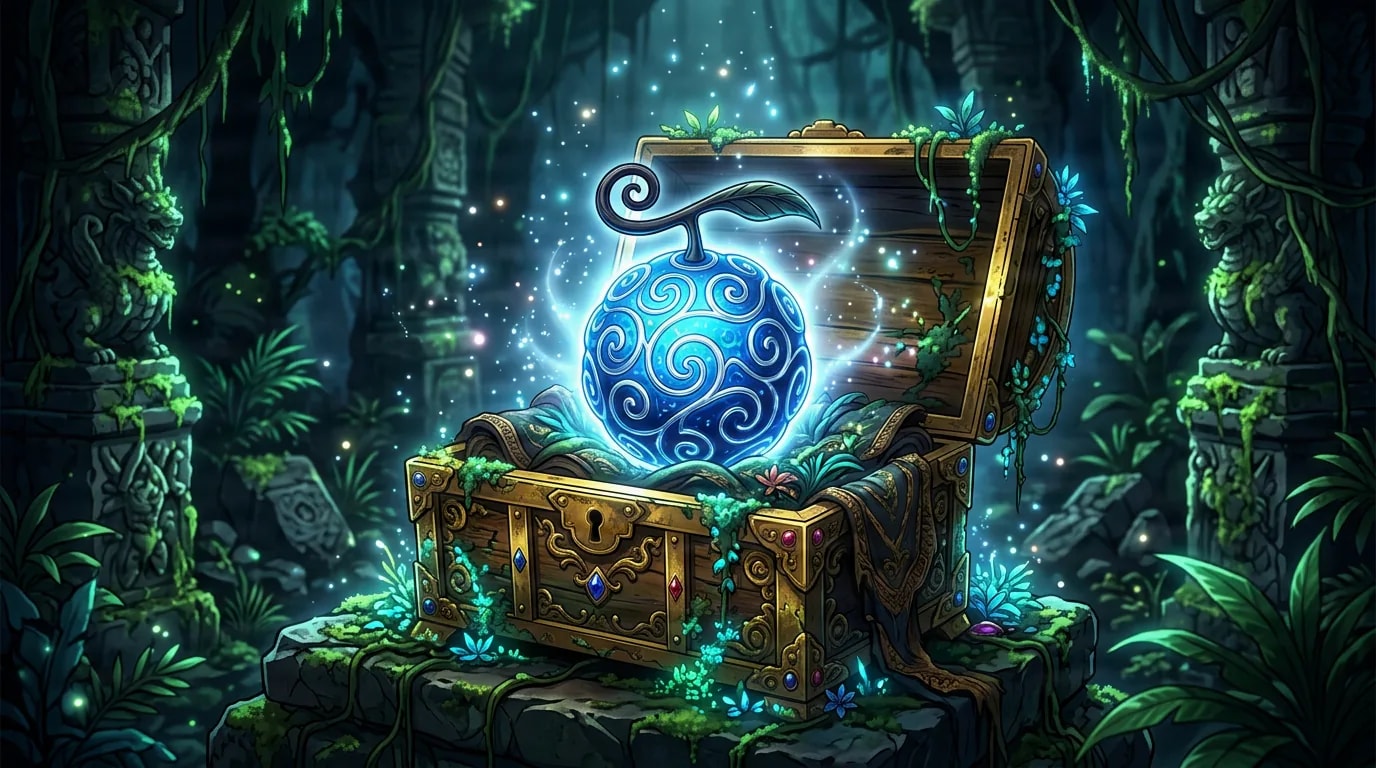
CharacterRare and mysterious, a Devil Fruit hands whoever eats one a single supernatural power while stripping away their ability to swim forever. Grouped into Paramecia, Zoan, and Logia families, these fruits shape much of the world's balance of strength and fetch fortunes when found.
Overview
Swallowing a Devil Fruit, known in Japanese as the Akuma no Mi, grants the eater one distinct ability from the instant it goes down, at the permanent price of never swimming again. Only a single person may hold a given power at any moment, and once that person dies the ability grows anew inside a fresh fruit somewhere in the world. Carrying two powers is forbidden, a rule Marshall D. Teach alone has ever broken. Three broad families sort the fruits: Paramecia, the most common, handing out an enormous variety of superhuman traits; Zoan, which let the eater transform into an animal; and Logia, the scarcest and usually strongest, which turn the body into a natural element. Each specimen wears a distinctive swirled skin and tastes dreadful, while the manufactured kinds carry ringed markings instead. Their true origin escapes even the genius Vegapunk, who guesses they represent branching possibilities of human evolution sparked by human longing, with the sea itself despising those who bear their powers. Recorded for at least eight centuries, over a hundred separate fruits are said to exist, scattered so sparsely that many seas dismiss them as myth, with the Grand Line hosting the greatest concentration.

Mechanics
A single bite is all it takes, and the power then stays with the eater for the rest of their life, released only by death, after which any leftover pieces of that fruit fall inert. Consumption rewrites the eater's Lineage Factor, a finding that let scientists start reproducing fruit abilities artificially, yet the alteration neither shortens lifespans nor passes down to offspring. Attempting to claim a second power brings an immediate, body-shattering death, a fate only Teach mysteriously avoids. Powers generally carry through a user's clothing and even prosthetic or cyborg parts, which stretch and change alongside the body. Every fruit shares one headline flaw: the eater becomes what is nicknamed a hammer, draining of strength and motion when deeply submerged in any still, enclosed body of water, seawater or not. Splashing or moving water such as rain causes no harm, and a user sealed in airtight gear can still act underwater. Seastone, a hardened form of the sea's own energy, saps a user on contact exactly as water does, which is how Impel Down holds its inmates, though unusually durable fighters can partly resist the drain. An overwhelming surge of Haki can likewise override a fruit's effects. Raw power counts for little without practice, so wielders must train to understand and refine what they wield, and the rarest, most disciplined reach an Awakening, a further stage that tightens control, unlocks fresh applications, and in certain cases spreads the power onto the surrounding environment.
Notable Users
A great many prominent figures owe their fame to these powers. Monkey D. Luffy stretches like rubber from a fruit long mislabeled the Gomu Gomu no Mi, which is truly a Mythical Zoan, the Nika-model Hito Hito no Mi. Marshall D. Teach uniquely wields a pair of powers: darkness from the Yami Yami no Mi, plus the quake force of the Gura Gura no Mi that once belonged to Edward Newgate, reputedly the mightiest Paramecia ever seen. The Ope Ope no Mi, held by Trafalgar Law, earns the label of Ultimate Devil Fruit for its power to heal any illness. Caesar Clown together with Donquixote Doflamingo built the synthetic SMILE fruits, while Vegapunk crafted artificial versions of his own. Even so, towering fighters who eat no fruit at all, among them Gol D. Roger, Silvers Rayleigh, Dracule Mihawk, Shanks, and Monkey D. Garp, show that the fruitless can rank among the very strongest, a point Kaidou drives home by placing Haki above any fruit's power.
Related Reading
See all
The Most Popular Women of One Piece: A Fan's Journey Through Anime's Greatest Female Characters...
When I first decided to commit to watching One Piece seriously, I knew I was embarking on one of anime's longest and most beloved series. With over 100...
Super Saiyan Pubes: The Song About Where Super Saiyan Hair Actually Goes
The transformation everyone knows, the follow-up question nobody would touch. Why we made a smooth R&B track about the golden glow Dragon Ball never talks about....

Frequently Asked Questions
What is the most powerful Devil Fruit?
No single Devil Fruit is officially crowned the strongest. The Gura Gura no Mi, once wielded by Edward Newgate, is described as reputedly the mightiest Paramecia ever seen, while the Ope Ope no Mi held by Trafalgar Law is called the Ultimate Devil Fruit for its power to heal any illness.
Can Luffy drink water?
Yes. Devil Fruit users are only weakened by deep submersion in a still, enclosed body of water; splashing water or rain causes no harm, so drinking water does not affect Luffy or any other Devil Fruit eater.
Are Devil Fruits edible?
Yes, Devil Fruits are edible, though every recorded fruit tastes dreadful regardless of the power it grants.
How many types of Devil Fruits are there?
Devil Fruits are grouped into three types: Paramecia, the most common and varied; Zoan, which let the eater transform into an animal; and Logia, the rarest and usually strongest, which turn the body into a natural element.
What happens if a person eats two Devil Fruits?
Eating a second Devil Fruit causes the eater's body to shatter, killing them almost instantly, a fate that only Marshall D. Teach, who wields both the Yami Yami no Mi and the Gura Gura no Mi, is known to have avoided.
Sources & Information
Looking for more on Devil Fruit? The One Piece Wiki on Fandom has a dedicated page with community notes.
View on FandomThis content is original writing by Daddy Jim Headquarters based on the One Piece anime series, manga, and official materials. Episode and chapter references are cited where applicable.
Character and scene imagery on this site is original artwork by Daddy Jim Headquarters, not screenshots or licensed imagery. Official cover art is used on three types of pages for editorial commentary:
- Movie pages: theatrical posters and key visuals, credited to Toei Animation and Toei Company.
- Game pages: official box art for the One Piece console and mobile games, credited to Bandai Namco.
- Manga chapter pages: Jump Comics volume covers, credited to Shueisha and Eiichiro Oda.
Official resources:
Help Us Keep This Wiki Accurate
Daddy Jim Headquarters maintains this encyclopedia. If you spot an error, a translation issue, or something that doesn't look right, let us know.