Goru Goru no Mi
CharacterGild Tesoro bends gold to his will through thought alone, the gift of a non-canon Paramecia introduced in One Piece Film: Gold. As the showman ruler of Gran Tesoro, he melts, hardens, and reshapes the metal to trap foes or armor himself into a colossal golem.
Overview
Debuting in the thirteenth theatrical film, this fruit falls outside the canon and belongs to the Paramecia group, granting sweeping command over gold. Gild Tesoro is its sole wielder. The fruit had once gone up for auction under the Donquixote Pirates, who never meant to sell it, before Tesoro seized it through a scheme that left many dead.
Its idea echoes the legendary golden touch of King Midas, turning whatever the holder handles into precious metal.

Mechanics
Every scrap of gold the wielder has touched obeys them, sliding between solid, molten, and fine powder so it can take almost any form. People can be sealed inside gold like statues, and the user may wrap themselves in golden plating or balloon into a giant golem. Soft though gold usually is, active control hardens it enough to shrug off Luffy's Gear 4 and Zoro's blade techniques, and the amount on hand can be multiplied enormously.
Awakening the power widens its reach, threading the user's senses through all the gold they have handled into an elaborate detection web that registers any disturbance. The core limit is that the fruit conjures no gold of its own, so its strength depends entirely on how much metal surrounds the wielder, and only gold already touched will answer. The standard Devil Fruit weaknesses round out the drawbacks, and immersion in water nullifies the power just as it did in the Midas legend.
Notable Users
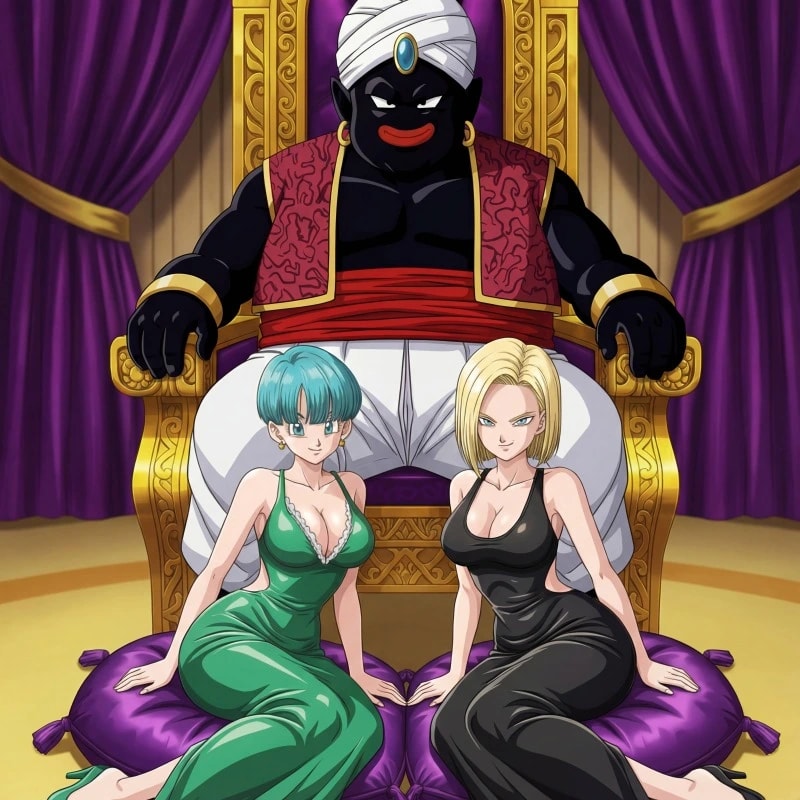
Tesoro raises great fountains of liquid gold, ensnares enemies, and works dust into people's bodies to slowly petrify them or to steer everyone aboard his ship. Having awakened the ability, he treats Gran Tesoro's gold as a sensory net that flags break-ins and attacks, and his larger constructs can loose explosive beams strong enough to sink a Marine warship.
Among his named moves are Gold Splash for spectacle, Gon Bomba, an exploding gauntlet punch, and his final trump Golden Tesoro, a giant golem piloted from within that fires the eye-beam Gon Fuoco di Dio and delivers the crushing Gon Inferno.
Related Reading
See all
The Most Popular Women of One Piece: A Fan's Journey Through Anime's Greatest Female Characters...
When I first decided to commit to watching One Piece seriously, I knew I was embarking on one of anime's longest and most beloved series. With over 100...
Super Saiyan Pubes: The Song About Where Super Saiyan Hair Actually Goes
The transformation everyone knows, the follow-up question nobody would touch. Why we made a smooth R&B track about the golden glow Dragon Ball never talks about....
Frequently Asked Questions
What does the Goru Goru no Mi do?
The Goru Goru no Mi is a non-canon Paramecia that gives its user, Gild Tesoro, total command over gold he has touched, letting him melt, harden, and reshape it at will. He uses it to trap enemies inside solid gold or to build a colossal golem around himself.
Is the Goru Goru no Mi canon?
No, the Goru Goru no Mi is not canon. It was introduced in the thirteenth One Piece film, One Piece Film: Gold.
What weakens the Goru Goru no Mi?
Water nullifies the Goru Goru no Mi's power, echoing the King Midas legend the fruit is based on. The fruit also cannot conjure gold on its own, so Gild Tesoro's strength depends entirely on how much gold is nearby that he has already touched.
What is Gild Tesoro's strongest Goru Goru no Mi technique?
Gild Tesoro's ultimate technique is Golden Tesoro, a giant golem piloted from within that fires the eye-beam Gon Fuoco di Dio and delivers the crushing attack Gon Inferno.
How did Gild Tesoro get the Goru Goru no Mi?
Gild Tesoro seized the Goru Goru no Mi through a deadly scheme after it had gone up for auction under the Donquixote Pirates, who never actually intended to sell it.
Sources & Information
Looking for more on Goru Goru no Mi? The One Piece Wiki on Fandom has a dedicated page with community notes.
View on FandomThis content is original writing by Daddy Jim Headquarters based on the One Piece anime series, manga, and official materials. Episode and chapter references are cited where applicable.
Character and scene imagery on this site is original artwork by Daddy Jim Headquarters, not screenshots or licensed imagery. Official cover art is used on three types of pages for editorial commentary:
- Movie pages: theatrical posters and key visuals, credited to Toei Animation and Toei Company.
- Game pages: official box art for the One Piece console and mobile games, credited to Bandai Namco.
- Manga chapter pages: Jump Comics volume covers, credited to Shueisha and Eiichiro Oda.
Official resources:
Help Us Keep This Wiki Accurate
Daddy Jim Headquarters maintains this encyclopedia. If you spot an error, a translation issue, or something that doesn't look right, let us know.