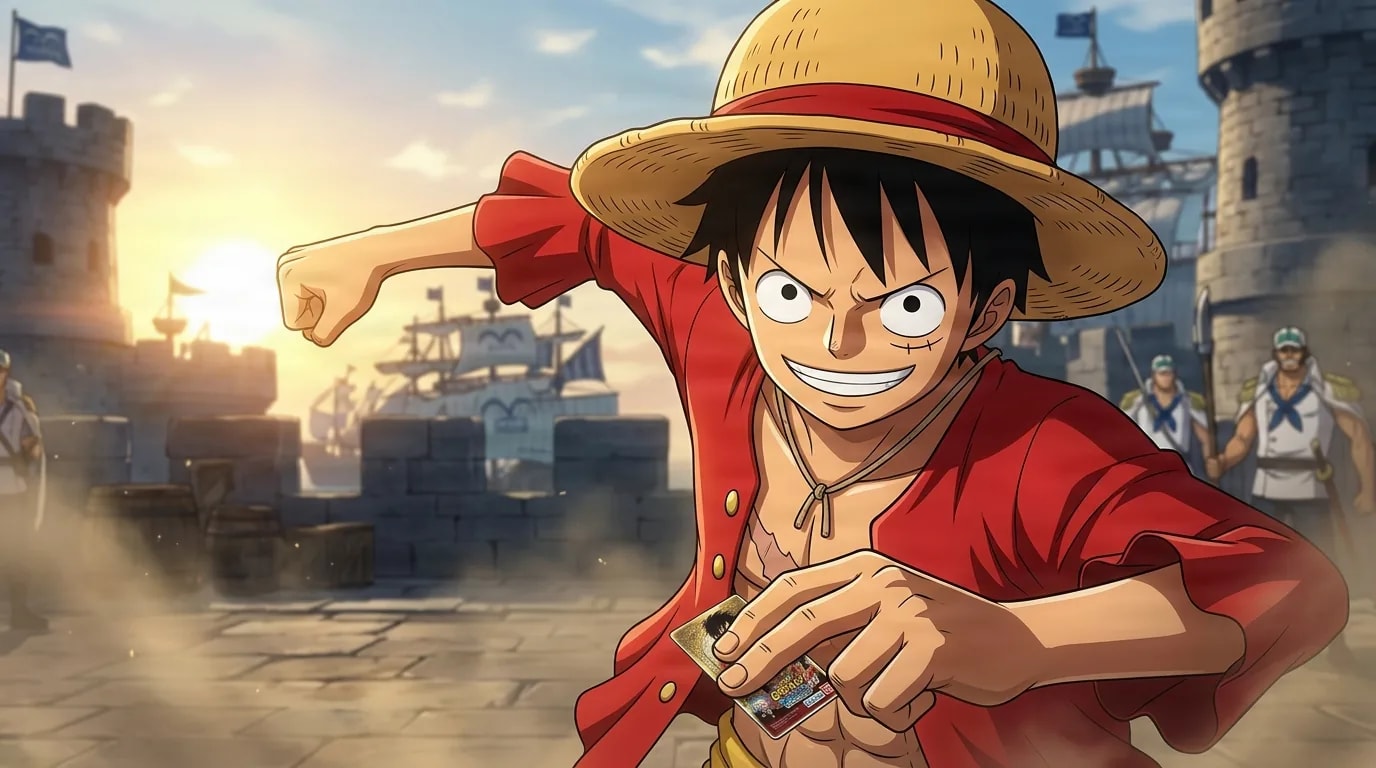
One Piece Miracle Battle Carddass
CharacterOne Piece Miracle Battle Carddass, often abbreviated to MiraBato, is a Bandai trading-card line dispensed from card vending machines. Launched in December 2009, it ran alongside several other shonen franchises under the wider Carddass brand.
Appearance
The product takes the form of collectible cards sold out of Bandai's vending machines, the action-genre offering known as Miracle Battle Carddass. The umbrella label "Carddass" is the generic name applied to any cards these machines produce, and it derives from AMeDAS, Japan's Automated Meteorological Data Acquisition System. That borrowed name reflected an early aim of positioning Carddass as a source of information for children.



Personality
The One Piece set is one branch of a much larger Miracle Battle Carddass family. Bandai built the line as a vending-machine card game, and in 2014 a brief promotional manga titled MiraBato Strongest Strategy: MiraBato GO! ran in Shueisha's Saikyo Jump to publicize it.
History
Related Reading
See all
The Most Popular Women of One Piece: A Fan's Journey Through Anime's Greatest Female Characters...
When I first decided to commit to watching One Piece seriously, I knew I was embarking on one of anime's longest and most beloved series. With over 100...
Super Saiyan Pubes: The Song About Where Super Saiyan Hair Actually Goes
The transformation everyone knows, the follow-up question nobody would touch. Why we made a smooth R&B track about the golden glow Dragon Ball never talks about....

Frequently Asked Questions
What is One Piece Miracle Battle Carddass?
One Piece Miracle Battle Carddass, often shortened to MiraBato, is a Bandai trading card line for One Piece dispensed from vending machines, launched in December 2009 alongside a Dragon Ball line.
Where does the name Carddass come from?
"Carddass" is Bandai's generic name for cards dispensed from its vending machines, derived from AMeDAS, Japan's Automated Meteorological Data Acquisition System, reflecting an early goal of using the cards as an information source for children.
What other franchises joined the Miracle Battle Carddass line?
After launching with One Piece and Dragon Ball in December 2009, the line added Toriko in March 2011, Hunter x Hunter in March 2012, Naruto Shippuden in April 2012, Bleach and Gintama in December 2013, and Kuroko's Basketball in June 2014.
Was there a manga based on Miracle Battle Carddass?
Yes, in 2014 a short promotional manga titled MiraBato Strongest Strategy: MiraBato GO! ran in Shueisha's Saikyo Jump to publicize the card line.
Who publishes One Piece Miracle Battle Carddass?
Bandai both developed and published One Piece Miracle Battle Carddass as part of its wider action-genre vending machine card game series.
Sources & Information
Looking for more on One Piece Miracle Battle Carddass? The One Piece Wiki on Fandom has a dedicated page with community notes.
View on FandomThis content is original writing by Daddy Jim Headquarters based on the One Piece anime series, manga, and official materials. Episode and chapter references are cited where applicable.
Character and scene imagery on this site is original artwork by Daddy Jim Headquarters, not screenshots or licensed imagery. Official cover art is used on three types of pages for editorial commentary:
- Movie pages: theatrical posters and key visuals, credited to Toei Animation and Toei Company.
- Game pages: official box art for the One Piece console and mobile games, credited to Bandai Namco.
- Manga chapter pages: Jump Comics volume covers, credited to Shueisha and Eiichiro Oda.
Official resources:
Help Us Keep This Wiki Accurate
Daddy Jim Headquarters maintains this encyclopedia. If you spot an error, a translation issue, or something that doesn't look right, let us know.