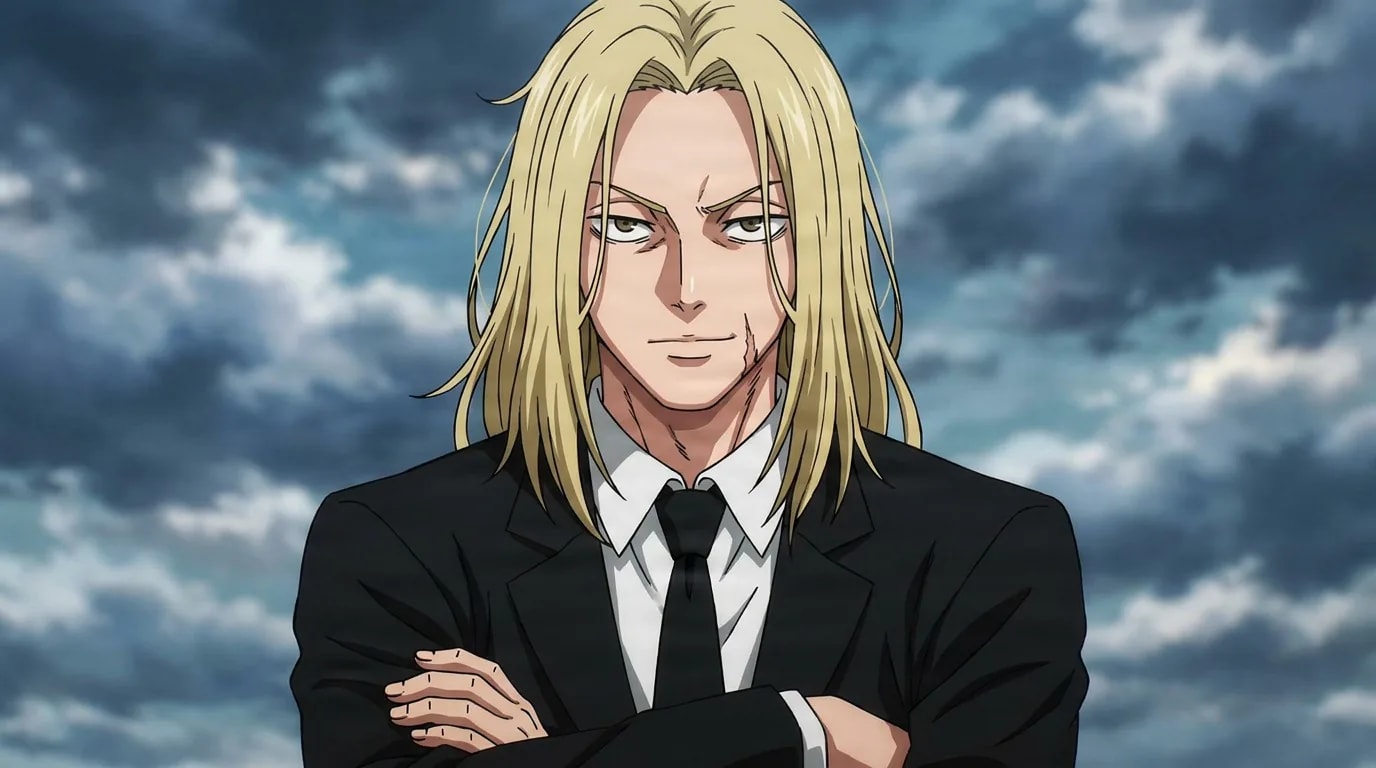
Shishiba
CharacterShishiba is a hammer-wielding member of the Order, the elite tier of the JAA's deadliest assassins. Once a directionless rogue killer, he was taken in and trained by Satoru Yotsumura, and he went on to become the mentor of Osaragi. His creed is simplicity, in his weapons and in his work.
Appearance
A lean, tall man in his mid-twenties, Shishiba wears his long blond hair down and looks out through dark green eyes. His usual dress is a sharp one: a pale blue polo beneath a brown suit, set off by a purple tie fixed with a hammerhead-shark pin, though the colors of the outfit change from scene to scene. A pointed scar marks the left side of his chin, a souvenir of his rematch with Yotsumura. He also lost the ring and little fingers of his left hand, and after reattaching them he keeps that hand covered with a glove.

Personality
Detached by nature, Shishiba shows little warmth toward anyone or anything beyond his job and his student Osaragi. He does insist, though, that killing be done with a certain courtesy toward bystanders, holding that ordinary people are entitled to their ordinary lives, and he scolds Osaragi for being too reckless in public. He regards grief as a strange thing for a killer to indulge, reasoning that people who make a living ending lives have no business going soft when a colleague or loved one falls. For all his skill he treats the act of killing as unremarkable, likening it to a household chore, and he lives by a single guiding word: simplicity. That principle even dictated his choice of weapon.


Abilities
Ranked among the Order's strongest, Shishiba fights with a pair of claw hammers that he prizes for their bluntness: they can bludgeon or tear, never empty like a gun, and never need sharpening. He uses the claws to rip, gouge, snap necks, and decapitate, and has turned a polished hammer face into a mirror to find enemies in cover or improvised a dango skewer into a lethal tool when disarmed. His speed is enough to break a man's neck before the victim registers it, his reflexes sharp enough to swat aside rifle fire one-handed while driving, and his strength lets him punch through walls and shatter weapons. Durable and seemingly tireless, he has walked away from being slammed through rooftops and struck by heavy machinery. He also reads Morse code, once catching a message Nagumo blinked at him through a car's signal lights. Yotsumura judged that with a different mindset his student could have climbed even higher in the ranks.
Related Reading
See all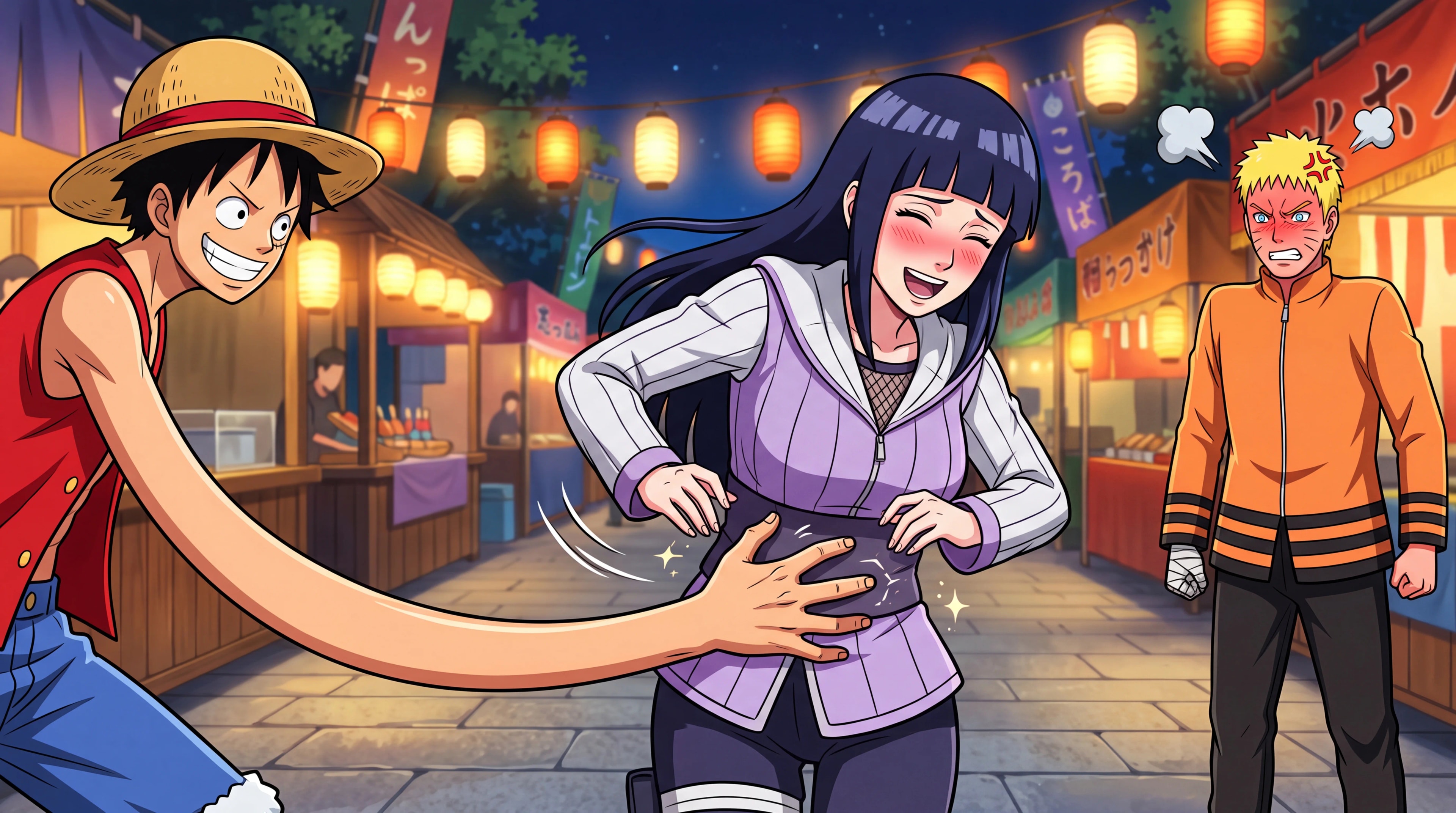
Naruto vs Luffy: Does the Fight Change if Luffy Tickles Hinata?
Naruto vs Luffy with the twist nobody asked for: Luffy tickled Hinata on date night, and she kind of liked it. We break down the whole fight and commit to a winner....
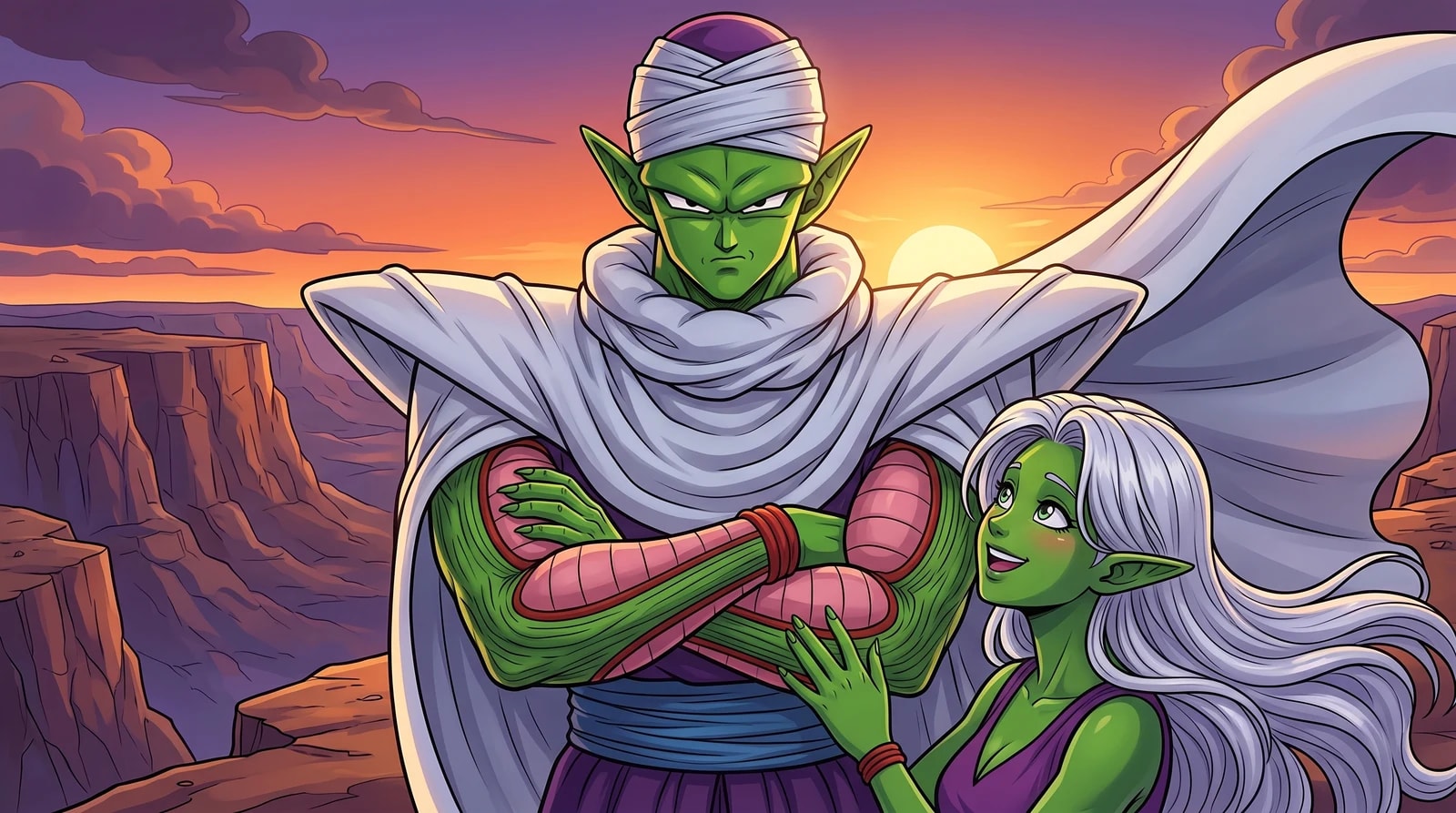
Piccolo Gets the Namek Hoes: Namek Has No Women, and He Pulls Anyway
There are no women on Namek. That isn't an oversight, it's the biology. Why we handed Piccolo the one thing his own species rules out, and why it had to be trap soul....

Frequently Asked Questions
What is the relationship between Sakamoto and Shishiba?
Shishiba and Taro Sakamoto are listed as acquaintances within the Sakamoto Days assassin world, though the wiki does not detail any close personal history between the two.
How old is Shishiba in Sakamoto Days?
Shishiba is 26 years old, born on September 24, according to Sakamoto Days character data.
Who trained Shishiba?
Shishiba was trained by Satoru Yotsumura after starting out as a directionless rogue killer, and he rose to become a member of the Order. He later became the mentor of his own protege, Osaragi.
What weapons does Shishiba use?
Shishiba fights with a pair of claw hammers, which he favors because they can bludgeon or tear, never run empty like a gun, and never need sharpening. He uses the claws to rip, gouge, snap necks, and decapitate opponents.
What is Shishiba's personal philosophy?
Shishiba lives by the guiding word simplicity, a principle that shapes both his choice of weapon and his approach to killing. He treats the act of killing as unremarkable, comparing it to a household chore.
Sources & Information
Looking for more on Shishiba? The Dragon Ball Wiki on Fandom has a dedicated page with community notes.
View on FandomThis content is original writing by Daddy Jim Headquarters based on the Dragon Ball anime series, manga, and official materials. Episode and chapter references are cited where applicable.
Character and scene imagery on this site is original artwork by Daddy Jim Headquarters, not screenshots or licensed imagery. Official cover art is used on three types of pages for editorial commentary:
- Movie pages: theatrical posters and key visuals, credited to Toei Animation and Shueisha.
- Game pages: official box art, credited to Bandai Namco, Atari, and other publishers.
- Manga chapter pages: Jump Comics volume covers, credited to Shueisha and Akira Toriyama.
Official resources:
Help Us Keep This Wiki Accurate
Daddy Jim Headquarters maintains this encyclopedia. If you spot an error, a translation issue, or something that doesn't look right, let us know.