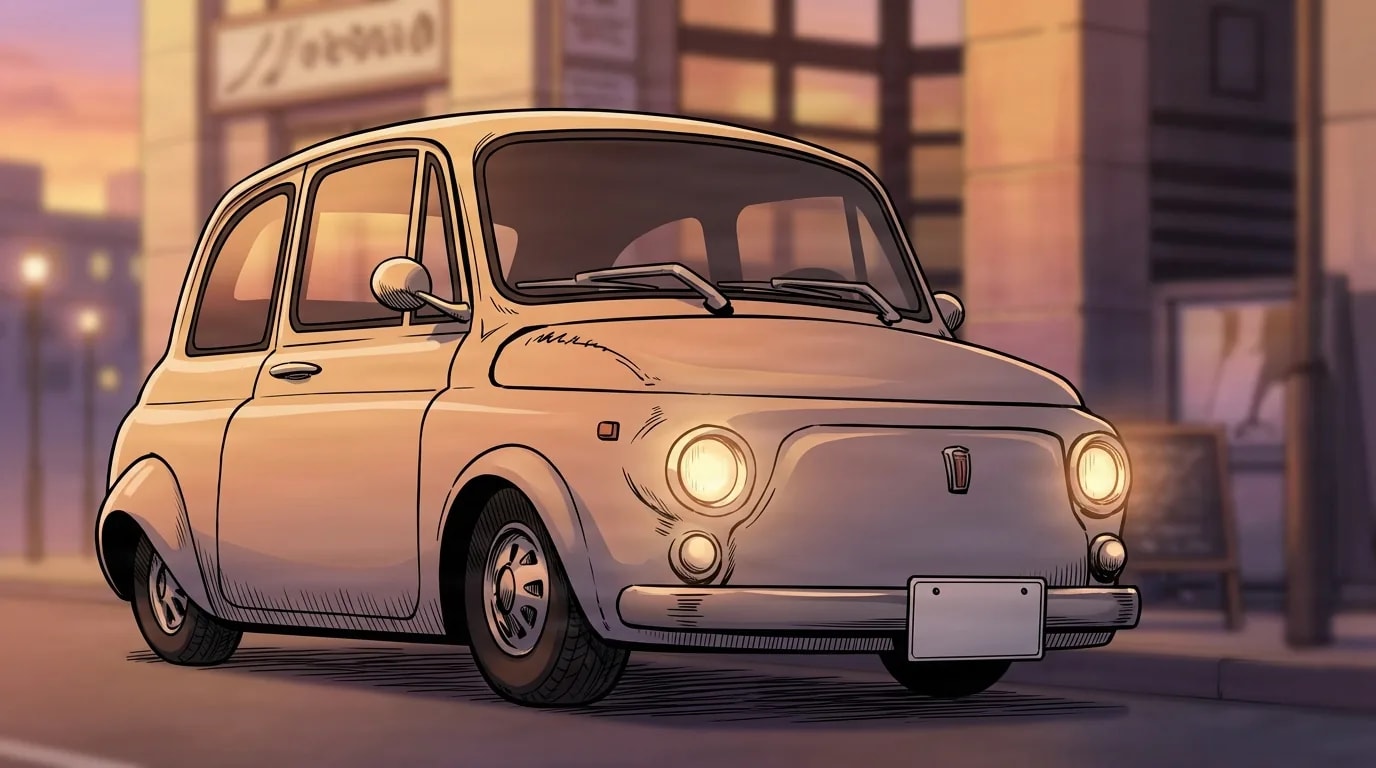
Kobeni's car
CharacterKobeni's car is a compact 1965 Fiat 500 she buys with her own earnings to ferry her family about. Modest as it is, the little yellow vehicle becomes an unlikely fixture of the story, coveted by Power and battered through a chaotic stretch of the hunters' misadventures.
Appearance
The vehicle is a diminutive 1965 Fiat 500, rounded across the top and set on little wheels, with a squared-off nose, a rectangular windscreen, and a single pair of doors. Inside sits a steering wheel of an older design. Its paintwork is a soft, pale shade of yellow rather than a bold one.
Personality
Though merely a machine, the car takes on an almost character-like presence in the tale. Power becomes so taken with it that she insists it belongs to her and accuses its real owner of theft. Fans embraced it too, ranking the unnamed little Fiat surprisingly high across the series' popularity polls, where it appeared simply under Kobeni's name.
History
Kobeni purchases the Fiat with her own money during the International Assassins arc, intending it as transport for her family. Power spots it, demands a lift, then claims the car as her own and bullies her way into the driver's seat, insisting she holds a license she does not actually have. Kobeni climbs in to stop her but fails, and the fiend plows the car into Denji and a man called Kurose, killing the latter. Power instantly pins the blame on Kobeni, branding her a murderer since the vehicle is hers. The dead man's face then shifts to reveal he was no Kurose at all but the eldest brother of Joey and Aldo, an assassin gunning for Denji, prompting Power to boast that she alone had seen through the ruse. Afterward Kobeni crouches beside the dented car fretting over repair costs, and later, inside a department store, she watches in horror as Kishibe and Aldo crash down onto it and cave in the roof.
Related Reading
See all
Viral Anime Wars: How Reze vs. Bakugo Memes Took Over Social Media in November 2025
Look, the origins of this viral showdown trace back to a single tweet that playfully juxtaposed Reze's enigmatic allure against Bakugo's expl...
Super Saiyan Pubes: The Song About Where Super Saiyan Hair Actually Goes
The transformation everyone knows, the follow-up question nobody would touch. Why we made a smooth R&B track about the golden glow Dragon Ball never talks about....

Frequently Asked Questions
What kind of car is Kobeni's car?
Kobeni's car is a compact 1965 Fiat 500, rounded across the top and set on little wheels, with a squared-off nose, a rectangular windscreen, and a single pair of doors. Its paintwork is a soft, pale shade of yellow, and she buys it with her own earnings to ferry her family about.
Who did Power hit with Kobeni's car?
Power plows the car into Denji and a man called Kurose, killing the latter. Kurose's face then shifts to reveal he was actually the eldest brother of Joey and Aldo, an assassin gunning for Denji.
How is Kobeni's car ranked in popularity?
Fans embraced the little Fiat, ranking the unnamed vehicle surprisingly high across the series' popularity polls, where it appeared simply under Kobeni's name.
Why does Power claim Kobeni's car?
Power becomes so taken with Kobeni's car that she insists it belongs to her and accuses its real owner of theft. She demands a lift, bullies her way into the driver's seat, and claims to hold a license she does not actually have.
What happens to Kobeni's car in Chainsaw Man?
Kobeni's car ends up destroyed. After it is dented in the assassins' chaos, she later watches in horror inside a department store as Kishibe and Aldo crash down onto it and cave in the roof.
Sources & Information
Looking for more on Kobeni's car? The Chainsaw Man Wiki on Fandom has a dedicated page with community notes.
View on FandomThis content is original writing by Daddy Jim Headquarters based on the Chainsaw Man anime series, manga, and official materials. Episode and chapter references are cited where applicable.
Character and scene imagery on this site is original artwork by Daddy Jim Headquarters, not screenshots or licensed imagery. Official cover art is used on three types of pages for editorial commentary:
- Movie pages: theatrical posters and key visuals, credited to MAPPA and the Chainsaw Man Movie Project.
- Game pages: official promotional artwork, credited to the licensed publishers.
- Manga chapter pages: Jump Comics volume covers, credited to Shueisha and Tatsuki Fujimoto.
Official resources:
Help Us Keep This Wiki Accurate
Daddy Jim Headquarters maintains this encyclopedia. If you spot an error, a translation issue, or something that doesn't look right, let us know.