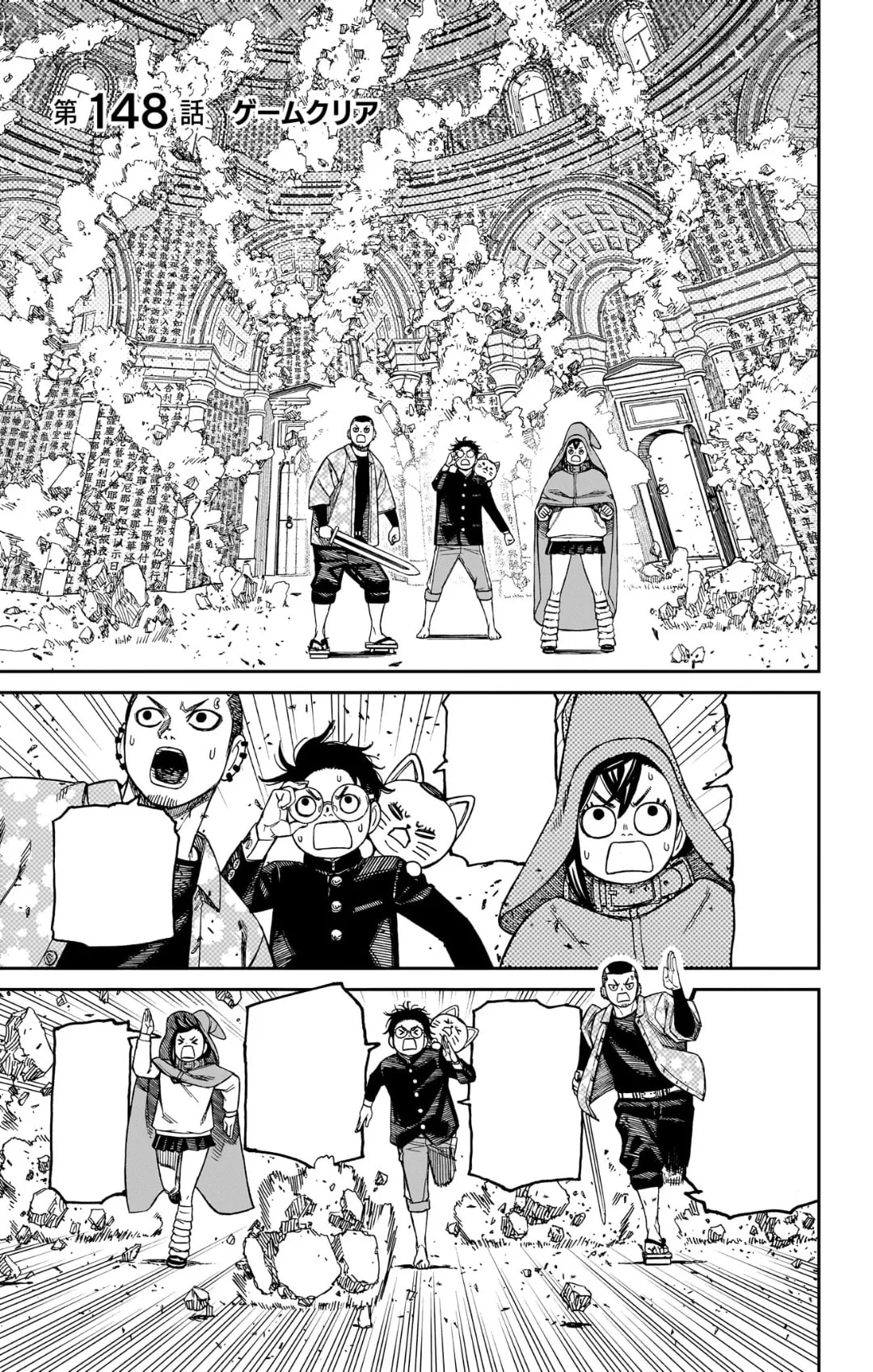
Chapter 148 reveals the deadly trick behind the Danmara game: breaking the crystal frees a sealed yokai, the Fairy-Tale Card, who promptly seizes Unji as the captives realize escape may be impossible.
Summary
With the crystal shattered, Momo, Okarun, Turbo Granny, and Unji sprint from the crumbling castle. Unji insists he beat the game, but Okarun corrects him: clearing it was never the goal. Turbo Granny lays out the truth, that Danmara is no tabletop diversion at all but a cursed wicker trunk built to imprison a wicked spirit through binding power. She adds that four seals once held it shut, and Momo realizes with horror that the four bosses on the card were those very seals, guardian deities disguised so that players would unwittingly free what they guarded.
As a sign congratulates the crowd for finishing, the freed yokai thanks his liberators. Turbo Granny orders everyone to shut their eyes, warning that this is the Fairy-Tale Card, capable of claiming anything that meets his gaze. He recognizes her changed voice and questions whether she now sides with humanity. He explains that he disguised the trunk as a game precisely because he could not break his own seal, needing others to do it. When Momo demands a way out, he tells her there is none, having released only the old man and one gang girl as bait to lure fresh victims with their stories. Momo says the candy-filled world bores her and wants to leave, but the yokai argues the delinquents secretly despise reality and crave chaos. Haunted by a painful memory, Unji's stand-in leader opens his eyes, falls under control, and strikes Unji, who looks up and is taken too.


Key Events
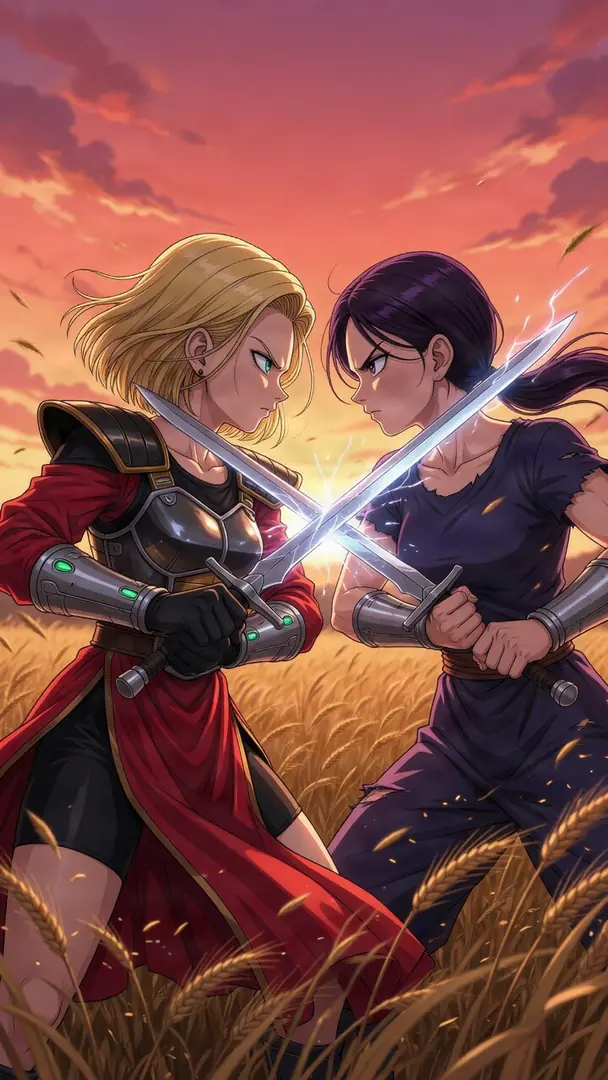
Turbo Granny exposes the diorama as a cursed trunk caging an evil yokai that staged itself as a board game so people would free it. The Fairy-Tale Card reveals himself and his power to possess anyone who looks at him. He works to convince the delinquents that his fabricated world beats the one they left behind. Raiya succumbs to the mind control and hits Unji, and Unji is then possessed and begins to transform.
Notes
This chapter opens Volume 18 and marks the debut of the Fairy-Tale Card antagonist. It recontextualizes the entire Danmara game as a trap, transforming a contest the cast thought they had won into the start of a much larger crisis. The possession of Unji sets up the umbrella-fueled battle to follow.
Related Reading
See all
Super Saiyan Pubes: The Song About Where Super Saiyan Hair Actually Goes
The transformation everyone knows, the follow-up question nobody would touch. Why we made a smooth R&B track about the golden glow Dragon Ball never talks about....
The Bleach Female Characters Nobody Can Agree On, Settled
Five Bleach female characters, ranked and settled. Yoruichi sits at number five, the spot nobody expects, and our number one is an Arrancar with a soft heart....
Frequently Asked Questions
What happens in Dandadan Chapter 148?
Dandadan Chapter 148, titled Game Cleared, reveals the deadly trick behind the Danmara game: breaking the crystal frees a sealed yokai, the Fairy-Tale Card, who promptly seizes Unji as the captives realize escape may be impossible.
What is the Danmara game really in Chapter 148?
In Chapter 148, Turbo Granny reveals that Danmara is no tabletop diversion but a cursed wicker trunk built to imprison a wicked spirit through binding power. Four seals once held it shut, and the four bosses on the card were those very seals, guardian deities in disguise.
Who is the Fairy-Tale Card in Dandadan?
The Fairy-Tale Card is the sealed yokai freed when the crystal is broken in Chapter 148. He can claim or possess anything that meets his gaze, so Turbo Granny orders everyone to shut their eyes.
Why did the Fairy-Tale Card disguise itself as a game in Chapter 148?
In Dandadan Chapter 148, the Fairy-Tale Card explains he disguised the trunk as a game precisely because he could not break his own seal, needing others to do it. He released only the old man and one gang girl as bait to lure fresh victims with their stories.
What happens to Unji at the end of Chapter 148?
At the end of Chapter 148, Unji's stand-in leader Raiya opens his eyes, falls under the Fairy-Tale Card's control, and strikes Unji. Unji looks up, is taken too, and begins to transform, setting up the umbrella-fueled battle to follow.
Sources & Information
Looking for more on Game Cleared? The Dandadan Wiki on Fandom has a dedicated page with community notes.
View on FandomThis content is original writing by Daddy Jim Headquarters based on the Dandadan anime series, manga, and official materials. Episode and chapter references are cited where applicable.
Character and scene imagery on this site is original artwork by Daddy Jim Headquarters, not screenshots or licensed imagery. Official cover art is used on three types of pages for editorial commentary:
- Movie pages: theatrical key visuals, credited to Science SARU and the production committee.
- Game pages: official promotional artwork, credited to the licensed publishers.
- Manga chapter pages: Jump Comics volume covers, credited to Shueisha and Yukinobu Tatsu.
Official resources:
Help Us Keep This Wiki Accurate
Daddy Jim Headquarters maintains this encyclopedia. If you spot an error, a translation issue, or something that doesn't look right, let us know.