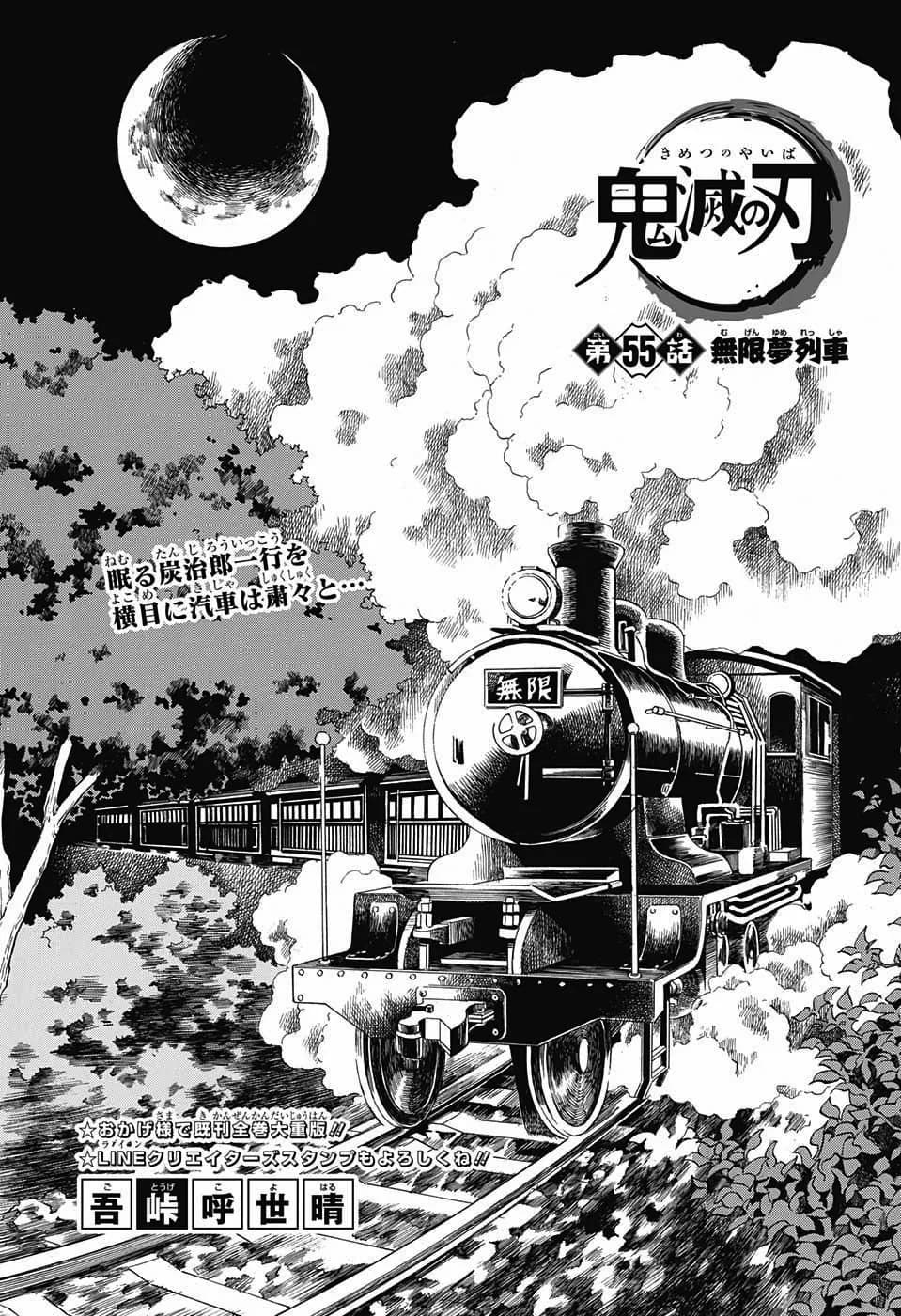
The fifty-fifth chapter reveals Enmu's plan to trap the Demon Slayers in blissful dreams while desperate children prepare to destroy their spiritual cores. Each slayer drifts into a personal fantasy as the demon savors their deepening sleep.
Summary
After putting the conductor to sleep at his own pleading request, Enmu's disembodied hand, marked with the kanji for dream, instructs four sleepless children to wait until the slayers slumber deeply before binding themselves to them with a special rope. Enmu, standing atop the locomotive, explains that a slayer's strength flows from spirit and resolve, so shattering their spiritual cores will reduce them to helpless living corpses.
Each slayer sinks into a private dream. Zenitsu imagines an idyllic outing with Nezuko as his girlfriend, while Inosuke leads a cave expedition with animal companions serving as his underlings. Kyojuro relives a moment at home, telling his cold father he has become the Flame Hashira and then encouraging his anxious younger brother Senjuro. Tanjiro finds himself reunited with his lost family before their deaths.

Key Events
Enmu uses his Blood Demon Art to seal each Demon Slayer inside a personal dream tailored to their deepest wishes. Zenitsu dreams of paradise with Nezuko, Inosuke of an underground adventure, Kyojuro of home and family, and Tanjiro of being reunited with his deceased loved ones.
Enmu orders four children who crave a peaceful sleep to tie themselves to the slayers, enter their dreams, and cripple them. As the bindings take hold and the slayers fall deeper into slumber, Enmu rejoices that they may never wake.
Related Reading
See all
Demon Slayer Infinity Castle Is the Biggest Anime Movie Ever but It Still Lost in Japan
Demon Slayer: Infinity Castle earned $778 million globally and nearly 40 billion yen in Japan, but it still couldn't top Mugen Train's domestic record. Here's why that barely matters....

Naruto vs Luffy: Does the Fight Change if Luffy Tickles Hinata?
Naruto vs Luffy with the twist nobody asked for: Luffy tickled Hinata on date night, and she kind of liked it. We break down the whole fight and commit to a winner....
Notes
This chapter is part of the Mugen Train Arc and is adapted across Episodes 28 and 29. It introduces the dream-manipulation premise central to the arc and offers early glimpses into Kyojuro's strained relationship with his father, Shinjuro.
The personal dreams provide insight into each character's longings, particularly Tanjiro's grief over his slaughtered family.
Frequently Asked Questions
What happens in Demon Slayer Chapter 55, Train of Infinite Dreams?
Chapter 55, Train of Infinite Dreams, reveals Enmu's plan to trap the Demon Slayers in blissful dreams while desperate children prepare to destroy their spiritual cores. Each slayer drifts into a personal fantasy as the demon savors their deepening sleep.
What is Enmu's plan in Chapter 55 of Demon Slayer?
In Chapter 55, Enmu uses his Blood Demon Art to seal each Demon Slayer inside a personal dream and explains that a slayer's strength flows from spirit and resolve, so shattering their spiritual cores will reduce them to helpless living corpses. He orders four sleepless children to tie themselves to the slayers, enter their dreams, and cripple them.
What do the Demon Slayers dream about in Chapter 55?
In Chapter 55, Zenitsu dreams of an idyllic outing with Nezuko as his girlfriend, Inosuke leads a cave expedition with animal companions as his underlings, Kyojuro relives a moment at home with his father and brother, and Tanjiro finds himself reunited with his lost family.
What arc and volume is Demon Slayer Chapter 55 from?
Chapter 55, Train of Infinite Dreams, is part of the Mugen Train Arc and is collected in Volume 7 of Demon Slayer.
Which anime episodes adapt Chapter 55 of Demon Slayer?
Chapter 55 is adapted across Episodes 28 and 29 of the Demon Slayer anime. It introduces the dream-manipulation premise central to the Mugen Train Arc and offers early glimpses into Kyojuro's strained relationship with his father, Shinjuro.
Sources & Information
Looking for more on Train of Infinite Dreams? The Demon Slayer Wiki on Fandom has a dedicated page with community notes.
View on FandomThis content is original writing by Daddy Jim Headquarters based on the Demon Slayer anime series, manga, and official materials. Episode and chapter references are cited where applicable.
Rights holders
All rights belong to their respective owners.
Character and scene imagery on this site is original artwork by Daddy Jim Headquarters, not screenshots or licensed imagery. Official cover art is used on three types of pages for editorial commentary:
- Movie pages: theatrical posters and key visuals, credited to ufotable and Aniplex.
- Game pages: official box art, credited to Sega, Aniplex, and other publishers.
- Manga chapter pages: Jump Comics volume covers, credited to Shueisha and Koyoharu Gotouge.
Official resources:
Help Us Keep This Wiki Accurate
Daddy Jim Headquarters maintains this encyclopedia. If you spot an error, a translation issue, or something that doesn't look right, let us know.